






































Ashwagandha: who is it for, and who should avoid it?
Ashwagandha is one of the most popular plants of the moment, but "natural" does not mean "risk-free." Certain situations call for caution, or even abstinence. Here are the contraindications and precautions to know before you start, and why medical advice is better than simply reading for tips.
📑 Summary
- What we know about ashwagandha safety
- Pregnancy and breastfeeding: abstain
- Thyroid and autoimmune diseases
- Liver, medication, and interactions
- Who might consider ashwagandha?
- Using it correctly: best practices and warning signs
🔬 What we know about ashwagandha safety
In clinical trials conducted on adults, ashwagandha is generally well-tolerated in the short term, over durations of a few weeks and with doses around 250 to 600 mg of extract per day. Reported side effects are most often mild: drowsiness, digestive issues, and headaches. The review by Tandon and Yadav (2020) concluded that it has a fairly favorable safety profile, while acknowledging that long-term data remains limited.
🧬 Data remains incomplete
Trials include few participants, rarely last longer than three months, and often exclude individuals with underlying health conditions or those taking medication. In other words, they mainly provide information on healthy adults. For all other situations, the absence of negative signals is not a guarantee of safety.
We also remind you that there are no health claims authorized in the European Union for ashwagandha. This article is therefore purely for informational purposes. For an overview, see our complete guide: benefits, dosage, and precautions.
🤰 Pregnancy and breastfeeding: abstain
Ashwagandha is not recommended for pregnant women. Safety data is insufficient, and the plant has traditionally been cited as posing a potential risk during pregnancy. When in doubt, the precautionary principle applies.
During breastfeeding, there is no reliable data to establish the safety of the plant for the infant. Once again, abstinence is the rule. The same applies if you are planning a pregnancy in the near future: speak to your doctor or midwife first.
🧬 Thyroid and autoimmune diseases
🦋 The thyroid gland
Some studies suggest that ashwagandha may alter thyroid hormone levels. In a trial conducted on patients with subclinical hypothyroidism (Sharma et al., 2018), thyroid parameters evolved in the group receiving the extract. This result is of interest to researchers, but it primarily illustrates a practical point: the plant can interact with thyroid balance.
If you have a thyroid condition, if you are taking levothyroxine or other thyroid medication, or if you have thyroid levels that need monitoring, ask your doctor for advice before starting. Hyperthyroidism is a situation where caution is particularly necessary.
🛡️ Autoimmune diseases and immunosuppressants
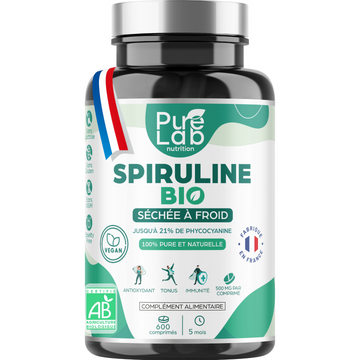
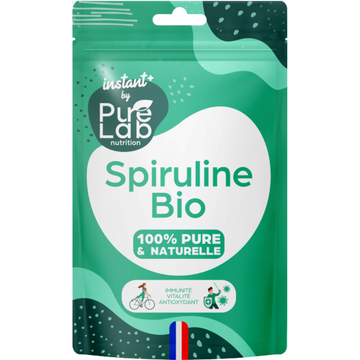
Ashwagandha is being studied for its effects on certain immune parameters. In the case of an autoimmune disease (rheumatoid arthritis, lupus, Hashimoto's disease, multiple sclerosis, etc.) or immunosuppressant treatment, the plant could theoretically interfere with the immune system. Lacking robust data, specialized medical advice is essential before taking it. This caution also applies to other supplements that stimulate immunity: if you are interested in organic Spirulina, the same question arises, and we detail its specifics in Everything to know before starting spirulina.
🩺 Liver, medication, and interactions
🧪 The question of the liver
Rare but documented cases of liver damage associated with the consumption of ashwagandha-based products have been published. Björnsson et al. (2020) described a series of cases in Iceland and the United States, with symptoms that generally resolved upon discontinuing the product. This is a case series, which does not allow for estimating the actual frequency of the problem or proving the exclusive role of the plant (the products were sometimes mixtures).
In practice: if you have liver disease, abnormal liver function tests, or consume significant amounts of alcohol, do not start without medical advice. And if you notice unusual fatigue, dark urine, jaundice, persistent nausea, or abdominal pain, stop taking it and consult a doctor immediately.
💊 Possible drug interactions
Ashwagandha could potentially enhance the effects of certain medications. This is of particular concern for:
- sedatives, sleeping pills, and anxiolytics (increased drowsiness);
- thyroid medications;
- antidiabetics and antihypertensives (possible cumulative effect on blood sugar or blood pressure);
- immunosuppressants and corticosteroids;
- medications that require liver monitoring.
This list is not exhaustive. It is also advised to report taking ashwagandha before any surgical procedure, as it may add to the effects of anesthesia. In all cases, speak with your doctor or pharmacist, who will check for compatibility with your medications.
👤 Who might consider ashwagandha?
Ashwagandha can be considered by a healthy adult who is not taking any medication that could interact with it, who is neither pregnant nor breastfeeding, and who is interested in plants as part of a general wellness routine. It is not intended for children or adolescents, due to a lack of data.
It in no way replaces medical treatment. If your stress, fatigue, or sleep disturbances are persistent, or accompanied by a depressive mood, overwhelming anxiety, or physical symptoms, consult a healthcare professional rather than trying another supplement. To understand what research reports, you can read Ashwagandha and sleep: what the studies really say.
🧭 Using it correctly: best practices and warning signs
- Seek medical advice before starting if you are in one of the situations mentioned above.
- Respect the dosage indicated on the packaging and do not exceed it.
- Choose a transparent product: extract and daily dose clearly indicated, without unnecessary additives. See Ashwagandha KSM-66: why the extract matters.
- Avoid stacking multiple products containing ashwagandha, or supplements with similar effects, without guidance. Read Can you take several supplements at the same time?
- Take breaks and regularly re-evaluate the benefit of taking it, rather than extending it indefinitely.
- Stop and consult in case of any side effects: rash, marked digestive issues, jaundice, or unusual fatigue.
✅ Our Organic Ashwagandha at Pure Lab Nutrition: an organic KSM-66® extract in 60 capsules, without additives, reserved for healthy adults and subject to medical advice if in doubt.
👉 Discover our Organic Ashwagandha here.
✅ In summary
1️⃣ Ashwagandha is generally well-tolerated in the short term for healthy adults, but long-term data is limited.
2️⃣ It is not recommended during pregnancy and breastfeeding.
3️⃣ Thyroid, autoimmune diseases, liver issues, and medications require prior medical advice.
4️⃣ In case of any unusual sign (jaundice, marked fatigue, dark urine), stop taking it and consult a doctor.
Pure Lab Nutrition — The art of nourishing your well-being.
Scientific sources:
- Tandon N, Yadav SS. Safety and clinical effectiveness of Withania somnifera (Linn.) Dunal root in human ailments. J Ethnopharmacol. 2020;255:112768.
- Björnsson HK, Björnsson ES, Avula B, et al. Ashwagandha-induced liver injury: a case series from Iceland and the US Drug-Induced Liver Injury Network. Liver Int. 2020;40(4):825-829.
- Sharma AK, Basu I, Singh S. Efficacy and safety of ashwagandha root extract in subclinical hypothyroid patients: a double-blind, randomized placebo-controlled trial. J Altern Complement Med. 2018;24(3):243-248.
- Speers AB, Cabey KA, Soumyanath A, Wright KM. Effects of Withania somnifera (Ashwagandha) on stress and the stress-related neuropsychiatric disorders anxiety, depression, and insomnia. Curr Neuropharmacol. 2021;19(9):1468-1495.


Restez informé 🌿
Recevez nos derniers articles et conseils santé directement dans votre boîte mail.