



















Adaptogenic supplements: what are they and what are they used for?
The term "adaptogen" is circulating everywhere in the wellness world. But what does it really cover? This article explains the concept, its origin, its scientific and regulatory limits, and then reviews three supplements often mentioned: ashwagandha, magnesium, and coenzyme Q10.
📑 Table of Contents
- Where does the concept of adaptogen come from?
- What science says and what regulation says
- Ashwagandha, an iconic plant
- Magnesium: a mineral with recognized claims
- Coenzyme Q10: a nutrient without authorized claims
- How to approach these supplements with discernment
🌿 Where does the concept of adaptogen come from?
The word "adaptogen" was proposed in 1947 by the Soviet pharmacologist Nikolai Lazarev, and later developed by his student Israel Brekhman. The initial idea: certain plant-based substances, such as Siberian ginseng or rhodiola, could increase the body's ability to adapt to various stress factors (physical, chemical, or biological) while remaining relatively harmless and non-specific in their action.
🧬 A category, not a promise
It must be clearly understood that "adaptogen" is a research and marketing concept, not a regulatory category. There is no legal definition in Europe, and the term does not appear in the list of authorized health claims. Therefore, it cannot be used as a promise of results: no supplement can be presented as capable of making you "adapt to stress." What can be done is to explain the concept, present what the scientific literature is studying, and recall the claims actually authorized for each nutrient.
⚖️ What science says and what regulation says
Research on adaptogens exists: literature reviews describe potential actions on the stress axis (the hypothalamic-pituitary-adrenal axis) and on certain cellular pathways (Panossian and Wikman, 2009). However, these studies have limitations: sometimes small sample sizes, extracts that vary significantly from one manufacturer to another, short durations, and heterogeneous results. Conclusions therefore remain cautious.
🧬 The European framework
In the European Union, a health claim is only authorized if EFSA has validated the causal link between the nutrient and the effect. Regulation (EU) No 432/2012 lists these claims. For most so-called adaptogenic plants, no claim has been authorized to date. This does not mean they are useless or dangerous, but that their effects cannot be claimed on a label or a sales page. This framework protects the consumer against exaggerated promises.
🌱 Ashwagandha, an iconic plant
Ashwagandha (Withania somnifera) is a plant from Ayurvedic medicine, the root of which has been used for centuries in India. It is often cited as an example of an adaptogenic plant. Randomized clinical trials have studied standardized extracts, for instance in adults subject to perceived stress, with interesting results that are nonetheless limited by sample size and duration (Lopresti et al., 2019).
🧬 The importance of the extract and precautions
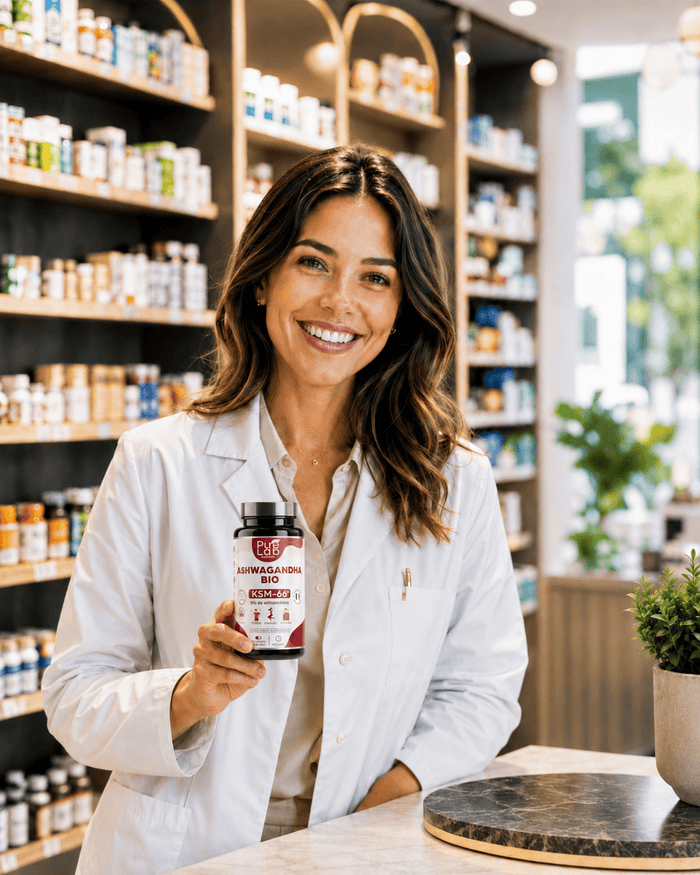
As with any plant, the quality of the extract matters: part used (root), titration in withanolides, absence of superfluous excipients. Our article Ashwagandha KSM-66: why the extract matters as much as the plant details this point. Furthermore, ashwagandha is not suitable for everyone: it is not recommended during pregnancy or breastfeeding, and medical advice is necessary if you are undergoing treatment (particularly thyroid or sedative medications) or have an autoimmune pathology. Find these precautions in Ashwagandha: benefits, dosage, and precautions.
✅ Our Organic Ashwagandha at Pure Lab Nutrition: KSM-66® root extract titrated to 5% withanolides, 300 mg per day in one capsule, certified Organic, without excipients or additives.
👉 Discover our Organic Ashwagandha here.
🧂 Magnesium: a mineral with recognized claims
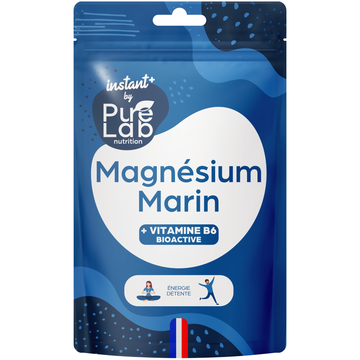
Magnesium is sometimes classified in common parlance among "stress management" supplements. It is not an adaptogen in the historical sense of the term (it is not a plant), but it is a nutrient for which Europe has recognized precise claims: magnesium contributes to the reduction of tiredness and fatigue, to electrolyte balance, to normal functioning of the nervous system, to normal muscle function, to normal psychological function, and to normal energy metabolism.
🧬 Choosing the form
Not all forms of magnesium are equal in terms of digestive tolerance. Organic forms, such as bisglycinate, malate, or taurinate, are generally better tolerated than mineral salts like oxide. To compare, read What is the best form of magnesium?, and for the link to daily life, How does magnesium act on stress?.
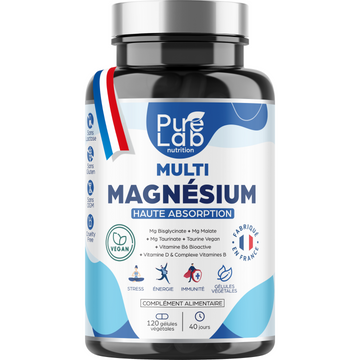
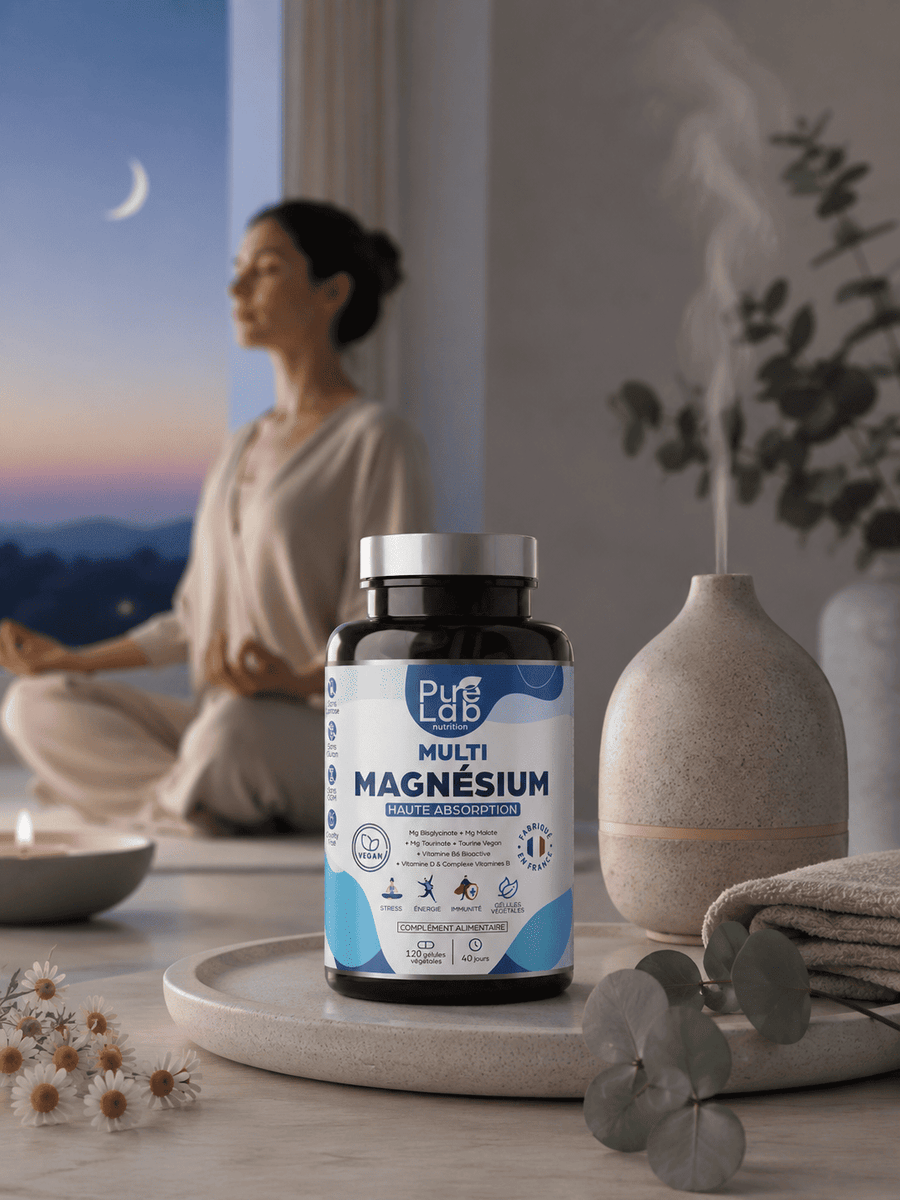
✅ Our Multi-Magnesium at Pure Lab Nutrition: 300 mg of magnesium per day, from three forms (bisglycinate, taurinate, malate), with vitamins B6 and D.
👉 Discover our Multi-Magnesium here.
⚡ Coenzyme Q10: a nutrient without authorized claims
Coenzyme Q10 (or ubiquinone) is a molecule naturally present in our cells, particularly in the mitochondria, where it participates in the cellular energy production chain. It also plays an antioxidant role. It is not an adaptogenic plant, but it is often mentioned in the same "vitality" categories.
🧬 What EFSA says
Health claim applications submitted for coenzyme Q10 were reviewed by EFSA, which did not conclude that there was a sufficiently established cause-and-effect relationship for the proposed effects (EFSA, 2010). Therefore, no health claim is authorized for this nutrient: we do not attribute any effect to it. However, it is found as an ingredient in certain complete formulas, particularly those that combine several antioxidants and cofactors.
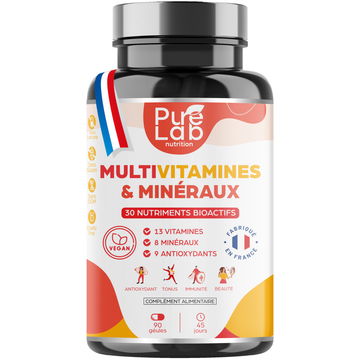
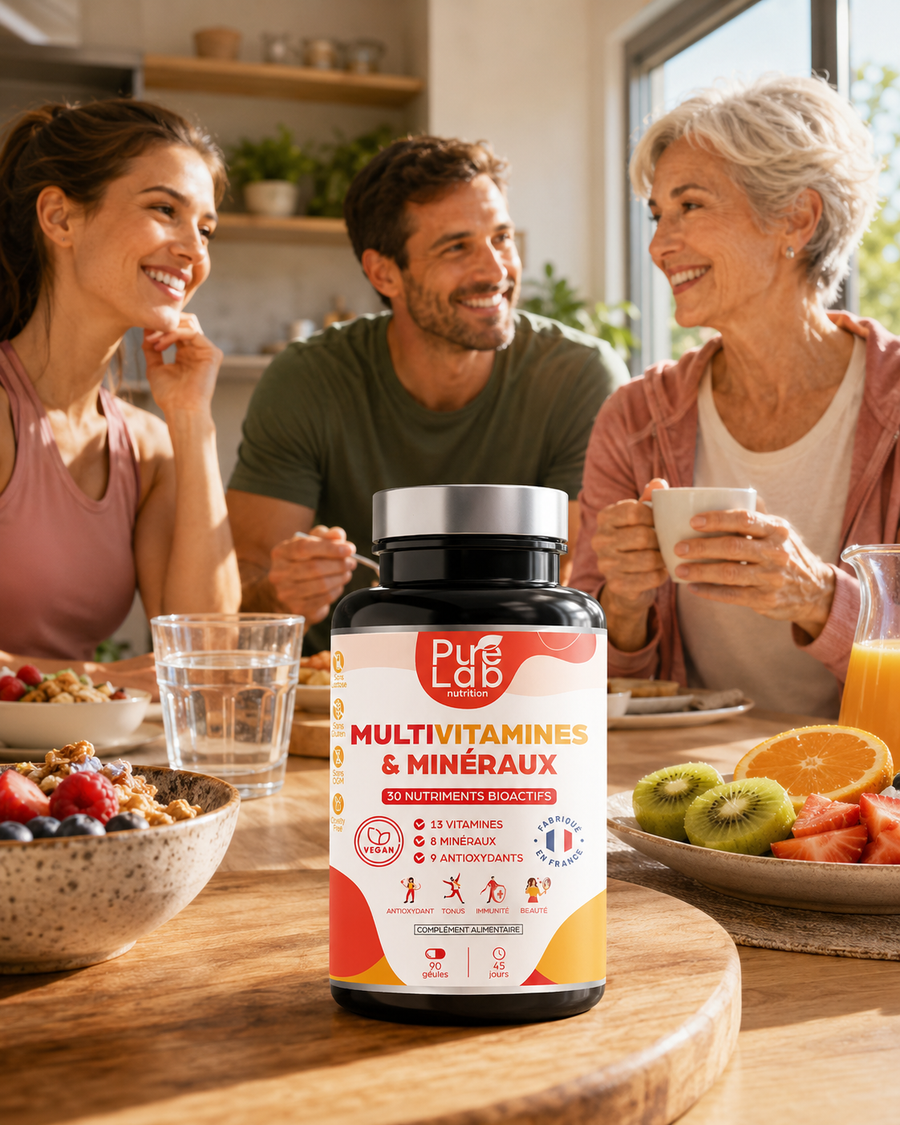
✅ Our Multivitamins & Minerals at Pure Lab Nutrition: 30 bioactive nutrients, including coenzyme Q10, in a vegan formula designed to cover recommended daily intakes without overdosing.
👉 Discover our Multivitamins & Minerals here.
🧭 How to approach these supplements with discernment
Faced with the adaptogen trend, a few reflexes help avoid disappointment:
- Look at the basics first: sleep, physical activity, nutrition, and time management act on stress much more than a supplement.
- Prioritize transparency: specified extract, clear dosage, legible precautionary statements.
- Beware of promises: a label that claims to "fight stress" or "rebalance hormones" falls outside the authorized framework.
- Proceed gradually: one product at a time, to observe your tolerance.
- Seek advice in case of treatment, pregnancy, or chronic illness.
🧬 Combine without layering
It is possible to combine a plant and a mineral, but it should be done thoughtfully. Our article Ashwagandha and magnesium: can they be combined? and the guide Stress and sleep: which supplements and how to combine them? offer concrete suggestions. Finally, remember that a food supplement does not replace a varied and balanced diet or a healthy lifestyle.
✅ In summary
1️⃣ "Adaptogen" denotes a research concept, without a legal definition or authorized claim in the European Union.
2️⃣ Ashwagandha is a studied plant, but its effects cannot be claimed; it requires precautions for use.
3️⃣ Magnesium benefits from authorized claims (fatigue, nervous system, normal psychological function); coenzyme Q10 has none.
4️⃣ Favor transparency, progressivity, and the advice of a healthcare professional in case of doubt.
Pure Lab Nutrition — The art of nourishing your well-being.
Scientific sources:
- Panossian A, Wikman G. Evidence-based efficacy of adaptogens in fatigue, and molecular mechanisms related to their stress-protective activity. Current Clinical Pharmacology 2009;4(3):198-219.
- Lopresti AL, Smith SJ, Malvi H, Kodgule R. An investigation into the stress-relieving and pharmacological actions of an ashwagandha (Withania somnifera) extract: a randomized, double-blind, placebo-controlled study. Medicine (Baltimore) 2019;98(37):e17186.
- EFSA Panel on Dietetic Products, Nutrition and Allergies (NDA). Scientific Opinion on the substantiation of health claims related to coenzyme Q10. EFSA Journal 2010;8(10):1792.
- EFSA Panel on Dietetic Products, Nutrition and Allergies (NDA). Scientific Opinion on Dietary Reference Values for magnesium. EFSA Journal 2015;13(7):4186.
- Commission Regulation (EU) No 432/2012 of 16 May 2012 establishing a list of permitted health claims made on foods.


Restez informé 🌿
Recevez nos derniers articles et conseils santé directement dans votre boîte mail.