



















Bioavailability: why the supplement form changes everything
Two supplements may display "100 mg" on the label, but they are not necessarily equivalent once inside your body. The reason can be summed up in one word: bioavailability. Zinc bisglycinate, magnesium citrate, liposomal vitamin C: here is what science says about the influence of the form, and what it does not say.
📑 Contents
- Bioavailability: what are we talking about?
- What influences absorption
- Zinc: the example of bisglycinate
- Vitamin C: conventional or liposomal
- Magnesium: oxide, citrate, bisglycinate
- How to choose: a reading guide
🔬 Bioavailability: what are we talking about?
Bioavailability refers to the fraction of a nutrient that is absorbed by the body and reaches the bloodstream, where it becomes usable. What you swallow is not what you absorb: some is eliminated in the stool, some binds to other dietary components, and some is transformed before reaching the blood.
It is often measured by the blood concentration of the nutrient in the hours following ingestion, or by its urinary excretion. These methods have their limitations: a higher blood level does not automatically mean a greater health benefit. It is an indicator of absorption, not proof of clinical efficacy.
🧬 Labelled amount vs. useful amount
The label indicates the amount contained in the product, not the amount absorbed. This is why reading the form of the nutrient and the amount of pure element is a useful habit; our guide How to read a food supplement label helps you do just that.
⚙️ What influences absorption
Several parameters come into play. First, the chemical form: a mineral bound to an organic acid or an amino acid does not behave like an inorganic salt because its solubility and its method of passage through the intestine differ. Next, the dose: transport systems become saturated beyond a certain threshold, so splitting a dose can improve the absorbed fraction.
The digestive context also counts. Phytates, found in whole grains and legumes, bind to zinc and reduce its absorption, as described in Lönnerdal’s summary published in the Journal of Nutrition in 2000. Calcium, iron, or coffee can also interfere with certain minerals. Finally, each person's nutritional status, age, and digestive health affect absorption.
🕐 A simple lever: timing of intake
Taking a mineral during a meal can improve digestive tolerance, while a meal rich in phytates can reduce the absorption of certain elements. For routine advice, see our article on taking multiple supplements at the same time.
🧲 Zinc: the example of bisglycinate
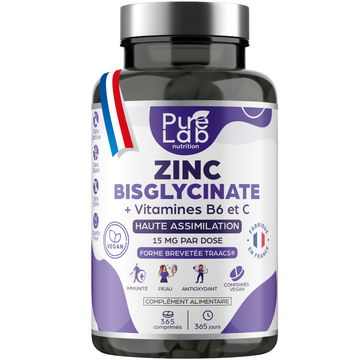
Zinc bisglycinate is a chelate: a zinc atom bound to two molecules of glycine, an amino acid. This structure is thought to protect zinc from interactions in the intestine. A high-quality but small-scale study compared zinc bisglycinate to zinc gluconate after a single dose in twelve healthy volunteers (Gandia et al., 2007): the bisglycinate form showed superior relative bioavailability.
The results are encouraging, but must be put into perspective: small sample size, single dose, healthy volunteers. They suggest an absorption advantage, without allowing for the conclusion of a superior health effect. Zinc, regardless of its form, contributes to the maintenance of normal skin and the normal function of the immune system; the form influences absorption, not these claims. Our comparison Zinc bisglycinate, gluconate, or citrate details this topic.
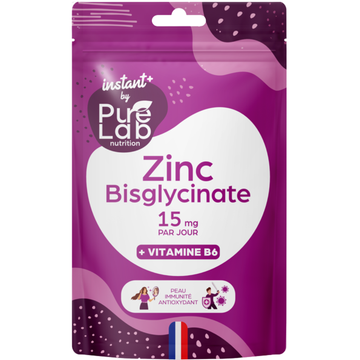
✅ Our Zinc Bisglycinate at Pure Lab Nutrition: zinc in bisglycinate form, which contributes to the maintenance of normal skin and the normal function of the immune system.
👉 Discover our Zinc Bisglycinate here.
🍊 Vitamin C: conventional or liposomal
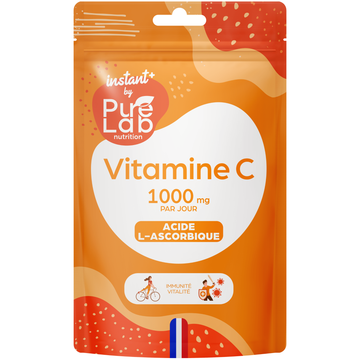
Vitamin C is a special case. Its intestinal absorption relies on saturable transporters: the pharmacokinetic study by Levine et al. (PNAS, 1996) showed that the absorbed fraction decreases as the dose per intake increases, and that plasma concentration tends toward a plateau. In other words, doubling the dose does not double absorption.
The liposomal form encapsulates the vitamin in phospholipid vesicles with the goal of improving its passage. A small pilot study (Davis et al., Nutrition and Metabolism Insights, 2016) observed higher plasma concentrations with liposomal vitamin C than with a non-encapsulated form at the same dose. However, data remains limited: few participants, no clinical criteria, and results that cannot be generalized. The liposomal form is therefore a promising avenue for absorption, not a guarantee of additional effect.
🍋 Natural or synthetic?
A review by Carr and Vissers (Nutrients, 2013) concludes that food-derived vitamin C and synthetic vitamin C have comparable bioavailability in humans. The ascorbic acid molecule is the same; it is the dose, the galenic form, and the distribution of doses that make the difference. To compare options, our article Conventional or liposomal vitamin C: which one to choose? proposes concrete criteria.
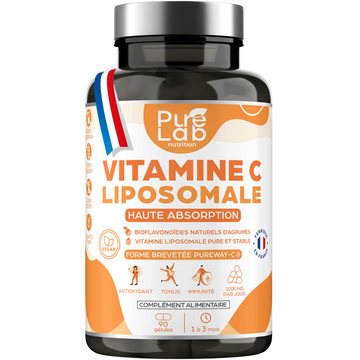
✅ Our Liposomal Vitamin C at Pure Lab Nutrition: vitamin C contributes to the protection of cells against oxidative stress and the reduction of fatigue.
👉 Discover our Liposomal Vitamin C here.
💧 Magnesium: oxide, citrate, bisglycinate
Magnesium provides the best-known illustration of differences in form. Magnesium oxide is rich in pure element but poorly soluble: its absorption is generally lower. A randomized, double-blind study (Walker et al., Magnesium Research, 2003) compared several preparations and concluded that magnesium citrate was more bioavailable than oxide.
Forms bound to organic acids or an amino acid like glycine are often proposed for their good solubility and, according to feedback, decent digestive tolerance. One should remain cautious: rigorous comparative data between all forms is still partial, and tolerance varies from one person to another. Regardless of the form, magnesium helps reduce fatigue and contributes to the normal functioning of the nervous system. To decide between options, read What is the best form of magnesium? and Marine magnesium or bisglycinate: which one to choose?
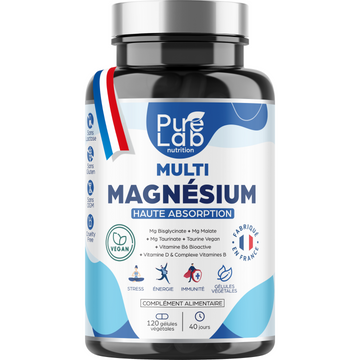
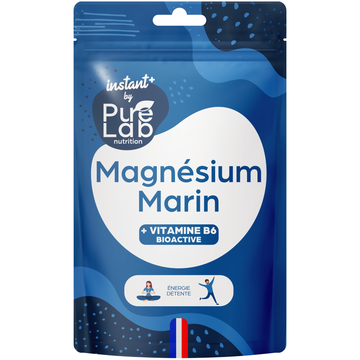
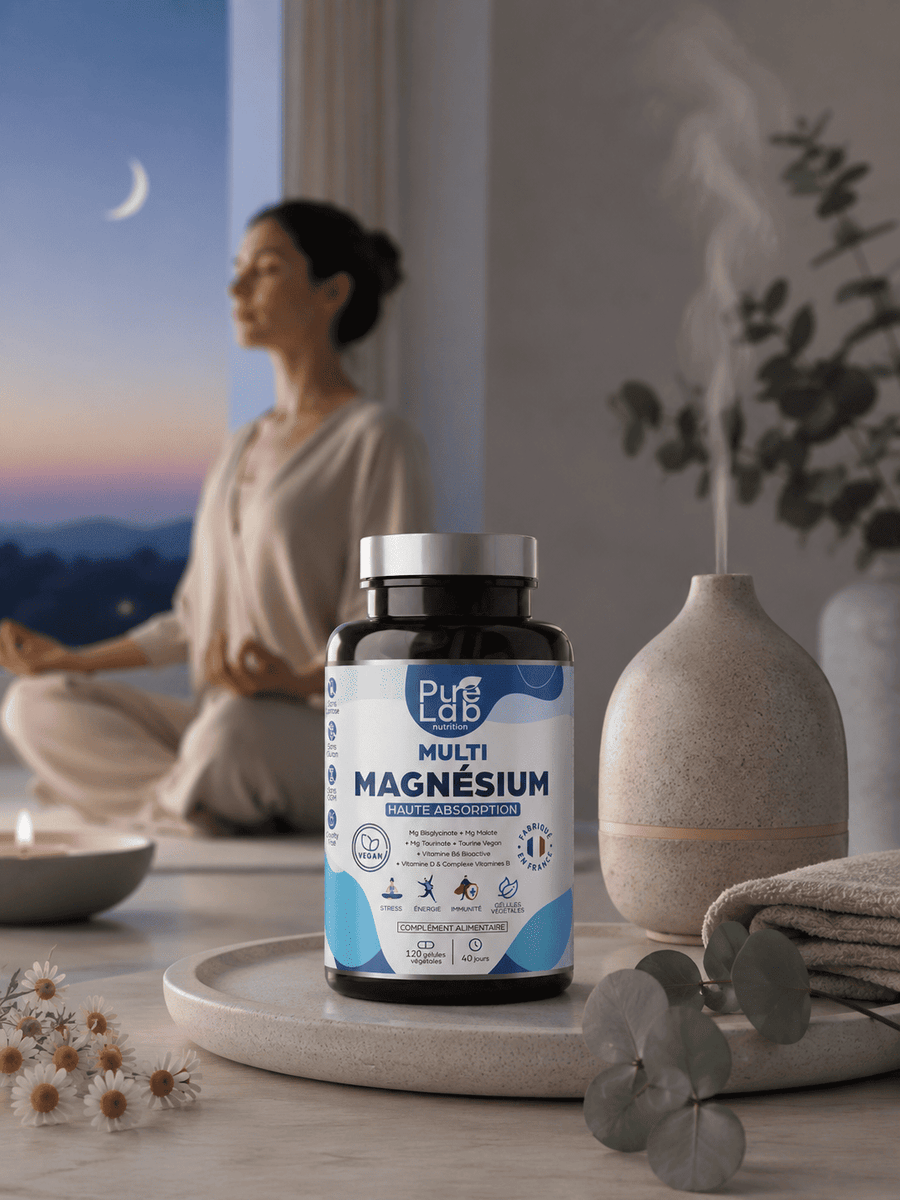
✅ Our Multi Magnesium at Pure Lab Nutrition: a magnesium supplement that contributes to reducing fatigue and the normal functioning of the nervous system.
👉 Discover our Multi Magnesium here.
📉 When bioavailability isn't everything
A highly absorbed form may also require more caution regarding dosage: the maximum tolerable intake levels set by scientific authorities apply regardless of the form. Better absorption does not justify increasing doses without professional advice.
🧭 How to choose: a reading guide
To decide, five questions are enough. Is the form of the nutrient clearly stated? Is the amount of pure element specified, in addition to that of the salt? Is the dose per serving reasonable given the NRVs and the intake already provided by the diet? Does published absorption data exist for this form, and of what quality? Finally, is the chosen form well-tolerated by your body?
Keep in mind that a supplement does not replace a varied diet, and that multiplying products is useless. If you are taking medication or are pregnant, talk to your doctor or pharmacist before starting a course: better absorption can also mean a more marked interaction.
✅ In summary
1️⃣ Bioavailability measures the portion of a nutrient actually absorbed; it depends on the form, the dose, and the digestive context.
2️⃣ Studies suggest better absorption of zinc bisglycinate over gluconate, and magnesium citrate over oxide, sometimes with small sample sizes.
3️⃣ For vitamin C, the liposomal form is promising for absorption, but data remains limited.
4️⃣ Read the form and the amount of pure element, respect the recommended dose, and ask for advice in case of medication or doubt.
Pure Lab Nutrition — The art of nourishing your well-being.
Scientific sources:
- Gandia P. et al., "A bioavailability study comparing two oral formulations containing zinc (Zn bis-glycinate vs. Zn gluconate) after a single administration to twelve healthy female volunteers", International Journal for Vitamin and Nutrition Research, 2007; 77(4):243-248.
- Walker A.F. et al., "Mg citrate found more bioavailable than other Mg preparations in a randomised, double-blind study", Magnesium Research, 2003; 16(3):183-191.
- Davis J.L. et al., "Liposomal-encapsulated ascorbic acid: influence on vitamin C bioavailability and capacity to protect against ischemia-reperfusion injury", Nutrition and Metabolism Insights, 2016; 9:25-30.
- Levine M. et al., "Vitamin C pharmacokinetics in healthy volunteers: evidence for a Recommended Dietary Allowance", PNAS, 1996; 93(8):3704-3709; Carr A.C., Vissers M.C.M., "Synthetic or food-derived vitamin C — are they equally bioavailable?", Nutrients, 2013; 5(11):4284-4304.
- Lönnerdal B., "Dietary factors influencing zinc absorption", Journal of Nutrition, 2000; 130(5S Suppl):1378S-1383S.


Restez informé 🌿
Recevez nos derniers articles et conseils santé directement dans votre boîte mail.