


















Zinc and iron: can they be taken together?
Zinc in the morning, iron in the evening, or both in the same dose? This question comes up often because these two minerals share some of the same absorption pathways in the intestine. What does science say about this famous competition, at what doses does it become a problem, and how should you practically organize your intake? Answers.
📑 Contents
- Two essential minerals with complementary roles
- How absorption competition works
- What studies show: meals or a solution?
- Other factors that affect absorption
- How to organize your intake, practically
- Precautions and special situations
🔬 Two essential minerals with complementary roles
Iron and zinc are two nutrients the body cannot do without, and they are often found in the same foods: meat, fish, legumes, and seeds. However, their functions are different.
🩸 What iron does
Iron contributes to the normal formation of red blood cells and hemoglobin, the normal transport of oxygen in the body, normal energy metabolism, the reduction of tiredness and fatigue, and the normal functioning of the immune system.
⚙️ What zinc does
Zinc contributes to normal immune function, the protection of cells from oxidative stress, normal DNA synthesis, normal fertility and reproduction, and the maintenance of normal skin, hair, and nails. These claims are authorized by Regulation (EU) No 432/2012.
As they are involved in similar mechanisms (immunity, cell division), it is tempting to combine them. It remains to be seen whether taking them at the same time helps or hinders them.
🔬 How absorption competition works
In the intestine, several transition minerals use common transporters or similar mechanisms. When a large quantity of one arrives at the same time as the other, it can reduce its absorption. This is described in reference reviews (Whittaker, 1998; Sandström, 2001) for the iron-zinc pair.
⚖️ A question of proportions
What counts is not just the presence of both minerals, but their ratio. Studies that have highlighted inhibition observed it when iron is provided in large excess relative to zinc, with ratios of around 2:1 or more. Early work by Solomons and Jacob (1981), for example, showed that high-dose non-heme iron could reduce zinc absorption.
🔄 And the other way around?
The relationship works both ways. Olivares et al. (2012) observed that a dose of zinc given simultaneously could reduce iron absorption, again under specific experimental conditions with relatively high doses. An effect of this type is therefore also plausible with supplements taken together.
🔬 What studies show: meals or a solution?
A fundamental point is often forgotten: most interactions were highlighted with minerals dissolved in water and taken on an empty stomach. When these same minerals are consumed during a meal, the effect is significantly attenuated or not observed at all (Sandström, 2001). Foods contain proteins, organic acids, and other components that change the situation.
📊 What to remember for a supplement?
A supplement taken on an empty stomach containing a significant dose of iron approximates the conditions where the interaction is most marked. A supplement taken during a meal is closer to real life. With usual dietary supplement doses (around 15 mg of zinc), a clinically relevant effect has not been demonstrated in a person with normal status. But since a margin of uncertainty exists, caution suggests spacing them out.
📌 What is not established
The studies are small, often conducted on volunteers for a single dose, and do not indicate what happens over months of treatment. We therefore cannot say that combining them would cause a specific proportion of one or the other to be lost. The practical advice below is based on caution.
🔬 Other factors that affect absorption
Iron and zinc are not the only ones in play.
☕ Tea, coffee, and polyphenols
Tannins and polyphenols in tea and coffee reduce the absorption of non-heme iron. It is best to consume them away from taking an iron supplement.
🌾 Phytates and calcium
Phytates in whole grains and legumes limit the absorption of both zinc and iron. High doses of calcium can also reduce iron absorption. Hence the value of not concentrating everything in the same meal.
🍊 Vitamin C, iron’s ally
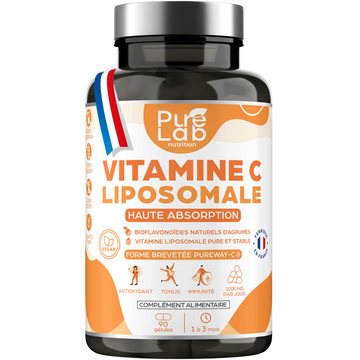
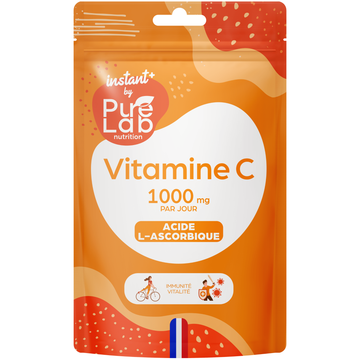
Vitamin C helps increase the absorption of non-heme iron. This is a well-documented effect (Hallberg et al., 1986; Teucher et al., 2004), which justifies linking an iron dose with a source of vitamin C. To find out when to take it, read When and how to take vitamin C.
🔬 How to organize your intake, practically
Here is a simple organization that immediately limits any risk of interaction.
🕒 Spacing
Common practice is to separate iron and zinc by at least two hours. For example, iron at breakfast or lunch with a source of vitamin C (avoiding tea and coffee), and zinc at dinner during the meal. This spacing rule is a precautionary measure, not the result of a scientifically fixed threshold.
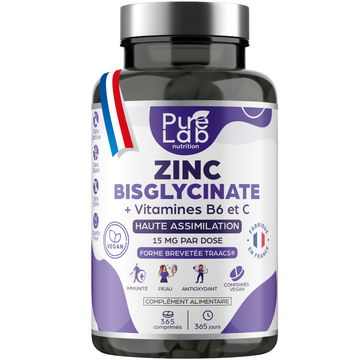
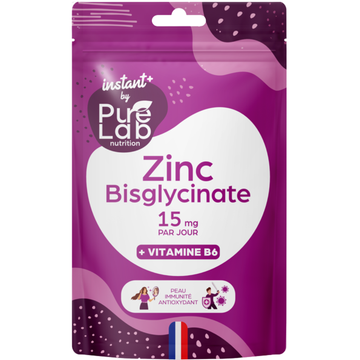
✅ Our Zinc Bisglycinate at Pure Lab Nutrition: 15 mg of zinc per day in bisglycinate form, to be taken during a meal, easy to space out from another supplement.
👉 Discover our Zinc Bisglycinate here.
📝 Bisglycinate forms
Chelated forms with glycine, such as zinc or iron bisglycinate, are considered better tolerated in terms of digestion. Some work suggests that chelation might limit interactions with other components of the meal, but direct data on iron-zinc interaction remains limited. So, do not rely on this to skip spacing them out. Compare the forms in Zinc bisglycinate, gluconate, or citrate: which form to choose?.
📋 Watch out for multi-supplements
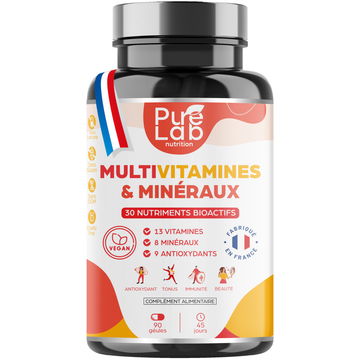
A multivitamin often contains iron and zinc together at moderate doses, close to nutritional reference values. This is not a problem in itself. But if you add a zinc or iron supplement on top, add up the doses: the total zinc intake should not exceed 25 mg per day. Read Can you take several supplements at the same time? and Multivitamins: when and how to take them? to organize everything.
🔬 Precautions and special situations
🚫 Iron should not be taken lightly
Unlike zinc, iron is poorly eliminated. An iron intake in supplement form should only be considered after a check-up (ferritin, hemoglobin) and with medical advice. Adult men and postmenopausal women generally do not need it in supplement form. To explore plant-based sources, read Spirulina and iron: a real alternative for women and vegetarians?.
🤰 Pregnancy, breastfeeding, treatments
During pregnancy and breastfeeding, or in the event of a digestive illness, diagnosed anemia, or medication use (some drugs interact with zinc or iron), ask your doctor or pharmacist for advice before combining supplements.
📉 Signs of excess
Nausea, stomach pain, or digestive issues after taking them should prompt you to stop and seek advice. A dietary supplement is no substitute for a varied and balanced diet, and the recommended daily dose should not be exceeded.
✅ In summary
1️⃣ Iron and zinc can compete for absorption, especially on an empty stomach and when iron is provided in large excess.
2️⃣ During a meal and at usual doses, the interaction is weak, but spacing out the doses remains a simple precaution.
3️⃣ For example: iron in the morning with vitamin C, zinc at dinner during the meal, two hours or more apart.
4️⃣ Always add up the intake from all your supplements and seek medical advice before any iron supplementation.
Pure Lab Nutrition — The art of nourishing your well-being.
Scientific sources:
- Whittaker P. Iron and zinc interactions in humans. American Journal of Clinical Nutrition, 1998;68(2 Suppl):442S-446S.
- Sandström B. Micronutrient interactions: effects on absorption and bioavailability. British Journal of Nutrition, 2001;85(Suppl 2):S181-S185.
- Solomons NW, Jacob RA. Studies on the bioavailability of zinc in humans: effects of heme and nonheme iron on the absorption of zinc. American Journal of Clinical Nutrition, 1981;34(4):475-482.
- Olivares M, Pizarro F, Ruz M, de Romaña D. Acute inhibition of iron absorption by zinc. Nutrition Research, 2012;32(5):373-379.
- Teucher B, Olivares M, Cori H. Enhancers of iron absorption: ascorbic acid and other organic acids. International Journal for Vitamin and Nutrition Research, 2004;74(6):403-419.


Restez informé 🌿
Recevez nos derniers articles et conseils santé directement dans votre boîte mail.