





























Multivitamins: when and how to take them?
You have chosen a good multivitamin. Now you need to take it correctly! The timing of your dose, the meal you pair it with, and the beverages you consume alongside it can change how much your body actually absorbs. Above all, consistency makes all the difference.
At Pure Lab Nutrition, we want every capsule to count. Here are our simple tips to get the most out of your multivitamin, concrete examples based on your schedule, common mistakes, and answers to your questions.
📑 Contents
- Why the absorption of micronutrients depends on the context
- During a meal, always
- Morning or evening?
- According to your schedule
- What is best to avoid
- Combining it with other supplements
- How long should you take it for?
- Frequently asked questions
- In summary
Why the absorption of micronutrients depends on the context
We often talk about micronutrients in terms of dosage, but rarely about what determines their actual utilization by the body. However, the bioavailability of a vitamin or mineral doesn't just depend on its presence in the tablet or capsule: it also depends on the timing, the meal, and the surrounding molecules.
🔬 The digestive context changes everything
Several mechanisms play a role here:
- Dietary fats trigger bile secretion, which is essential for the absorption of vitamins A, D, E, and K. Without fat, these vitamins largely pass through the intestine without being assimilated.
- Dietary proteins provide the amino acids necessary for the synthesis of transport proteins used by certain minerals (iron, zinc, magnesium).
- Gastric pH directly influences the solubilization of many minerals. An active stomach—meaning one currently digesting a meal—offers more favorable conditions than an empty one.
- Proton pump inhibitors (PPIs), taken long-term by millions of people for reflux, significantly reduce gastric acidity and, with it, the absorption of magnesium, iron, B12, and vitamin C. If you are on PPI treatment, taking your multivitamin with a real meal is even more important.
📊 What the current lifestyle reveals
The contemporary problem is not just the micronutrient content of food (affected by soil depletion and ultra-processing); it is also the deteriorating ability to absorb them: chronic stress that slows down the secretion of digestive enzymes, skipped meals, frequent medication use, and the aging of the intestinal lining. Optimizing the timing of your multivitamin is therefore a concrete way to compensate for these factors.
During a meal, always
🥑 Fat-soluble vitamins need fat
Vitamins A, D, E, and K are called "fat-soluble": they dissolve in fats, and their absorption is better in the presence of lipids.
A study published in 2015 in the Journal of the Academy of Nutrition and Dietetics (Dawson-Hughes et al.) illustrates this well: in 50 older adults, the peak of vitamin D3 in the blood was on average 32% higher when the supplement was taken with a meal containing fats rather than with a fat-free meal. The researchers did not, however, observe a difference based on the type of fat: it is their presence that counts, not any particular oil.
🍽️ Better digestive comfort
Taking your multivitamin during a meal also limits the minor discomforts (nausea, mild heartburn) that some people feel on an empty stomach, particularly with minerals.
Our advice: take your multivitamin during a meal that contains a little fat (olive oil, avocado, eggs, cheese, nuts). You don't need a large meal: buttered toast, a yogurt and a handful of almonds, or a dressed salad are sufficient.
Morning or evening?
Morning or noon is often the most practical. B-group vitamins contribute to normal energy metabolism: many people therefore prefer to take them at the beginning of the day. But the most important criterion remains consistency: choose the meal you never skip.
- Full breakfast: ideal if it contains a little fat
- Lunch: perfect if your breakfast is light or nonexistent
- 2-capsule formula: you can take them together, or split them with one at breakfast and one at lunch
Dinner is not forbidden: if it is the only meal you eat at a fixed time, it is better to take your multivitamin every evening than to forget it every other morning.
According to your schedule
| Your situation | Our suggestion |
|---|---|
| You skip breakfast | Both capsules at lunch |
| You work shifts | At the "first real meal" of your day, regardless of the time |
| You work out in the morning | At the meal following the session |
| You travel often | Keep a few capsules in your bag, with lunch |
| You easily forget | Leave the box next to your mug or set a reminder |
| You are on chronic medication (PPIs, metformin...) | Always with a full meal, and inform your pharmacist of your supplement |
For travel, our article Supplements while traveling: the ideal kit gives you more tips.
What is best to avoid
- Coffee and tea at the same time: their compounds can hinder the absorption of certain minerals; let some time pass
- Taking it on an empty stomach, for the reasons of absorption and comfort explained above
- Doubling the dose to "make up" for a missed one: just resume the next day
- Combining multiple supplements that provide the same nutrients without knowing it
- Exceeding the indicated daily dose: the label of a supplement must, in fact, carry a warning to this effect, as pointed out by the DGCCRF
- Leaving it in a hot and humid place (bathroom, car): store it in a dry place, away from heat and out of the reach of young children
- Combining it without verification with a recently prescribed medication: certain vitamins and minerals interact with treatments (anticoagulants for vitamin K2, levothyroxine for calcium and iron, etc.) — your pharmacist is the right person to consult
Combining it with other supplements
Read the labels carefully: a multivitamin already contains many nutrients. Before adding another supplement, check that it doesn't provide the same ones. The DGCCRF also recommends being particularly careful about accumulation when taking several supplements, as well as possible interactions with medications.
| Combination | Our take | Note |
|---|---|---|
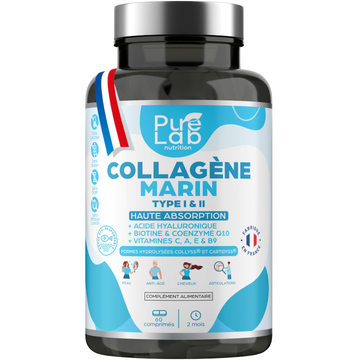
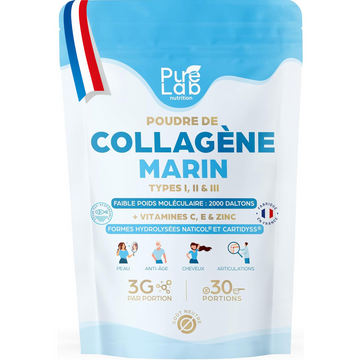
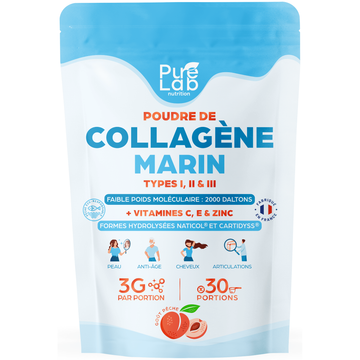
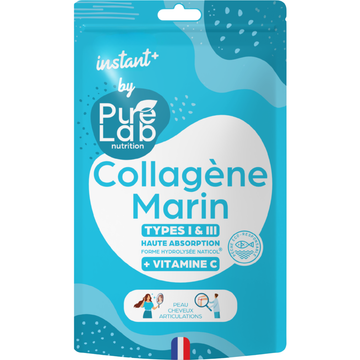
| Multivitamin + collagen | ✅ Complementary | The vitamin C in the multivitamin promotes collagen synthesis |
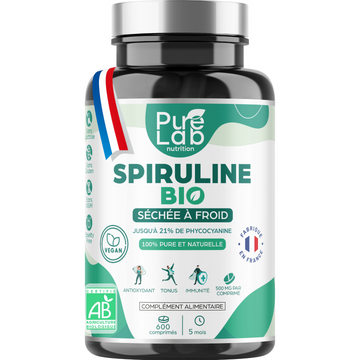
| Multivitamin + spirulina | ✅ Complementary | Spirulina provides proteins and phycocyanin, which are not present in a multivitamin |
| Multivitamin + omega-3 | ✅ Complementary | Take at the same meal; the fats in omega-3 improve the absorption of fat-soluble vitamins |
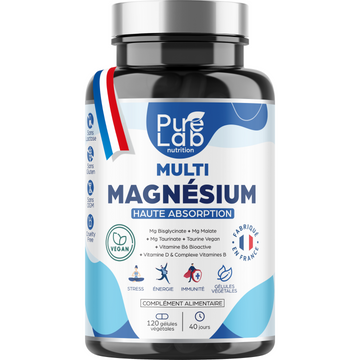
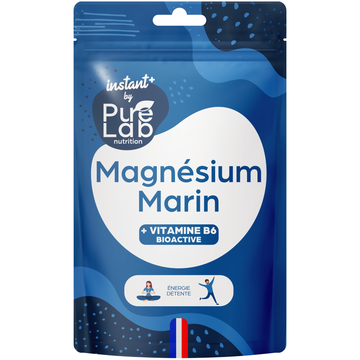
| Multivitamin + zinc or magnesium alone | ⚠️ Check total doses | An excess of zinc can reduce copper absorption and vice versa |
| Multivitamin + another multivitamin | ❌ Pointless, risk of duplication | Doubles the intake with no extra benefit, risk of exceeding ULs |
To learn more, read Can you take several supplements at the same time?
How long should you take it for?
A multivitamin can be taken as a cure, for example during periods of fatigue or at the change of season, or over a longer period if your diet remains persistently insufficient. Take stock of your eating habits regularly, and seek advice from a healthcare professional if in doubt, especially if you are pregnant or breastfeeding, or if you are following a treatment.
In a modern diet, subclinical deficiencies—not yet detectable in standard blood tests but sufficient to alter cellular functions—are common. Intakes of magnesium, vitamin D, zinc, and B vitamins consistently remain below the reference intakes in major French nutritional surveys (INCA3, 2017). This is precisely why continuous supplementation, adapted to your profile, has its place in a preventive health routine.
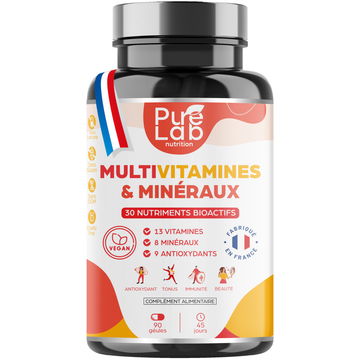
🌟 Our Multivitamin & Minerals
✅ 2 capsules per day, to be taken together or in two doses; a bottle of 90 vegetable capsules covers 45 days
✅ Selected forms: vitamin D3, K2 (K2VITAL®), active folates (Quatrefolic®), minerals in bisglycinate form
✅ Iron and copper-free
👉 Discover our Multivitamin & Minerals here.
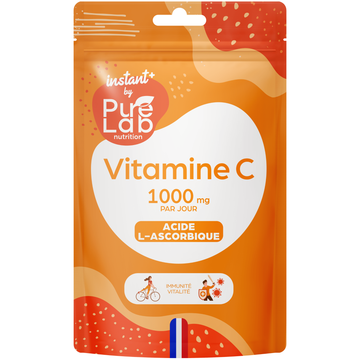
Read also: Should you take a multivitamin?, When and how to take vitamin C to reap all its benefits? and When and how to take your magnesium?
Frequently asked questions
❓ I forgot my dose yesterday, what should I do?
Nothing special: just take the usual dose with your next meal. Do not double the dose to compensate.
❓ Can I open the capsule if I have trouble swallowing it?
The simplest thing is to follow the instructions on the label. In case of difficulty swallowing, ask your pharmacist for advice.
❓ Should I take breaks?
It depends on your situation. Some people alternate between cures and breaks, while others take it continuously when their diet remains insufficient. Checking in from time to time with a healthcare professional is a good habit.
❓ My urine is bright yellow: is that normal?
Yes, it is a well-known and harmless effect of vitamin B2 (riboflavin), present in most multivitamins: the excess is eliminated in the urine, which gives it a strong yellow color. It is not a sign that the supplement "is useless."
❓ I am on treatment: can I take it?
Seek advice from your doctor or pharmacist first. The DGCCRF strongly recommends that people on medication, as well as pregnant or breastfeeding women and children, consult a healthcare professional.
❓ Is vitamin D better taken in the morning or in the evening?
The available data do not show a significant difference between morning and evening for vitamin D, provided it is taken with a meal containing fat. The key is consistency in taking it. However, some people find that taking it in the evening disrupts their sleep—if that is your case, prefer the morning or noon.
❓ My multivitamin contains iron: should I space it out from my coffee?
Non-heme iron (of plant origin or in salt form) is particularly sensitive to the tannins in coffee and tea, which reduce its absorption. A gap of 30 to 60 minutes between your cup and your capsule is recommended. Note that the Pure Lab Nutrition multivitamin does not contain iron—this precaution concerns other formulas.
In summary
1️⃣ During a meal with fat: to maximize the absorption of fat-soluble vitamins and digestive comfort
2️⃣ Morning or noon, with the meal you never skip
3️⃣ Away from coffee and tea, without doubling the dose in case of forgetfulness
4️⃣ Watch out for duplication with your other supplements
5️⃣ In case of chronic treatment (PPIs, metformin, anticoagulants...), inform your pharmacist to check for any interactions
Pure Lab Nutrition ... The art of nourishing your well-being.
Sources:
- Dawson-Hughes B., Harris S.S., Lichtenstein A.H., Dolnikowski G., Palermo N.J., Rasmussen H. (2015). Dietary Fat Increases Vitamin D-3 Absorption. Journal of the Academy of Nutrition and Dietetics, 115(2), 225-230. PubMed
- DGCCRF. Labeling, presentation, and advertising of food supplements: the rules to know. economie.gouv.fr
- ANSES. INCA3 Survey — Individual and National Study on Food Consumption 3. anses.fr
- Regulation (EU) No 432/2012 establishing a list of permitted health claims. EUR-Lex


Restez informé 🌿
Recevez nos derniers articles et conseils santé directement dans votre boîte mail.


