

















Bisglycinate iron: the most easily absorbed form to combat fatigue
Chronic fatigue, brittle nails, shortness of breath during exertion… These subtle signs can reveal an iron deficiency. But not all supplements are created equal: iron bisglycinate represents a major breakthrough in terms of absorption and digestive tolerance.
📑 Contents
- What is iron bisglycinate and how does it differ from iron sulfate?
- Absorption: the figures that make the difference
- Physiological roles of iron according to Regulation (EU) No 432/2012
- Who needs iron supplementation the most?
- How to choose your iron supplement and at what dosage?
🔬 What is iron bisglycinate and how does it differ from iron sulfate?
Iron is an essential mineral that our body does not synthesize: it must be provided daily through diet or, when intake is insufficient, through supplementation. While red meat, legumes, and fortified cereals are good sources, the specific needs of certain populations often make supplementation necessary.
The question then is: which form to choose? On the market, there are mainly two broad categories:
- Inorganic salts: ferrous sulfate, ferrous fumarate, ferrous gluconate. These are the historically most used forms, particularly in reimbursed medications.
- Amino acid chelates: including iron bisglycinate, also called iron glycinate or Ferrochel®. The iron is bound (chelated) to two molecules of glycine, a non-essential amino acid.
🧬 Chelation: optimal protection for iron
In bisglycinate, the iron is encapsulated by the two glycine molecules, which protects it from chemical reactions within the digestive tract. Unlike iron salts, it does not form insoluble complexes with phytates in cereals, tannins in tea, or polyphenols in coffee — compounds that usually block the absorption of non-heme iron.
This chelated structure also allows iron bisglycinate to take a different absorption route: it is absorbed largely in its intact form via dipeptide transporters (PepT1), in addition to the classic DMT-1 (Divalent Metal Transporter 1) pathway. Result: more effective absorption, even in the presence of other foods.
📊 Absorption: the figures that make the difference
Bioavailability is the deciding criterion for evaluating an iron supplement. Comparative studies have shown that bisglycinate exhibits significantly higher absorption than classic inorganic forms.
🧪 What clinical studies say
A study published in Archivos Latinoamericanos de Nutrición (Szarfarc et al., 2001) evaluated the relative absorption of iron bisglycinate versus ferrous sulfate in Brazilian pregnant women. Bisglycinate showed comparable or superior effectiveness at doses twice as low. In children, Bovell-Benjamin et al. (2000), published in the American Journal of Clinical Nutrition, found significantly higher absorption of bisglycinate compared to ferrous sulfate in whole maize.
In practice, this improved absorption means that lower doses of bisglycinate can produce an effect equivalent — or even superior — to higher doses of ferrous sulfate.
💊 Much better digestive tolerance
Iron sulfate is notorious for its gastrointestinal side effects: nausea, cramps, constipation, diarrhea, and blackened stools. These effects are so common that they are the primary reason for abandoning iron supplementation.
Bisglycinate, on the other hand, is absorbed higher up in the digestive tract (proximal jejunum) and releases much less free iron into the intestinal lumen — this free iron being responsible for local oxidative stress and mucosal irritation. Tolerance studies have confirmed a clear reduction in side effects with bisglycinate, which improves treatment adherence.
⚡ Physiological roles of iron according to Regulation (EU) No 432/2012
The European Union has established, via Regulation (EU) No 432/2012, a list of authorized health claims for food supplements. For iron, the following are recognized:
🩸 Red blood cell formation and oxygen transport
Iron is a central component of hemoglobin, the protein in red blood cells that transports oxygen from the lungs to the tissues. Without sufficient iron, red blood cell production decreases and their hemoglobin content becomes depleted. Iron contributes to the normal formation of red blood cells and hemoglobin and to the normal transport of oxygen in the body.
⚡ Energy metabolism and reduction of fatigue
Iron is also an essential cofactor for many enzymes of mitochondrial energy metabolism, particularly those of the respiratory chain. It contributes to normal energy-yielding metabolism and plays a role in the reduction of tiredness and fatigue. These claims are particularly relevant for people with low iron stores, even in the absence of established anemia.
🛡️ Immune system
Iron plays a role in the functioning of immune cells, notably lymphocytes. It contributes to the normal function of the immune system. Iron deficiencies are associated with lower resistance to infections, which epidemiological studies confirm, particularly in children and pregnant women.
👥 Who needs iron supplementation the most?
👩 Women of childbearing age
Women lose iron with every menstrual cycle. The recommended dietary allowances (RDA) for women aged 15 to 50 are 16 mg/day, nearly double those for adult men (11 mg/day). In France, the Esteban health study (2015-2016) conducted by Santé publique France highlighted that women of childbearing age have iron intake levels below the recommendations.
🏃 Endurance athletes
Intensive athletic activity increases iron requirements in several ways: mechanical destruction of red blood cells (impact hemolysis during running), sweat losses, micro-hemorrhagic gastrointestinal bleeding linked to exertion, and increased needs related to heightened hemoglobin synthesis. Iron deficiency in athletes is well documented in scientific literature, especially among long-distance runners.
🌱 Vegetarians and vegans
Dietary iron comes in two forms: heme iron (meat, fish), which is better absorbed (15-35%), and non-heme iron (plants, legumes, cereals), which is less well absorbed (2-20%). A vegetarian or vegan diet provides exclusively non-heme iron, the absorption of which is further inhibited by phytates and oxalates present in these same foods. Supplementation with bisglycinate is particularly well-suited for these populations because it partially bypasses these inhibitors.
🍽️ Regular blood donors
A 450 ml blood donation results in a loss of about 200 to 250 mg of iron. Frequent donors may have difficulty replenishing their stores between donations, especially if their diet is already borderline in iron intake.
📋 How to choose your iron supplement and at what dosage?
🎯 Criteria for a good iron supplement
To choose a quality iron supplement, it is advisable to check:
- The chemical form: prefer iron bisglycinate (iron glycinate) over ferrous sulfate or fumarate, especially if you have a sensitive stomach.
- The elemental iron dose: dietary supplements generally contain 14 to 28 mg of elemental iron per daily dose. The 14 mg dose corresponds to 100% of the NRV (Nutrient Reference Values).
- Cofactors: vitamin C promotes the absorption of non-heme iron by keeping it in its reduced form (Fe²⁺). Some supplements include vitamin C for this synergy.
- Absence of problematic excipients: avoid supplements containing dyes, artificial flavors, or unnecessary bulking agents.
⏰ When and how to take your iron?
To optimize absorption:
- Take iron away from meals (30 to 60 minutes before, or 2 hours after) to avoid interaction with dietary phytates.
- Avoid combining it with tea, coffee, or milk within two hours of intake.
- Combine it with vitamin C (citrus juice, kiwi, bell pepper) to maximize absorption.
- Avoid combining it with calcium or zinc supplements, which compete for the same intestinal transporters.
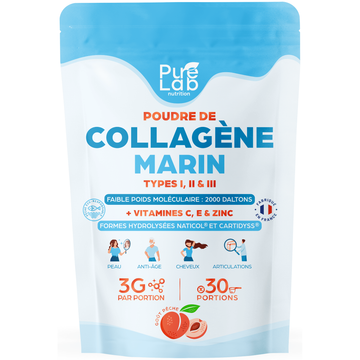
✅ Our iron bisglycinate at Pure Lab Nutrition: an elemental iron formula in bisglycinate form, highly bioavailable and gentle on the digestive system, to help reduce fatigue and support your daily vitality.
👉 Discover our entire range of supplements here.
✅ In summary
1️⃣ Iron bisglycinate is a chelated form whose bioavailability is superior to that of classic ferrous sulfate.
2️⃣ Its molecular structure protects iron from dietary inhibitors (phytates, tannins) and reduces digestive side effects.
3️⃣ Iron contributes — according to Regulation (EU) No 432/2012 — to reducing fatigue, supporting energy metabolism, forming red blood cells, and supporting immunity.
4️⃣ Women of childbearing age, endurance athletes, vegetarians, and regular blood donors are the populations most concerned by iron supplementation.
Pure Lab Nutrition — The art of nourishing your well-being.
Scientific sources:
- Szarfarc SC, et al. (2001). Relative effectiveness of iron bis-glycinate chelate (Ferrochel) and ferrous sulfate in the control of iron deficiency in pregnant Brazilian women. Archivos Latinoamericanos de Nutrición, 51(1 Suppl 1):42-7.
- Bovell-Benjamin AC, et al. (2000). Iron absorption from ferrous bisglycinate and ferric trisglycinate in whole maize is regulated by iron status. American Journal of Clinical Nutrition, 71(6):1563-9.
- Milman N, et al. (2014). Iron-bisglycinate 25 mg iron is as effective as ferrous sulfate 50 mg iron in the prophylaxis of iron deficiency and anemia during pregnancy in a randomized trial. Journal of Perinatal Medicine, 42(2):197-206.
- Santé publique France (2019). Étude de santé sur l'environnement, la biosurveillance, l'activité physique et la nutrition (Esteban) 2014-2016. Volet nutrition.
- Commission Regulation (EU) No 432/2012 of 16 May 2012 establishing a list of permitted health claims made on foods. Official Journal of the European Union, L 136/1.


Restez informé 🌿
Recevez nos derniers articles et conseils santé directement dans votre boîte mail.