





















Men's vs. women's multivitamins: what are the differences in needs?
Same plate, same vitamins? Not exactly. Between iron requirements, hormonal fluctuations, muscle mass, and sun exposure, men and women do not have the exact same nutritional benchmarks. Here is how to navigate this, supported by official references, to choose a multivitamin that makes sense.
📑 Contents
- Why needs are not identical
- Iron: the major difference between the sexes
- Zinc, vitamin C, and other differences in references
- Vitamin D: a common need, a shared point of vigilance
- Life stages that change the game
- How to choose and use your multivitamin
🔬 Why needs are not identical
The nutritional references published by the European Food Safety Authority (EFSA) and by ANSES in France are established by age group and sex. This is not an administrative detail: these values reflect physiological realities. On average, men have higher body mass and lean mass, and therefore expend more energy at rest. Women, meanwhile, experience iron loss related to menstruation, hormonal fluctuations, and, at times, periods of pregnancy and breastfeeding that profoundly alter their needs.
🧬 References, not prescriptions
It is important to understand what these benchmarks are. They describe the intake levels that cover the needs of almost an entire healthy population. They say nothing about your individual situation: diet, physical activity, smoking, ongoing medication, or health status can change everything. A multivitamin is therefore never a universal solution, but a supplement to a varied diet, which one adjusts according to one's profile.
📊 What real-world diet shows
National consumption surveys, such as the INCA 3 study conducted by ANSES, show that the intake of certain micronutrients remains below the references for a portion of the population, with different profiles depending on sex and age. It is precisely this heterogeneity that justifies not reasoning in a uniform manner.
🔬 Iron: the major difference between the sexes
This is the clearest gap. According to European reference values, the recommended iron intake is approximately 11 mg per day for an adult man, compared to about 16 mg per day for a premenopausal woman. The reason is simple: menstruation causes regular losses that the diet must compensate for.
Iron contributes to the normal formation of red blood cells and hemoglobin, normal oxygen transport in the body, and the reduction of fatigue and tiredness. It also contributes to the normal function of the immune system and normal cognitive functions. These claims are authorized by Regulation (EU) No 432/2012 and Regulation (EU) No 1924/2006, which governs them.
🧬 Why men need to be careful about excess
Conversely, adult men and postmenopausal women, barring specific circumstances, have no reason to seek additional iron intake. Iron is not easily eliminated: the body primarily regulates its absorption, and prolonged excess is not trivial. A man choosing a multivitamin would therefore do well to look for a formula with a reasonable iron dosage, or even no iron depending on his profile, and to seek advice in case of doubt.
🩸 For women: no high-dose self-medication
A menstruating woman may benefit from monitoring her iron intake, especially if her periods are heavy or if her diet contains little meat. However, a blood test (ferritin) remains the only reliable way to know where one stands. If a deficiency is confirmed, it is the doctor who defines the solution and the duration. A multivitamin provides a background supplement, not the treatment for a confirmed deficiency.
🔬 Zinc, vitamin C, and other differences in references
Iron is not the only nutrient for which benchmarks vary. According to European reference values, the zinc requirements of an adult man are higher than those of a woman, notably because zinc is involved in many male functions, including maintaining normal blood testosterone levels. EFSA also provides ranges that depend on the phytate content of the diet—compounds found in whole grains and legumes that limit zinc absorption.
Zinc contributes to normal immune function, protection of cells against oxidative stress, maintenance of normal skin, hair, and nails, normal fertility and reproduction, as well as the maintenance of normal testosterone levels in the blood. It also contributes to normal DNA synthesis.
🍊 Vitamin C
For vitamin C, EFSA sets a slightly higher reference intake for men (approximately 110 mg per day) than for women (approximately 95 mg per day). Vitamin C contributes to the protection of cells from oxidative stress, normal immune function, reduction of fatigue, and normal collagen formation for the normal functioning of skin and blood vessels. Smoking increases requirements, a point to keep in mind regardless of sex.
⚖️ Folates, iodine, and B-group vitamins
Women of childbearing age need to pay special attention to folates (vitamin B9), whose requirements increase if pregnancy is planned. Iodine, meanwhile, contributes to the normal production of thyroid hormones and normal thyroid function for everyone, with increased requirements during pregnancy. As for B-group vitamins, they contribute to normal energy metabolism and the normal functioning of the nervous system, in both men and women.
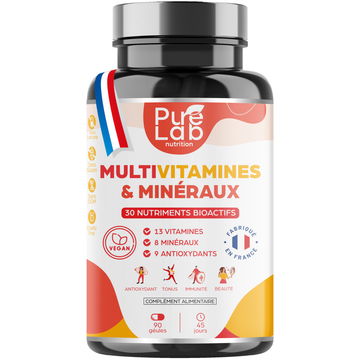
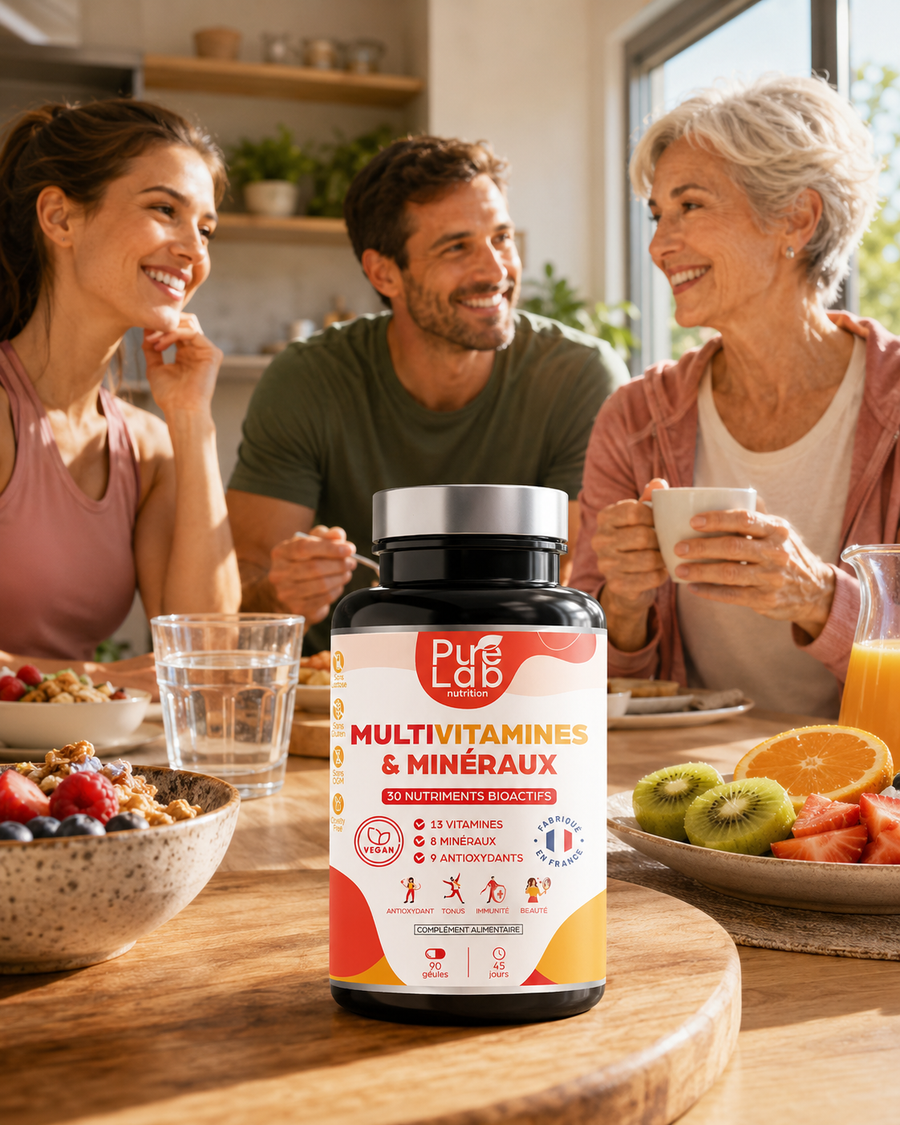
✅ Our Multivitamin & Minerals at Pure Lab Nutrition: a complete formula of vitamins and minerals to support a varied diet on a daily basis.
👉 Discover our Multivitamin & Minerals here.
🔬 Vitamin D: a common need, a shared point of vigilance
Vitamin D is one of the rare nutrients for which the reference is identical for adult men and women: EFSA sets an adequate intake of 15 µg (600 IU) per day in the absence of cutaneous synthesis. It contributes to the normal absorption and utilization of calcium and phosphorus, to the maintenance of normal bones, normal muscle function, and normal immune function.
☀️ A frequent deficiency in Europe
Synthetic studies published on vitamin D status in Europe, such as those by Cashman and collaborators in 2016, show that low blood levels are common across the continent, particularly at the end of winter. In France, the national health and nutrition study (ENNS) had already highlighted a significant proportion of adults whose status was below the reference thresholds. This concerns both men and women, with risk factors specific to each: indoor work, dark skin, advanced age, limited sun exposure. Supplementation methods should be discussed with a healthcare professional.
🔬 Life stages that change the game
Beyond the difference between men and women, it is often life stages that guide the choice.
🤰 Pregnancy and breastfeeding
Requirements for folates, iron, iodine, and vitamin B12 evolve. A mass-market multivitamin is not designed to meet these specific needs on its own. Supplements intended for pregnant or breastfeeding women should always be chosen with the advice of a doctor, midwife, or pharmacist.
🏋️ Intense physical activity
Athletes, both men and women, lose minerals through sweat and have higher energy expenditures. Zinc, magnesium, B-group vitamins, and iron then deserve special attention, especially since restrictive diets are common in certain disciplines.
🌱 Plant-based diet
For vegetarians or vegans, vitamin B12 is essential, and plant-based iron and zinc are less well absorbed. The references must be adapted, which makes reading the multivitamin label particularly important.
🎂 After 50 years
Menopause reduces women's iron requirements, which then become closer to those of men. At the same time, the absorption of certain nutrients, such as vitamin B12, can decrease with age.
🔬 How to choose and use your multivitamin
A few simple benchmarks can help avoid common mistakes.
📋 Read the label
Compare the doses with the reference nutritional values (NRVs) indicated as a percentage. A formula that significantly exceeds 100% of the NRVs for several nutrients is not necessarily better. Our guide on how to read a food supplement label details these concepts.
⏰ Take it correctly
Taking it during a meal, preferably one containing fats, promotes the assimilation of fat-soluble vitamins. For details on the right time, consult Multivitamin: when and how to take it?. And to know if a multivitamin is useful in your case, Should you take a multivitamin? The guide to choosing well will help you take stock.
🔗 Consider interactions
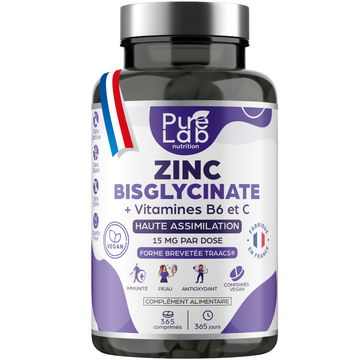
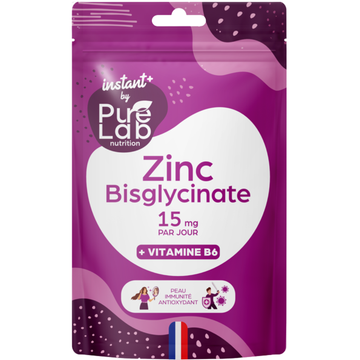
Certain minerals compete during absorption, notably iron and zinc taken at high doses at the same time. If you are taking several supplements, read Can you take several supplements at the same time?. Zinc can also be chosen separately if you wish to adjust your intake, for example with our Zinc Bisglycinate.
⚠️ What a multivitamin does not do
Large trials conducted on multivitamins in healthy adults, such as the Physicians' Health Study II, concluded that there was no proven cardiovascular benefit. A multivitamin does not replace a balanced diet, medical advice, or a check-up in case of persistent symptoms. Always respect the indicated daily dose, keep supplements out of the reach of children, and seek advice from a healthcare professional in case of medical treatment, pregnancy, or pathology.
✅ In summary
1️⃣ Requirements differ mainly for iron (approx. 11 mg for men, 16 mg for menstruating women), but also for zinc and vitamin C.
2️⃣ Vitamin D is a need shared by both sexes, with status often insufficient at the end of winter.
3️⃣ Pregnancy, intense sports, plant-based diets, and age strongly modify requirements: adapt your choice.
4️⃣ A multivitamin complements a varied diet; it does not replace it, nor does it replace medical advice.
Pure Lab Nutrition — The art of nourishing your well-being.
Scientific sources:
- EFSA NDA Panel. Scientific Opinion on Dietary Reference Values for iron. EFSA Journal, 2015;13(10):4254.
- EFSA NDA Panel. Scientific Opinion on Dietary Reference Values for zinc. EFSA Journal, 2014;12(10):3844.
- EFSA NDA Panel. Scientific Opinion on Dietary Reference Values for vitamin C. EFSA Journal, 2013;11(11):3418.
- Cashman KD, et al. Vitamin D deficiency in Europe: pandemic? American Journal of Clinical Nutrition, 2016;103(4):1033-1044.
- Sesso HD, et al. Multivitamins in the prevention of cardiovascular disease in men: the Physicians' Health Study II randomized controlled trial. JAMA, 2012;308(17):1751-1760.


Restez informé 🌿
Recevez nos derniers articles et conseils santé directement dans votre boîte mail.