

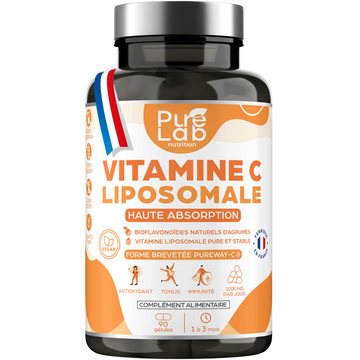
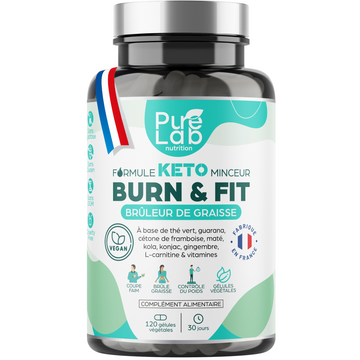
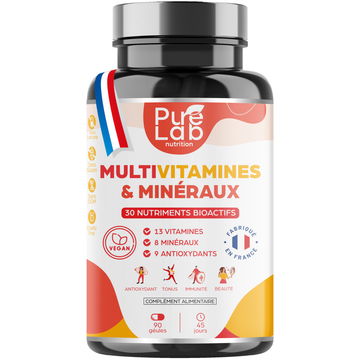

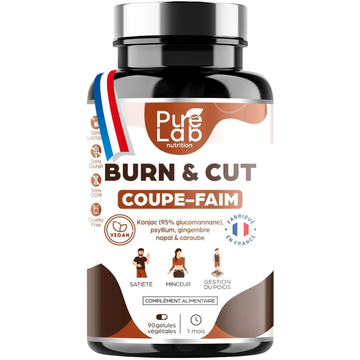
































Can you take several supplements at the same time?
A supplement for fatigue, one for the skin, one for sports… and you’re wondering if they all play well together? That’s an excellent question. Combining several supplements is often possible, provided you follow a few simple rules and keep an overview of what you are taking.
At Pure Lab Nutrition, we help you create a consistent and safe routine. Identifying duplicates, beneficial combinations, timing of intake, concrete examples, and mistakes to avoid: here is our practical guide.
📑 Contents
- The short answer
- Why taking several supplements is often justified
- The trap of duplicates
- Good combinations
- Spacing out your intake
- The right time for each
- Three sample routines
- Taking stock of your routine
- Common mistakes
- When to seek advice
- Frequently asked questions
- In summary
The short answer
Yes, in most cases, for healthy adults who follow the indicated dosages. However, the DGCCRF reminds us that supplements are not harmless: one must be careful with cumulative intake and interactions, particularly with medications.
The right approach is to start from a specific need (fatigue, skin, sport, plant-based diet...) rather than piling up products “just in case.” Every added supplement must have a purpose.
Why taking several supplements is often justified
Our modern lifestyles create multiple and simultaneous needs. This is not a question of insufficient dietary discipline—it is a modern physiological reality explained by three phenomena.
🌱 Depleted soils, less dense foods
Repeated intensive farming has gradually reduced the mineral content of plants: zinc, magnesium, iron. A vegetable today is no longer nutritionally equivalent to the same vegetable from 50 years ago. Meeting several micronutritional needs through diet alone has therefore become structurally more difficult.
⚙️ Ultra-processing erodes nutritional density
Even quality foods lose part of their vitamins during industrial processes. Vitamin B1 is destroyed by heat, vitamin C oxidizes, and minerals are leached out. A routine of targeted supplements compensates for these losses in a precise and dosed manner.
😮💨 Chronic stress multiplies needs
Cortisol accelerates the urinary excretion of magnesium, vitamin C is mobilized as a priority by the adrenal glands, and B-group vitamins are consumed at an accelerated rate in energy metabolic pathways. Given this context, a routine of two or three complementary supplements is not a luxury: it is a rational response to real needs.
The trap of duplicates
The main risk is taking the same nutrient in several products without knowing it. Common examples:
- a multivitamin + a zinc supplement + a hair supplement that also contains zinc
- several products containing vitamin D
- a magnesium supplement + a multivitamin that already contains it
- two formulas that each provide vitamin B6
The reflex: add up the quantities indicated on each label, per daily serving. To know where to find them, read How to read a dietary supplement label.
🔎 An example with our formulas
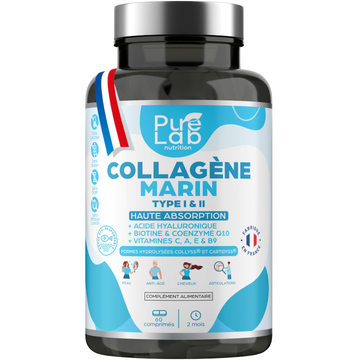
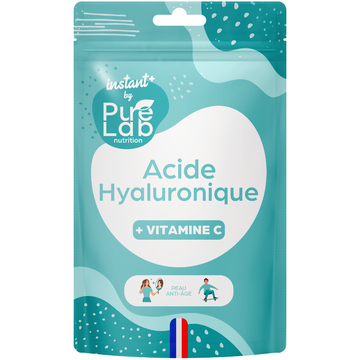
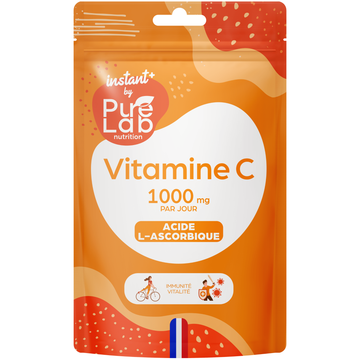
Our Biotine Instant+ combines biotin, zinc bisglycinate, and selenium. If you add our Zinc Instant+ (zinc + B6), you are taking zinc twice. Similarly, Magnesium marin Instant+ and Zinc Instant+ both contain vitamin B6. This is not necessarily a problem, but it is precisely the kind of accumulation you need to check on the labels before combining.
Good combinations
| Combination | Why |
|---|---|
| Collagen + vitamin C | Vitamin C contributes to normal collagen formation for the normal function of skin, bones, and cartilage |
| Magnesium + vitamin B6 | Two nutrients that contribute to the reduction of fatigue and normal psychological function |
| Iron + vitamin C | Vitamin C increases iron absorption |
| Biotin + zinc + selenium | Three nutrients that contribute to the maintenance of normal hair |
| Ashwagandha + magnesium | A mineral that contributes to normal psychological function and a plant studied for its effect on perceived stress |
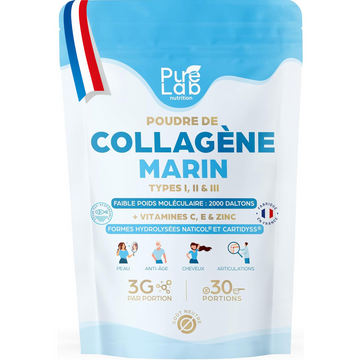
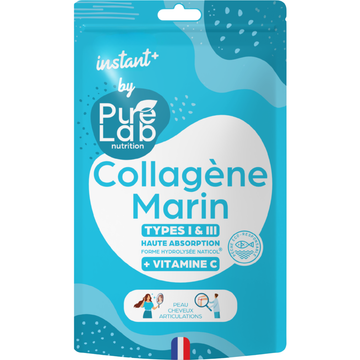
Good news: several of our formulas already combine these duos, such as Collagène marin Instant+ (collagen + vitamin C) or Magnésium marin Instant+ (magnesium + B6). Choosing a formula that already brings together two complementary nutrients also means one less product to manage. For the collagen and vitamin C combination, read Collagen and vitamin C: why combine them?
Spacing out your intake
Some combinations pose no safety problems but benefit from being separated during the day:
✅ Fiber (appetite suppressants): they can slow down the absorption of other supplements or medications taken at the same time. Keep a few hours' distance.
✅ High-dose minerals (iron, zinc, calcium...): they can interfere with each other when taken together in high doses. Spreading them out over different meals is a simple precaution to validate with your pharmacist.
✅ Medications: some supplements interact with treatments. Ask your pharmacist if you should stagger your intake.
The right time for each
- Vitamin D: with a meal containing fat; in a study published in 2015 (Dawson-Hughes et al.), vitamin D3 was better absorbed with a meal containing fat than with a fat-free meal
- Magnesium: preferably in the evening
- Appetite-suppressing fiber: before meals, with a large glass of water, and away from other supplements or medications
- The rest: at the time you will remember every day; that is what matters most
For the multivitamin, read Multivitamin: when and how to take it?
Three sample routines
⚡ "Fatigue and stress" routine
A multivitamin at breakfast, a magnesium + B6 in the evening. Before adding anything else, check what the multivitamin already provides in terms of magnesium and B6. Our Multivitamines et Minéraux is taken as 2 capsules per day and contains neither iron nor copper.
✨ "Skin and hair" routine
Marine collagen combined with vitamin C in the morning, and possibly a biotin + zinc + selenium formula. In this case, there is no need to add an extra zinc supplement, unless advised by a professional.
🏋️ "Sport" routine
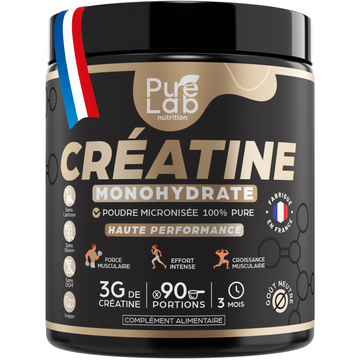
Creatine monohydrate every day, at any time, and magnesium in the evening. Simple, clear, without duplicates.
Taking stock of your routine
Before adding a new product, take ten minutes to lay out what you are already taking. A simple table is enough:
| Step | What you do |
|---|---|
| 1. List | All your supplements, including ampoules, gummies, and fortified drinks |
| 2. Identify | For each product, the nutrients and their quantities per daily serving |
| 3. Add up | The quantities of the same nutrient present in several products |
| 4. Justify | Each product based on a specific need; if there is no longer one, it can be removed from the routine |
Keep this list on your phone: it will be useful when visiting the doctor or the pharmacy and will prevent you from buying the same ingredients twice.
🚦 When to take a break
Digestive discomfort, headaches, or a skin reaction that appears after adding a product are signals to be taken seriously. Stop the most recently introduced supplement and talk to your doctor or pharmacist. In France, these adverse effects can be reported to the nutrivigilance system of ANSES, entrusted to the agency in 2009: healthcare professionals, as well as individuals, can report online, although the agency recommends going through a healthcare professional preferably.
Common mistakes
❌ Starting everything on the same day: in case of discomfort, it is impossible to know which product is the cause
❌ Forgetting the multivitamin in the dosage calculation
❌ Adding "special hair" or "special immunity" products that contain the same vitamins
❌ Not informing your doctor or pharmacist about what you are taking
❌ Keeping a fixed routine all year round without questioning whether it is still useful
When to seek advice
The DGCCRF strongly recommends consulting a healthcare professional for:
✅ pregnant or breastfeeding women
✅ children and adolescents
✅ people undergoing medical treatment
ANSES takes the same view for supplements intended to develop muscle mass or reduce body fat: it recommends avoiding consuming several of them at the same time or combining them with medications, and informing your doctor and pharmacist about the supplements you are taking.
And in any case, start with one or two supplements, not five at once. Then introduce the others one by one, a few days apart.
Frequently asked questions
❓ What is the maximum number of supplements one can take?
There is no official limit. What matters is the sum of the nutrients provided and the consistency of the whole. In practice, a routine of two or three well-chosen products covers most needs.
❓ Can you swallow everything at once?
Often yes, during a meal. The main exceptions are fiber, to be taken separately, and high-dose minerals, which are better spread out throughout the day.
❓ Do supplements interact with medications?
Some do. If you are following a treatment, show your list of supplements to your doctor or pharmacist before starting.
❓ Do fortified foods count in the calculation?
Yes. Breakfast cereals, plant-based drinks, or fortified milks can provide vitamin D, B12, or calcium. If you consume them every day, take them into account when adding up your intake, especially for vitamin D, whose excess is not harmless.
❓ Should you take breaks in your supplement routine?
There is no general rule, but re-evaluating your routine twice a year is good practice. Some needs are seasonal (vitamin D in winter), others resolve over time. An annual blood test is the best indicator for adjustments.
In summary
1️⃣ Yes, you can combine several supplements, while respecting the dosages
2️⃣ Modern deficiencies are structural: soils, ultra-processing, stress — a targeted routine is rational
3️⃣ Beware of duplicates: add up the quantities, including multivitamins
4️⃣ Some combinations are beneficial, others should be spaced out
5️⃣ Medical advice in case of pregnancy, treatment, or for a child
Pure Lab Nutrition ... The art of nourishing your well-being.
Sources:
- DGCCRF. Labeling, presentation, and advertising of food supplements. economie.gouv.fr
- Dawson-Hughes B. et al. (2015). Dietary Fat Increases Vitamin D-3 Absorption. Journal of the Academy of Nutrition and Dietetics, 115(2), 225-230. PubMed
- ANSES. Vitamin D: why and how to ensure sufficient intake? anses.fr
- ANSES. Nutrivigilance. anses.fr
- Regulation (EU) No 432/2012 on authorized health claims. EUR-Lex
- ANSES (2017). Food supplements for developing muscle or reducing body fat. anses.fr


Restez informé 🌿
Recevez nos derniers articles et conseils santé directement dans votre boîte mail.


