




















Zinc bisglycinate, gluconate, or citrate: which form should you choose?
On the label, "zinc" is never written alone. It is always paired with another molecule: oxide, gluconate, citrate, bisglycinate… And this combination makes a big difference, particularly regarding the amount of zinc your body actually absorbs.
At Pure Lab Nutrition, we have chosen zinc bisglycinate. Here is why, backed by studies, how to compare zinc forms for yourself, and what mistakes to avoid when reading a label.
📑 Summary
- Why the form matters
- The main forms of zinc
- What the studies say
- Comparison at a glance
- Our tips for choosing well
- Common mistakes
- Frequently asked questions
- In summary
Why the form matters
Zinc cannot exist on its own in a supplement: it is always bound to another molecule, which we call the "salt" or "ligand." This bond influences how the zinc dissolves, passes through the intestine, and enters the bloodstream. This is known as bioavailability: the portion of ingested zinc that is actually absorbed and usable.
Regardless of its form, once absorbed, zinc plays the same roles: it contributes to the normal functioning of the immune system, the maintenance of normal skin, hair, and nails, and the protection of cells against oxidative stress. The form does not change what the zinc does, but it can change the amount that reaches its destination.
The main forms of zinc
- Zinc oxide: a very common mineral form
- Zinc sulfate: a mineral salt, often used to enrich foods
- Zinc gluconate: an organic salt, very common in pharmacies
- Zinc citrate: an organic salt, bound to citric acid
- Zinc picolinate: bound to picolinic acid
- Zinc bisglycinate: zinc bound to two molecules of glycine, an amino acid; this is known as a "chelated" form
What the studies say
🔬 Citrate, gluconate, and oxide
In 2014, a Swiss study published in the Journal of Nutrition (Wegmüller et al.) measured zinc absorption in young adults:
- Citrate: approximately 61% of zinc absorbed
- Gluconate: approximately 61%
- Oxide: approximately 50%
Citrate and gluconate are therefore on par, and both perform better than oxide.
🔬 Bisglycinate and gluconate
In 2007, a French study published in the International Journal for Vitamin and Nutrition Research (Gandia et al.) compared bisglycinate and gluconate in 12 volunteers. With the same 15 mg dose of zinc, bisglycinate increased zinc bioavailability by approximately 43% compared to gluconate, with good tolerance.
📚 The 2024 review
A review published in 2024 in Nutrients (Devarshi et al.) gathered human absorption studies. Its authors conclude that zinc glycinate and gluconate are better absorbed than other forms, with glycinate showing the most consistent results.
In the interest of transparency: these studies are small-scale, and the 2024 review was funded by a supplement manufacturer. However, the results all point in the same direction: oxide is the least well-absorbed form, and bisglycinate is one of the best.
Comparison at a glance
| Form | Absorption according to studies | Key takeaway |
|---|---|---|
| Oxide | Lowest | Very common but poorly absorbed |
| Gluconate | Good | Standard form in pharmacies |
| Citrate | Good, comparable to gluconate | Few studies |
| Bisglycinate | Very good, most consistent results | Chelated form, well tolerated |
Our tips for choosing well
🔎 Read the elemental zinc content
Do not confuse the amount of salt with the amount of zinc. 100 mg of zinc gluconate does not provide 100 mg of zinc. A reputable label always indicates the quantity of elemental zinc per dose.
🧾 A practical case: comparing two labels
Are you hesitating between a product that displays "100 mg of zinc gluconate" in large print and another that indicates "15 mg of zinc (as bisglycinate)"? The first number is that of the whole salt, the second is that of the zinc actually provided. To compare, look in the nutrition facts table for the "zinc" line expressed in mg and, if possible, as a percentage of the reference nutritional values. This figure, and this figure alone, allows for an honest comparison.
📏 Stay reasonable
Prolonged excess zinc can interfere with copper absorption. ANSES sets an upper safety limit of 25 mg per day for adults, from all sources combined. Respect the indicated dose and do not combine multiple products containing zinc. To find out your needs, read Zinc: roles, daily needs, and signs of deficiency.
🤢 Think about digestive comfort
Some people experience nausea when taking zinc on an empty stomach. If this is the case for you, take it with a meal, away from tea and coffee. Chelated forms like bisglycinate are known to be well tolerated.
🛡️ Our choice: bisglycinate
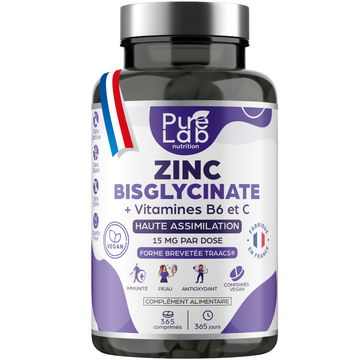
✅ Zinc Bisglycinate: 15 mg of elemental zinc per day, with vitamins B6 and C, one-year supply
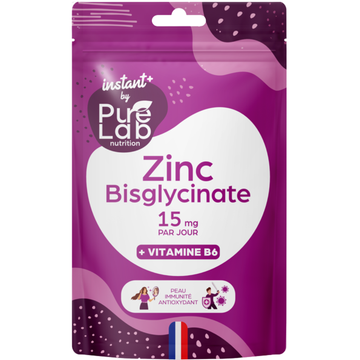
✅ Zinc Bisglycinate Instant+: 15 mg of zinc + B6, 30-day pocket format
✅ Vegan formulas, lactose-free and gluten-free
👉 Discover our Zinc Bisglycinate and our Zinc Bisglycinate Instant+.
Common mistakes
- Comparing the salt weight instead of the elemental zinc
- Believing that more milligrams is better: beyond your needs, zinc provides no additional benefit and may interfere with copper absorption
- Forgetting other sources of zinc: multivitamins, hair and nail formulas, medications
- Taking it at the same time as an iron supplement: space them out by a few hours
Frequently asked questions
❓ Are bisglycinate and glycinate the same thing?
In everyday language, yes: both terms refer to zinc bound to glycine. "Bisglycinate" specifies that the zinc atom is bound to two molecules of glycine.
❓ Is picolinate a good option?
It is sometimes highlighted, but in the 2024 review, glycinate and gluconate achieve the best absorption results in humans.
❓ Should I change forms if my current zinc works for me?
Not necessarily. If you tolerate it well and it clearly indicates its elemental zinc content, the most important thing is to take it regularly, at the right dose.
In summary
1️⃣ The form affects absorption: they are not all equal
2️⃣ Oxide is the least well-absorbed
3️⃣ Bisglycinate achieves the most consistent results
4️⃣ Look at the elemental zinc, not just the salt weight
The same logic regarding forms applies to magnesium: discover how to choose your magnesium well, and to decode the rest of the label, read our guide How to read a food supplement label.
Pure Lab Nutrition ... The art of nourishing your well-being.
Sources:
- Wegmüller R. et al. (2014). Zinc absorption by young adults from supplemental zinc citrate is comparable with that from zinc gluconate and higher than from zinc oxide. The Journal of Nutrition. folia.unifr.ch
- Gandia P. et al. (2007). A bioavailability study comparing two oral formulations containing zinc (Zn bis-glycinate vs. Zn gluconate) after a single administration to twelve healthy female volunteers. International Journal for Vitamin and Nutrition Research, 77(4), 243. PubMed
- Devarshi P.P., Mao Q., Grant R.W., Mitmesser S.H. (2024). Comparative Absorption and Bioavailability of Various Chemical Forms of Zinc in Humans: A Narrative Review. Nutrients, 16(24), 4269. PMC
- ANSES (2021). The nutritional references for vitamins and minerals. anses.fr
- Regulation (EU) No 432/2012 establishing a list of permitted health claims. EUR-Lex


Restez informé 🌿
Recevez nos derniers articles et conseils santé directement dans votre boîte mail.