






















Bones and joints after 40: the supplements that count
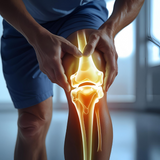
After forty, your skeleton and joints require more attention than before. Bone mass peaks around age 30 and then slowly evolves, while the muscle mass that supports your joints also begins to decrease. Here, with supporting evidence, are the nutrients that truly count, and those whose promises sometimes exceed the data.
📑 Contents
- What changes in the body after age 40
- Vitamin D3 and K2: the duo for bone capital
- Magnesium, a discreet yet central mineral
- Creatine: an unexpected ally for muscle and bone
- Collagen, diet, and physical activity
- How to build a reasoned routine
🔬 What changes in the body after age 40
Bone tissue is not static: it constantly renews itself through a balance between cells that destroy old bone and cells that create new bone. Around age 30, we reach peak bone mass; afterwards, the balance gradually shifts toward loss. In women, menopause significantly accelerates this phenomenon due to the drop in estrogen. In men, the loss is more gradual but very real.
🧬 Muscles, cartilage, and mobility
Joints do not exist in isolation: muscles, tendons, and cartilage together ensure mobility. With age, muscle mass and strength decrease, a process called sarcopenia. Less muscle often means more strain on the joints and an increased risk of falling. A coherent strategy is therefore not limited to "bone": it considers the musculoskeletal system as a whole.
🧬 What a supplement can and cannot do
A dietary supplement does not replace a varied diet, physical activity, or medical supervision. However, it can help cover deficiencies in your intake. If you experience persistent pain, joint swelling, or have been diagnosed with osteoporosis, talk to your doctor before taking any action.
🔬 Vitamin D3 and K2: the duo for bone capital
Vitamin D contributes to the normal absorption and utilization of calcium and phosphorus, as well as to the maintenance of normal bones and normal muscle function. These are claims recognized by Regulation (EU) No 432/2012. Vitamin K, for its part, contributes to the maintenance of normal bones.
🧬 Why vitamin D is often insufficient
At our latitudes, cutaneous synthesis of vitamin D is low between October and March, and it decreases with age. Dietary intake (fatty fish, eggs) remains modest. A meta-analysis by the American National Osteoporosis Foundation concluded that the combination of calcium and vitamin D was linked to a reduction in fracture risk in the studies analyzed, which highlights the value of not neglecting this nutrient. A blood test remains the best way to determine your status, because vitamin D is fat-soluble and excess is not desirable: the EFSA sets the safe upper limit at 100 µg per day for adults.
🧬 Vitamin K2: a role not to be overestimated
Vitamin K is involved in the activation of bone-related proteins, such as osteocalcin. A three-year trial in healthy postmenopausal women observed that a low dose of menaquinone-7 (MK-7) was associated with a decrease in bone loss at the lumbar level. Results are still debated regarding fracture rates, and people taking vitamin K antagonist anticoagulants must never take it without medical advice.
Note: our catalog does not currently offer a D3+K2 formula. Speak to your doctor or pharmacist to choose a form and dose adapted to your situation.
🔬 Magnesium, a discreet yet central mineral
About half of the body's magnesium is stored in the bones. Magnesium contributes to the maintenance of normal bones and teeth, normal muscle function, and to the reduction of fatigue. These statements are authorized by Regulation (EU) No 432/2012.
🧬 What the data shows
A literature review published in Nutrients summarizes the links between magnesium status, bone mineral density, and osteoporosis: lower intake is associated with lower bone density in several observational studies. This work is primarily associative; it does not prove that supplementation alone is sufficient to change fracture risk. It remains relevant, however, when the diet is low in oilseeds, legumes, and whole grains.
🧬 Dose and form
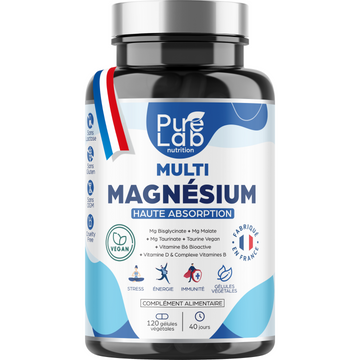
The safe upper limit for magnesium from supplements is 250 mg per day for adults. Organic forms, such as bisglycinate or marine magnesium, are generally well-tolerated digestively. To choose, our article Marine magnesium or bisglycinate: which one to choose? details the differences, and this one specifies when to take it.
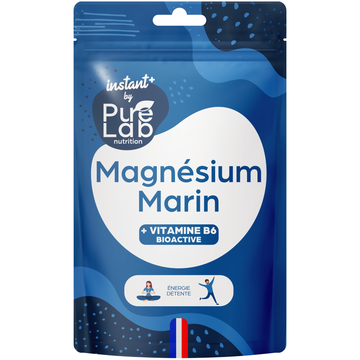
✅ Our Multi Magnesium at Pure Lab Nutrition: a formula designed to cover your daily magnesium needs, in compliance with recommended doses.
👉 Discover our Multi Magnesium here.
🔬 Creatine: an unexpected ally for muscle and bone
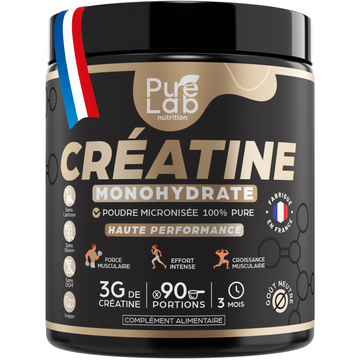
Creatine is associated with athletes, yet research is increasingly interested in its role in middle-aged adults and seniors. The authorized claim is precise: creatine increases physical performance in successive bursts of short-term, high-intensity exercise, with an effect obtained at 3 g per day in adults performing this type of effort.
🧬 Creatine and musculoskeletal aging
A review by Candow et al. on musculoskeletal aging indicates that creatine, combined with resistance training, could improve lean mass and strength in older adults. A meta-analysis by Chilibeck et al. reported that in resistance training trials, gains in lean mass and strength were greater with creatine compared to a placebo. Direct effects on bone density, however, are more uncertain: the results are heterogeneous and require confirmation.
🧬 Precautions
Creatine monohydrate is one of the most studied forms. People with kidney disease should seek medical advice. To learn more, read our article Creatine for the elderly.
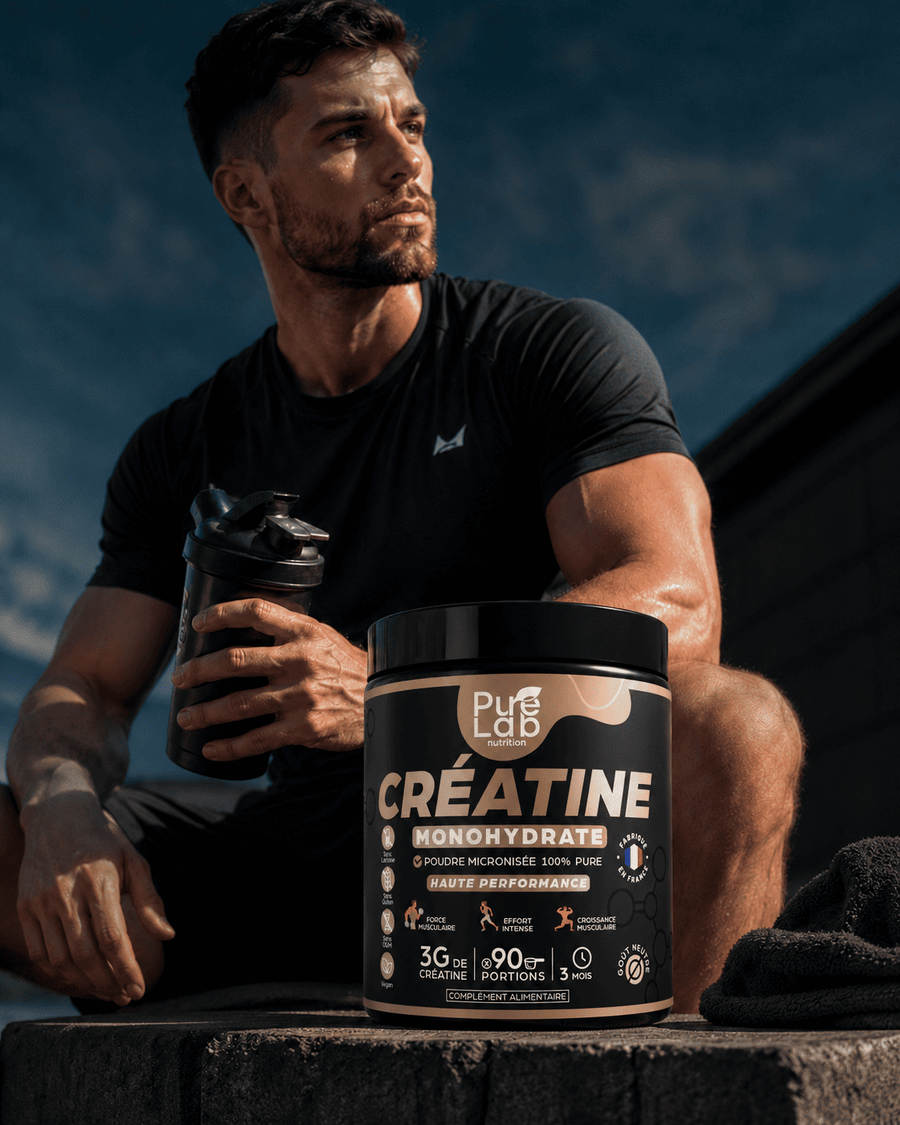
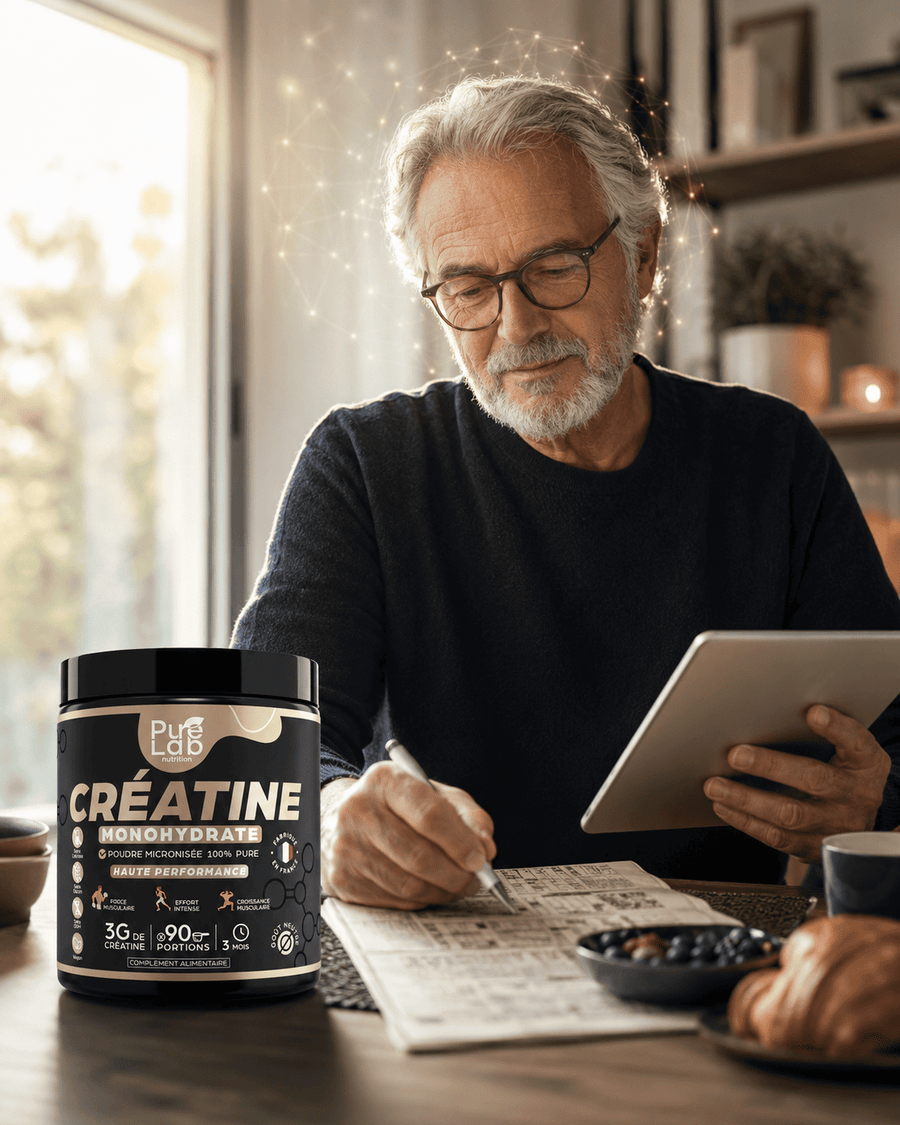
✅ Our Creatine monohydrate at Pure Lab Nutrition: a simple creatine monohydrate, dosed for daily use at 3 g.
👉 Discover our Creatine monohydrate here.
🔬 Collagen, diet, and physical activity
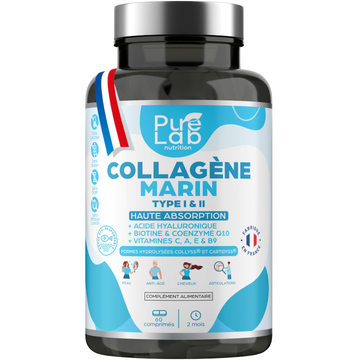
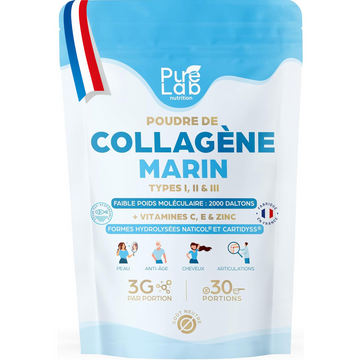
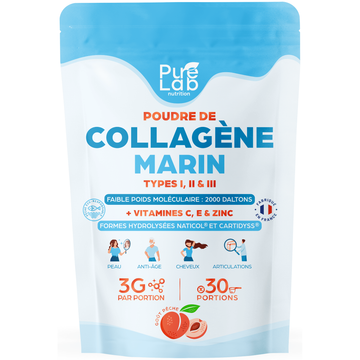
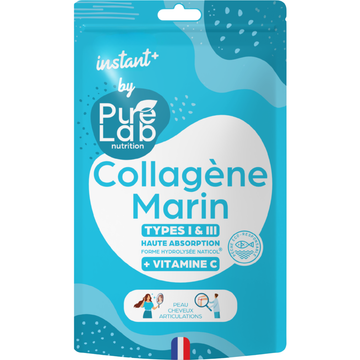
Collagen is a major component of cartilage, tendons, and the bone matrix. Collagen supplements are being researched for joint comfort, but no health claim is currently authorized in the European Union for collagen supplements regarding joints. We therefore invite you to read the data with nuance; our article Inflammation, stiffness, discomfort: which supplement for your joints? provides an update on what to expect.
🧬 The foundation: protein, calcium, movement
No supplement compensates for an insufficient intake of protein and calcium. Dairy products, calcium-rich waters, green vegetables, legumes, and fatty fish are foundations. Regarding movement, it is weight-bearing exercises (brisk walking, climbing stairs) and muscle strengthening that stimulate bone. Two to three weekly strengthening sessions are a realistic goal.
🧬 Habits to watch
Smoking, excessive alcohol, and a sedentary lifestyle weaken bone capital. Too much sodium intake increases urinary calcium excretion. These are all free levers to act upon in parallel with any supplementation.
🔬 How to build a reasoned routine
Rather than stacking products, proceed in steps. Start with an assessment: diet, sun exposure, medications, medical history. Ask your doctor if a vitamin D test is relevant. Then, introduce one supplement at a time, note what you observe over several weeks, and then add the next if needed.
🧬 A possible schedule
In the morning, take creatine (3 g) with a meal; in the evening, magnesium. Vitamin D, being fat-soluble, is best taken with a meal containing fats, as per your doctor's advice. You will find other benchmarks in Supplements after 50: the essentials.
🧬 When to consult
Night pain, loss of height, fracture after a minor impact, hot and swollen joint: these signs justify a consultation without delay. Supplements never replace a diagnosis.
✅ In summary
1️⃣ After 40, think musculoskeletal system: bones, muscles, and joints evolve together.
2️⃣ Vitamin D and K contribute to the maintenance of normal bones; have your vitamin D levels checked before supplementing.
3️⃣ Magnesium contributes to normal muscle function and the maintenance of normal bones; creatine, combined with effort, supports physical performance during short and intense bursts.
4️⃣ Diet, protein, calcium, and physical activity remain the basis; a supplement does not replace a balanced lifestyle or medical advice.
Pure Lab Nutrition — The art of nourishing your well-being.
Scientific sources:
- Weaver CM, et al. Calcium plus vitamin D supplementation and risk of fractures: an updated meta-analysis from the National Osteoporosis Foundation. Osteoporosis International, 2016;27:367-376.
- Knapen MHJ, et al. Three-year low-dose menaquinone-7 supplementation helps decrease bone loss in healthy postmenopausal women. Osteoporosis International, 2013;24:2499-2507.
- Castiglioni S, et al. Magnesium and osteoporosis: current state of knowledge and future research directions. Nutrients, 2013;5(8):3022-3033.
- Candow DG, et al. Creatine supplementation and aging musculoskeletal health. Endocrine, 2014;45:354-361.
- Chilibeck PD, et al. Effect of creatine supplementation during resistance training on lean tissue mass and muscle strength in older adults: a meta-analysis. Open Access Journal of Sports Medicine, 2017;8:213-226.


Restez informé 🌿
Recevez nos derniers articles et conseils santé directement dans votre boîte mail.