






















Sleep disorders: which supplements should be used first?
Difficulty falling asleep, waking up at night, feeling tired upon waking: sleep disruption affects a large portion of adults. Before looking for a supplement, one principle is essential: sleep hygiene first. Nutrients can then play a supportive role, provided you know what studies actually show.
📑 Table of Contents
- Sleep hygiene: the essential prerequisite
- Magnesium: what we know
- Ashwagandha and stress
- Vitamin D3 and sleep
- How to combine and take them
- When to consult a professional
🔬 Sleep hygiene: the essential prerequisite
European recommendations on insomnia, updated in 2023, place behavioral approaches on the front line, particularly cognitive behavioral therapy for insomnia (CBT-I). No supplement is positioned before it. This is a key point: a nutrient does not fix a disrupted rhythm.
🧬 The basics that make the difference
Regular bedtimes and wake times, including on weekends, help the biological clock. A cool (around 18°C), dark, and quiet bedroom promotes falling asleep. Limit screen light in the hour before bed, and avoid heavy late meals and alcohol in the evening: it fragments sleep. Caffeine has a half-life of several hours; for many, it is best to stop in the early afternoon.
🧬 Light, movement, and stress management
Exposure to natural light in the morning resets the circadian rhythm. Regular physical activity, not too late in the evening, is associated with better sleep. Techniques such as cardiac coherence or progressive relaxation also help. Our guide Restorative Sleep: 7 Expert Strategies to Rediscover Peaceful Nights details these levers.
🔬 Magnesium: what we know
Magnesium contributes to normal psychological function, normal functioning of the nervous system, normal muscle function, and the reduction of fatigue (Regulation (EU) No. 432/2012). There is no specific authorized claim for sleep; we therefore speak of supporting nervous balance and muscle relaxation.
🧬 Available studies
A randomized, double-blind trial conducted in elderly people suffering from primary insomnia reported improvements in several subjective sleep parameters with 500 mg of magnesium per day for eight weeks. However, a systematic review and meta-analysis on oral supplementation in older adults highlights the low quality of the evidence and the small number of studies. This level of evidence calls for caution: magnesium is a reasonable avenue, not a guaranteed solution. Also note that the 500 mg dose exceeds the upper limit of 250 mg of supplemental magnesium set by European authorities for routine use; do not take it without medical advice.
🧬 Choosing and timing intake
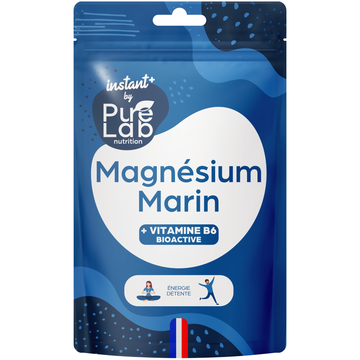
Well-absorbed forms that are gentle on digestion, such as bisglycinate or marine magnesium, are often preferred. Many people take it in the evening with dinner. To understand the mode of action, read How does magnesium act on our sleep?
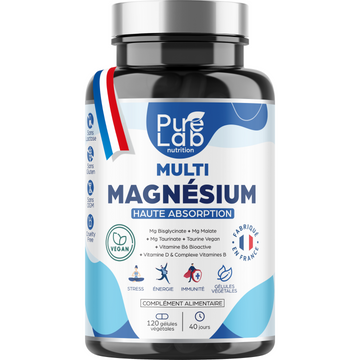
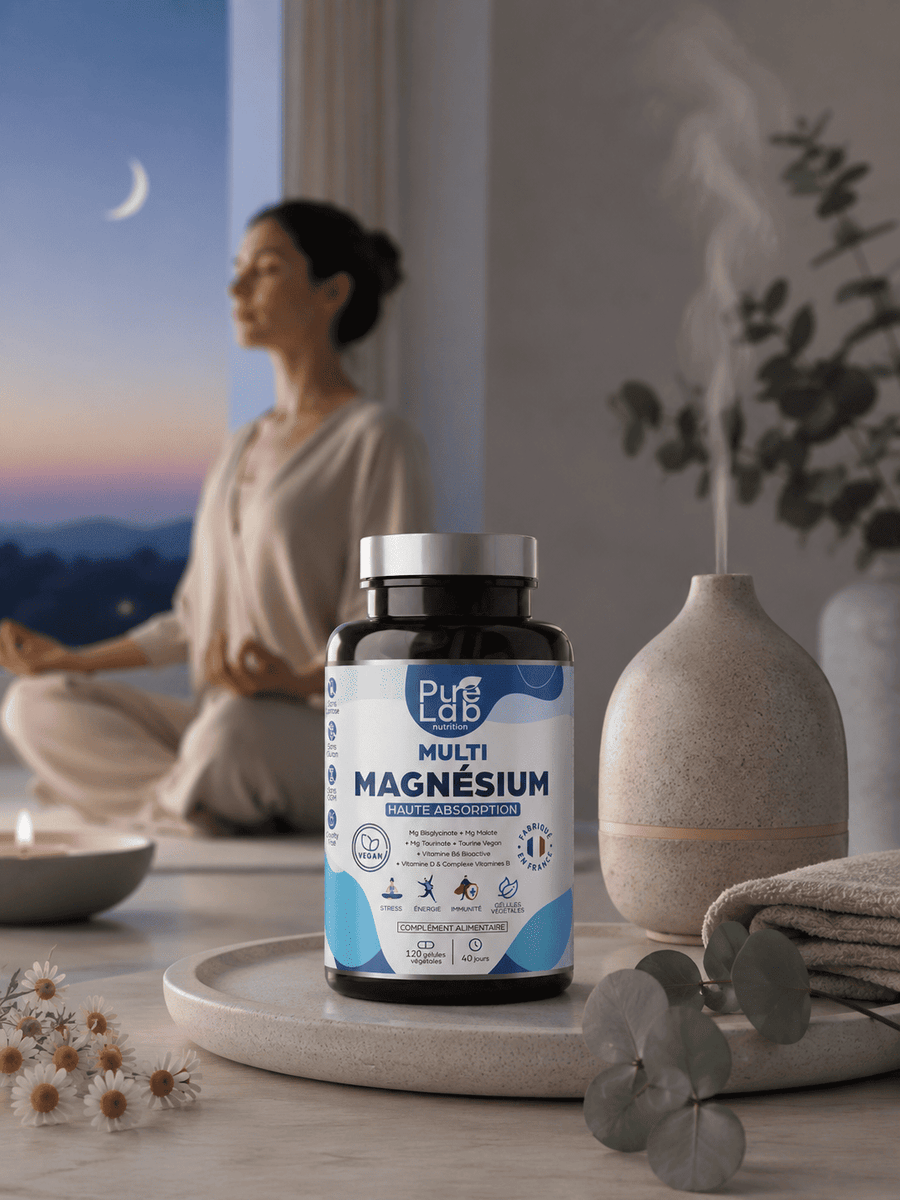
✅ Our Multi Magnesium at Pure Lab Nutrition: a combination of forms of magnesium to support nervous balance and reduce fatigue.
👉 Discover our Multi Magnesium here.
🔬 Ashwagandha and stress
Ashwagandha (Withania somnifera) is a plant from the Ayurvedic tradition. Please note: no health claims are authorized in the European Union for ashwagandha. What follows is based solely on research, with no commercial promises.
🧬 What trials report
A placebo-controlled randomized trial (Langade et al., 2019) observed an improvement in sleep scores in adults with sleep disorders and anxiety using a root extract. A 2021 meta-analysis (Cheah et al.) on five trials concludes there is a modest but significant effect on sleep, especially in people suffering from insomnia and with doses equal to or greater than 600 mg per day for at least eight weeks. The authors point out the small sample sizes and the heterogeneity of the extracts.
🧬 Precautions
Ashwagandha is not recommended during pregnancy and breastfeeding, in case of thyroid pathology or hormone therapy without medical advice, and in combination with certain treatments (sedatives, immunosuppressants). If in doubt, ask a pharmacist for advice. Our article Ashwagandha and sleep: what studies say explores the subject further.
✅ Our ORGANIC Ashwagandha at Pure Lab Nutrition: a plant from organic farming, offered as a course of treatment with clear dosage.
👉 Discover our ORGANIC Ashwagandha here.
🔬 Vitamin D3 and sleep
Vitamin D contributes to the normal function of the immune system, normal muscle function, and the maintenance of normal bones. It has no authorized claim for sleep.
🧬 A link observed, not proof of causality
A 2018 meta-analysis (Gao et al.) associated low vitamin D status with a higher risk of sleep disorders, including poorer quality and shorter duration. These studies are observational: low status can be a consequence as much as a cause. This does not authorize high-dose supplementation "to sleep." A blood test is the most sensible approach, especially since the EFSA sets the upper limit at 100 µg per day for adults.
Our catalog does not, to date, include a standalone vitamin D3 product: seek advice from your doctor or pharmacist.
🔬 How to combine and take them
The golden rule: one supplement at a time. Introduce one, observe for two to four weeks, then consider the next. This allows you to identify what suits you and avoid stacking intake.
🧬 A cautious schedule
Magnesium in the evening at dinner; ashwagandha as a time-limited course, according to the label's recommendation; vitamin D in the morning or at lunch with a fatty meal, if your doctor recommends it. If you are hesitating between several combinations, read Stress and sleep: which supplements, and how to combine them? or Ashwagandha and magnesium: can they be combined?
🧬 What to avoid
Do not combine "relaxing" supplements with sleeping pills or anxiolytics without medical advice. Avoid prolonging a plant treatment indefinitely. And do not rely on a supplement to compensate for late bedtimes, chronic stress, or coffee at 5 p.m.
🔬 When to consult a professional
If your sleep difficulties last for more than three weeks, if you snore heavily with breathing pauses, or if you feel sleepy during the day or depressed, see a doctor. Chronic insomnia, sleep apnea, or restless leg syndrome require appropriate care that supplements cannot replace.
🧬 What to prepare
Keeping a sleep diary for two weeks (bedtime, awakenings, caffeine, alcohol, stress) makes the consultation much more useful. Also, note the supplements and medications taken. This information helps point the professional in the right direction.
✅ In summary
1️⃣ Sleep hygiene and CBT-I remain the first line of defense: regular rhythm, light, cool room, fewer screens.
2️⃣ Magnesium contributes to normal psychological function and the reduction of fatigue; evidence regarding sleep remains of low quality.
3️⃣ Ashwagandha has been the subject of promising trials but has no authorized claims, with contraindications to respect; vitamin D levels should be tested before supplementing.
4️⃣ Introduce one supplement at a time, and consult if the issues persist for more than three weeks.
Pure Lab Nutrition — The art of nourishing your well-being.
Scientific sources:
- Riemann D, et al. The European Insomnia Guideline: an update on the diagnosis and treatment of insomnia 2023. Journal of Sleep Research, 2023;32(6):e14026.
- Abbasi B, et al. The effect of magnesium supplementation on primary insomnia in elderly: a double-blind placebo-controlled clinical trial. Journal of Research in Medical Sciences, 2012;17(12):1161-1169.
- Mah J, Pitre T. Oral magnesium supplementation for insomnia in older adults: a systematic review and meta-analysis. BMC Complementary Medicine and Therapies, 2021;21:125.
- Langade D, et al. Efficacy and safety of Ashwagandha root extract in insomnia and anxiety: a double-blind, randomized, placebo-controlled study. Cureus, 2019;11(9):e5797.
- Cheah KL, et al. Effect of Ashwagandha on sleep: a systematic review and meta-analysis. PLoS One, 2021;16(9):e0257843.
- Gao Q, et al. The association between vitamin D deficiency and sleep disorders: a systematic review and meta-analysis. Nutrients, 2018;10(10):1395.


Restez informé 🌿
Recevez nos derniers articles et conseils santé directement dans votre boîte mail.


