




















Supplements and work: boosting concentration and reducing mental fatigue
Back-to-back meetings, constant notifications, screens all day long: mental fatigue has become a desk companion. Can dietary supplements change anything? Here is an honest overview, based on scientific sources and what European regulations actually allow us to claim.
📑 Table of Contents
- Mental fatigue: what are we talking about?
- The basics before any supplement
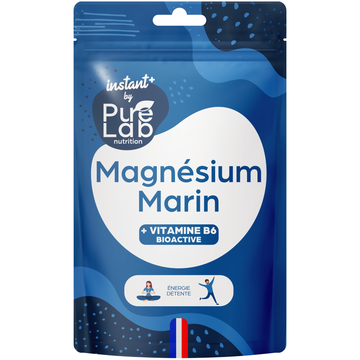
- Magnesium: fatigue and psychological function
- Ashwagandha: a studied adaptogen
- What about coenzyme Q10?
- A realistic office routine
🔬 Mental fatigue: what are we talking about?
Mental fatigue corresponds to the decline in cognitive efficiency that occurs after prolonged concentration: difficulty concentrating, irritability, a feeling of "brain fog." It is not a disease, but it can take hold when stress, lack of sleep, and a sedentary lifestyle accumulate.
🧬 When to consult
If fatigue is persistent, accompanied by other symptoms, or does not improve despite getting good sleep, speak to a doctor. It may have causes that no supplement will resolve. Our article Persistent fatigue: which deficiencies should you check? can help you ask the right questions.
🔬 The basics before any supplement
No supplement can compensate for too little sleep or a lack of breaks. A few simple levers have a well-documented effect: sleeping regularly, moving for a few minutes every hour, staying hydrated, not skipping lunch, and limiting caffeine in the late afternoon.
🧬 Lunchtime nutrition
A balanced meal (vegetables, proteins, whole grains) limits afternoon energy slumps. Supplements come into play afterward to bridge potential gaps, not to replace these habits.
🔬 Magnesium: fatigue and psychological function
Magnesium is an essential mineral found in oilseeds, green vegetables, legumes, and whole grains. A review by Schwalfenberg and Genuis (2017) highlights its involvement in numerous bodily reactions and the fact that dietary intake is sometimes below recommended levels.
🧬 Authorized claims
In accordance with Regulation (EU) No. 432/2012, magnesium contributes to a reduction of tiredness and fatigue, to normal psychological function, to normal functioning of the nervous system, and to electrolyte balance. These formulations are precise: it contributes to these things as part of a varied diet, but it is not a concentration "booster."
🧬 What research says about stress
A systematic review by Boyle, Lawton, and Dye (2017) examined the effect of magnesium on subjective anxiety and stress: the authors concluded that the data are encouraging but of limited methodological quality, and that more rigorous studies are needed. To choose and take your magnesium, see When and how should you take your magnesium? and How does magnesium act on stress?.
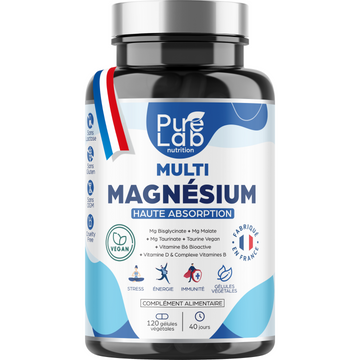
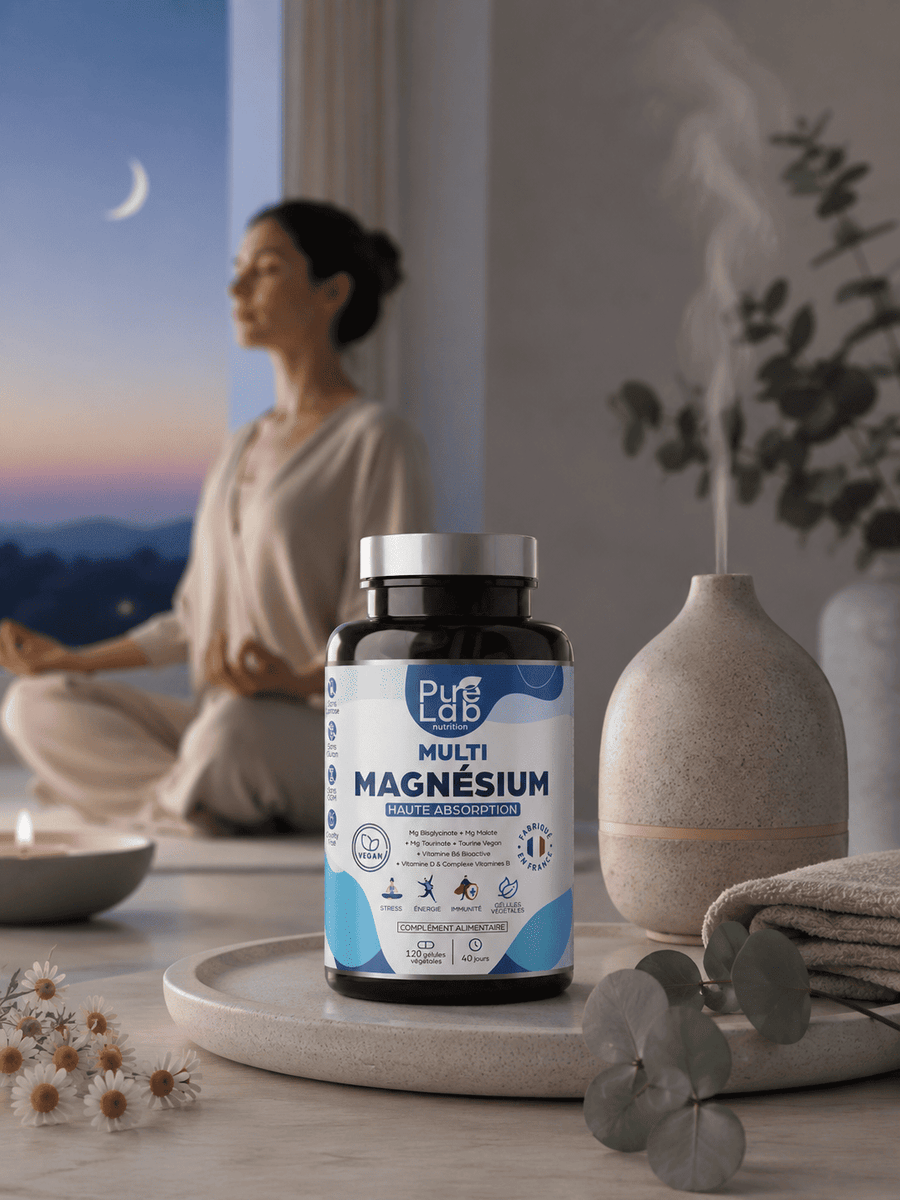
✅ Our Multi-Magnesium at Pure Lab Nutrition: a combination of magnesium forms for a daily intake to support a varied diet.
👉 Discover our Multi-Magnesium here.
🔬 Ashwagandha: a studied adaptogen
Ashwagandha (Withania somnifera) is a plant from Ayurvedic medicine. It has been studied for several years for its adaptogenic profile. We must be very clear here: no health claim is authorized in the European Union for ashwagandha. We cannot, therefore, claim that it acts on stress or concentration as a commercial promise. We can, however, report what studies have observed.
🧬 What clinical trials have observed
Lopresti et al. (2019), in a randomized, double-blind, placebo-controlled trial conducted on adults under stress, reported a difference between the group receiving an ashwagandha extract and the placebo group regarding scores for perceived stress and morning cortisol. Salve et al. (2019) obtained similar results with a root extract in healthy adults. These trials are modest in size, and their results pertain to specific extracts and dosages: they do not allow for generalization to all products.
🧬 Precautions
Ashwagandha is not recommended during pregnancy or breastfeeding, nor in cases of thyroid disorders, autoimmune diseases, or if you are on medication, without medical advice. Consult our guide Ashwagandha: benefits, dosage, and precautions before starting, as well as Ashwagandha and magnesium: can they be combined?.
✅ Our Organic Ashwagandha at Pure Lab Nutrition: a plant-based supplement from organic farming, to be used in compliance with the precautions for use.
👉 Discover our Organic Ashwagandha here.
🔬 What about coenzyme Q10?
Coenzyme Q10 (ubiquinone) is a molecule naturally present in our cells, involved in energy production in the mitochondria. Mizuno et al. (2008) observed, in a placebo-controlled trial, effects on the perception of fatigue during physical exertion in volunteers. This refers to physical effort, not office work: we cannot, therefore, extrapolate these results to mental fatigue.
🧬 A regulatory status to know
No health claim is authorized in the European Union for coenzyme Q10. We do not offer this type of product in our current range, and we prefer to remain cautious: seek advice from a healthcare professional, especially if you are taking anticoagulant or heart medication.
🔬 A realistic office routine
Here is a pragmatic approach to properly using supplements in a professional context.
🧬 Start small, one thing at a time
Introduce only one supplement at a time for 3 to 4 weeks and note how you feel. This allows you to know what works for you. A supplement does not produce an immediate effect: see How long does it take to see the effects of a supplement?.
🧬 The habits that matter most
Prioritize sufficient sleep, natural light in the morning, a few minutes of walking at the end of a meeting, and a real lunch break. These simple actions have more impact than any capsule. Dietary supplements should not replace a varied and balanced diet or a healthy lifestyle. Do not exceed the recommended daily dose.
✅ In summary
1️⃣ Mental fatigue should first be addressed through sleep, breaks, diet, and movement.
2️⃣ Magnesium contributes to reducing fatigue and to normal psychological function.
3️⃣ Ashwagandha is being studied, but no claims are authorized in the EU, and it requires precautions.
4️⃣ Coenzyme Q10 also has no authorized claims: professional advice is recommended.
Pure Lab Nutrition — The art of nourishing your well-being.
Scientific sources:
- Lopresti AL, Smith SJ, Malvi H, Kodgule R. An investigation into the stress-relieving and pharmacological actions of an ashwagandha (Withania somnifera) extract: a randomized, double-blind, placebo-controlled study. Medicine (Baltimore). 2019;98(37):e17186.
- Salve J, Pate S, Debnath K, Langade D. Adaptogenic and anxiolytic effects of ashwagandha root extract in healthy adults. Cureus. 2019;11(12):e6466.
- Boyle NB, Lawton C, Dye L. The effects of magnesium supplementation on subjective anxiety and stress: a systematic review. Nutrients. 2017;9(5):429.
- Schwalfenberg GK, Genuis SJ. The importance of magnesium in clinical healthcare. Scientifica (Cairo). 2017;2017:4179326.
- Mizuno K, et al. Antifatigue effects of coenzyme Q10 during physical fatigue. Nutrition. 2008;24(4):293-299.


Restez informé 🌿
Recevez nos derniers articles et conseils santé directement dans votre boîte mail.