
























Persistent fatigue: which deficiencies should be checked?
Do you wake up tired, drag yourself through the day, and has this been going on for weeks? Persistent fatigue often has several causes: sleep, stress, lifestyle... but sometimes, also an insufficient intake of certain nutrients. And in modern diets—ultra-processed, depleted by exhausted soils—these requirements are structurally more difficult to meet than one might think.
At Pure Lab Nutrition, a French brand, we prefer to help you understand before offering you a product. Here are the most common deficiencies to check, the people most affected, the mistakes to avoid, and the right habits to get your energy back.
📑 Table of Contents
- First: when should you consult a doctor?
- Non-nutritional causes
- Iron, the #1 lead for women
- Vitamin B12
- Magnesium
- Vitamin D
- Summary table
- Preparing and tracking your health assessment
- Three profiles, three approaches
- Common mistakes
- Frequently Asked Questions
- In summary
First: when should you consult a doctor?
Fatigue that lasts more than a few weeks, does not improve with rest, or is accompanied by other symptoms (shortness of breath, unexplained weight loss, fever, marked pallor) warrants medical advice. Your doctor can prescribe a blood test to check for the most frequent causes.
Non-nutritional causes
Before suspecting a deficiency, it is useful to review the most common causes of fatigue, which often have nothing to do with what is on your plate:
- Sleep: nights that are too short, irregular schedules, or fragmented sleep are enough to exhaust anyone
- Stress and mental load, which weigh on energy as much as physical exertion
- Sedentary lifestyle: paradoxically, moving little is tiring, whereas regular activity often restores momentum
- Alcohol and late meals, which degrade the quality of your sleep
- A medical cause: thyroid disorder, recent infection, sleep breathing disorders, low mood... Only a doctor can investigate these
Iron, the #1 lead for women
Women who menstruate lose iron every month. Their reserves (measured by ferritin) can be low even without anemia. Iron contributes to reducing fatigue, to the normal formation of red blood cells and hemoglobin, and to normal cognitive function.
🔬 What the study says
In a randomized trial published in 2012 in the CMAJ, conducted among 44 general practitioners in France, 198 women aged 18 to 53, who were not anemic but were tired and had ferritin levels below 50 µg/L, received 80 mg of iron per day or a placebo for 12 weeks. Fatigue decreased by 47.7% in the iron group, compared to 28.8% in the placebo group. The benefit therefore applies to fatigue in women with low reserves and can be biologically monitored.
⚠️ No iron without an assessment
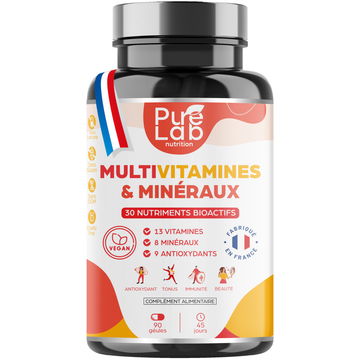
Excess iron is not harmless. It should only be taken after a ferritin test and on medical advice. This is precisely why our Multivitamins & Minerals does not contain iron: everyone can add it only if they need it.
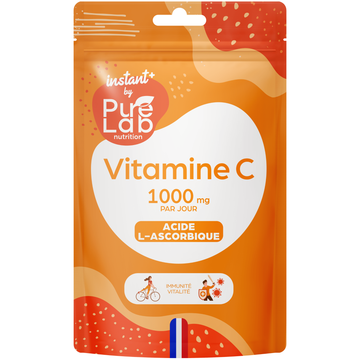
🍊 The vitamin C tip
Vitamin C increases iron absorption. Combining a source of vitamin C (citrus fruits, kiwi, bell peppers) with a meal rich in non-heme iron (lentils, chickpeas, spinach) can significantly improve the efficiency of your intake.
Vitamin B12
Vitamin B12 contributes to reducing fatigue, the normal functioning of the nervous system, and the normal formation of red blood cells. It is found almost exclusively in animal products. EFSA has set a satisfactory intake for adults of 4 µg per day.
👥 Those most affected
- vegetarians and vegans
- the elderly, who absorb it less well
- people taking certain long-term treatments (metformin, proton pump inhibitors)
🌿 Beware of false sources
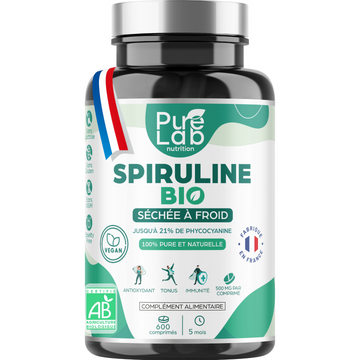
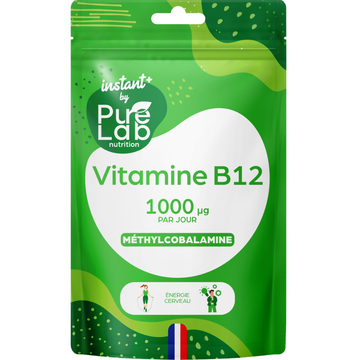
Spirulina is sometimes presented as a source of B12 for vegans. The French agency ANSES points out that it is not a reliable source of vitamin B12 because it contains mostly an inactive form. Reliable supplementation in the form of methylcobalamin or adenosylcobalamin is recommended.
👉 Discover our Vitamin B12 Instant+ here.
Magnesium
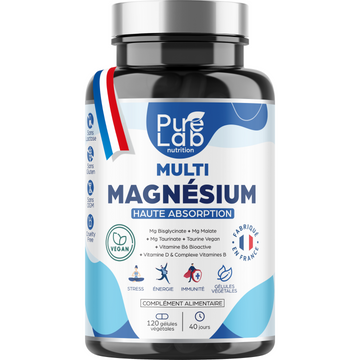
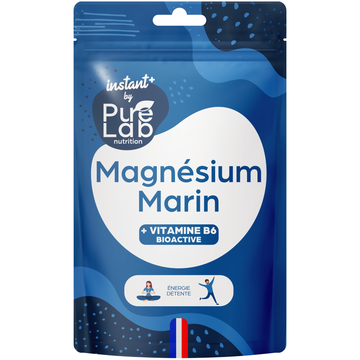
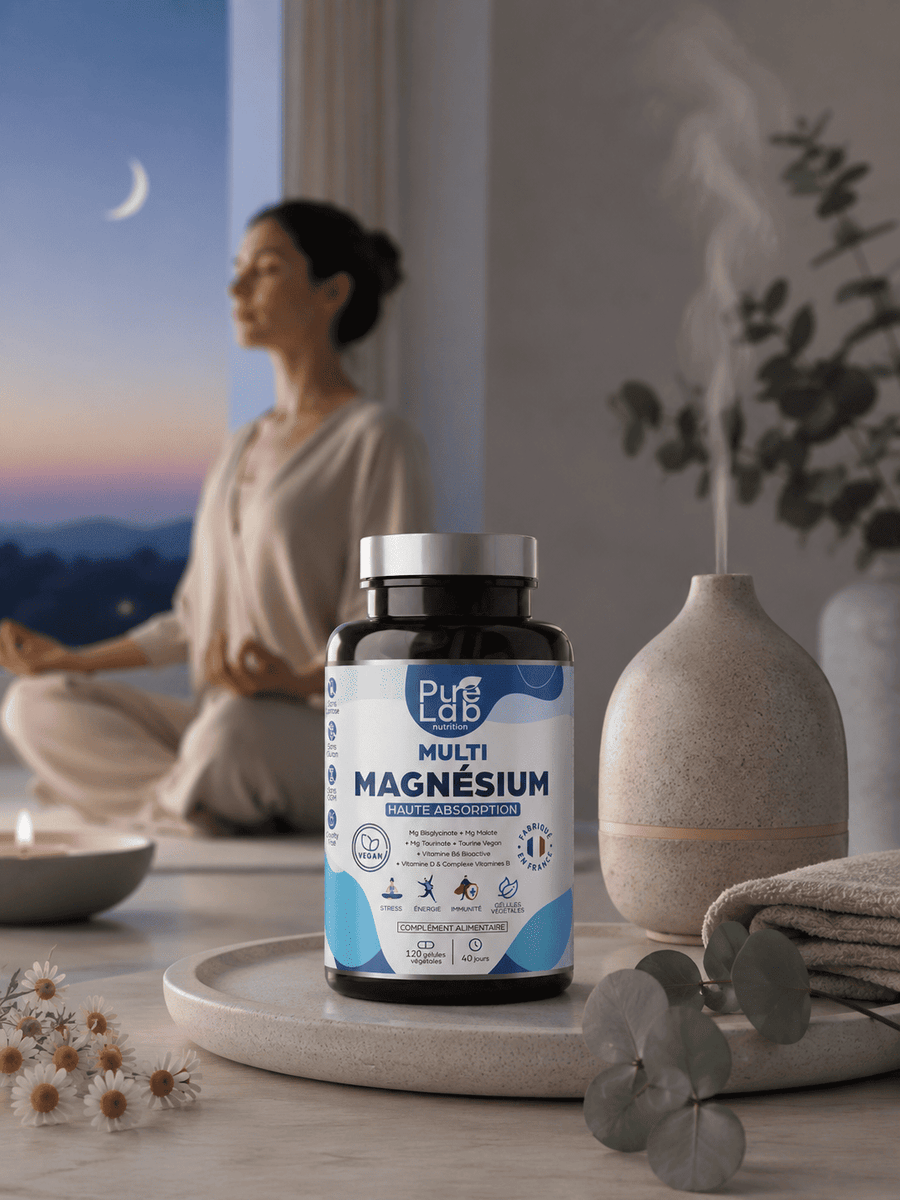
Magnesium contributes to reducing fatigue, the normal functioning of the nervous system, and normal psychological functions. Chronic stress, ultra-processed food, depleted agricultural soils, and intense physical exercise all contribute to intakes that are often insufficient in the modern population.
In a trial published in 2018 in PLoS ONE (Pouteau et al.), 264 stressed adults with low blood magnesium levels took 300 mg of magnesium per day, alone or combined with 30 mg of vitamin B6, for 8 weeks. Their stress score decreased by approximately 42 to 45% depending on the group.
👉 Discover our Multi Magnesium here.
Vitamin D
Vitamin D contributes to normal muscle function and the normal functioning of the immune system. It is mainly synthesized by the skin under the influence of sunlight: ANSES suggests 15 to 20 minutes of sun exposure as a reference.
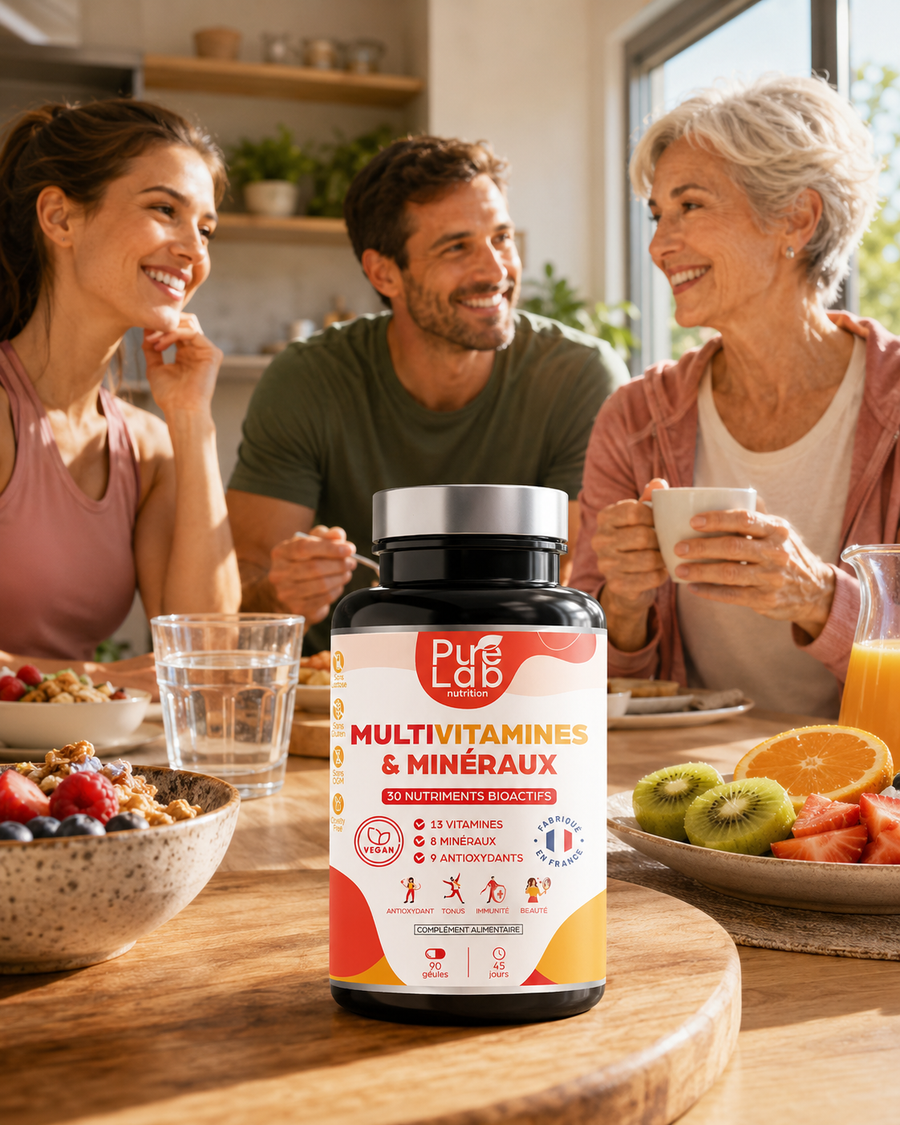
Food provides little of it: according to ANSES, adults consume an average of 3.1 µg per day, far from the nutritional reference of 15 µg per day. ANSES cites several profiles that are more exposed to deficiency: the elderly, pregnant and menopausal women, people with dark skin, and those who exclude meat, fish, eggs, and dairy products. Our Multivitamins & Minerals contains vitamin D3 combined with vitamin K2 (K2VITAL®), bisglycinates, and Quatrefolic for optimal bioavailability, without iron or copper.
Summary table
| Nutrient | At-risk profiles | How to check |
|---|---|---|
| Iron | Menstruating women, pregnant women, vegetarians | Blood test (ferritin) |
| Vitamin B12 | Vegans, vegetarians, seniors | Prescription blood test |
| Magnesium | Stressed individuals, athletes, processed diet | Medical advice; blood tests do not accurately reflect reserves |
| Vitamin D | Little sun exposure, winter, elderly | According to your doctor's advice |
Preparing and tracking your health assessment
A consultation is more useful if it is well prepared. Some questions to ask yourself:
✅ How long have I been tired, and is the fatigue present upon waking or only at the end of the day?
✅ What has changed recently: work, sleep, diet, treatment?
✅ Which tests are relevant in my situation (ferritin, B12, vitamin D…)?
✅ When should I follow up if supplementation is started? For iron, the authors of the CMAJ trial suggest a blood check after six weeks.
Three profiles, three approaches
👩 Julie, 32, heavy periods
Tired for several months despite decent nights, Julie consults her doctor. The doctor prescribes a ferritin test: this is the most logical step in her case. Any necessary iron will be tailored to her results, not taken "at random." Additionally, ensuring sufficient magnesium intake (via her diet or a targeted supplement) is a rational step given the stress associated with her fatigue.
🌱 Marc, 41, vegan for three years
Marc takes no supplements. For him, vitamin B12 is the first thing to secure urgently: plant-based diets do not provide it, and deficits can set in insidiously over years before manifesting neurologically.
💼 Sophie, 48, very stressful period
Not enough sleep, long days, meals eaten on the go: first and foremost, Sophie would benefit from adjusting her rhythm. Magnesium supplementation can usefully accompany this period: in modern diets, magnesium intakes are structurally insufficient (depleted soils, ultra-processing), and stress accelerates its elimination.
Common mistakes
❌ Taking iron "just to see", without prior testing
❌ Combining several products containing the same nutrients, at the risk of exceeding recommended doses
❌ Expecting an effect in three days: a course of supplements is judged over several weeks
❌ Ignoring sleep: no supplement compensates for nights that are too short
❌ Postponing a consultation when fatigue sets in or worsens
Frequently Asked Questions
❓ Is a multivitamin enough for fatigue?
It can help cover basic needs if your diet is irregular, but it does not correct a proven deficiency, which requires targeted intake and medical follow-up.
❓ How long does it take to feel better?
It depends on the cause. A deficiency is corrected over several weeks: in the iron trial, results were measured at 12 weeks. If fatigue does not improve despite appropriate intake, you must look for another cause with your doctor.
❓ Can you take magnesium and B12 at the same time?
Yes, these two nutrients can be taken together. Simply respect the doses for each product.
❓ Are there situations where a deficiency is inevitable?
Yes: a vegan person without supplementation will inevitably lack B12; a woman with heavy periods who eats little red meat is at risk of an iron deficit. In these cases, targeted supplementation is not optional; it is a physiological necessity.
In summary
1️⃣ Persistent fatigue = medical advice and blood test
2️⃣ Iron: the first lead for women, but only after testing
3️⃣ B12 and magnesium contribute to reducing fatigue; vitamin D is often insufficient in winter
4️⃣ For vegans and women with heavy periods, supplementation is not optional
Pure Lab Nutrition ... The art of nourishing your well-being.
Sources :
- Vaucher P. et al. (2012). Effect of iron supplementation on fatigue in nonanemic menstruating women with low ferritin: a randomized controlled trial. CMAJ, 184(11):1247-1254. PMC
- EFSA (2015). Vitamin B12: EFSA sets dietary reference values. efsa.europa.eu
- ANSES. Les références nutritionnelles en vitamines et minéraux. anses.fr
- ANSES. Vitamine D : pourquoi et comment assurer un apport suffisant ? anses.fr
- Pouteau E. et al. (2018). Superiority of magnesium and vitamin B6 over magnesium alone on severe stress in healthy adults with low magnesemia. PLoS ONE, 13(12):e0208454. DOI
- Dawson-Hughes B. et al. (2015). Dietary fat increases vitamin D-3 absorption. Journal of the Academy of Nutrition and Dietetics, 115(2):225-230. PubMed
- Règlement (UE) n° 432/2012 relatif aux allégations de santé autorisées. EUR-Lex


Restez informé 🌿
Recevez nos derniers articles et conseils santé directement dans votre boîte mail.


