
























Marathon and trail running: supplements before, during, and after the race
A marathon or a trail run is not won solely on race day. Preparation, hydration, nutrition, and recovery count just as much as the training kilometers. Let's look at the evidence to see what role food supplements can play around exertion, and more importantly, which ones truly deserve your attention.
📑 Summary
- What endurance running demands of the body
- Before the race: preparing the groundwork
- During the race: hydration and electrolytes
- After the race: recovery and connective tissues
- Does creatine have a place for runners?
- Building your routine without making mistakes
🔬 What endurance running demands of the body
Running 42 kilometers, or more in trail running with elevation gain, taxes the body on several levels at once: glycogen stores are depleted, water and mineral salt losses accumulate through sweat, and muscles and tendons endure thousands of repeated impacts. Endurance nutrition recommendations, published notably by Jeukendrup (2011) and sports nutrition societies, remind us of a simple hierarchy: first energy (carbohydrates), then hydration, and only then targeted supplements.
🧬 Supplements come after the fundamentals
No supplement replaces a sufficient intake of carbohydrates, proteins, and fluids, nor quality sleep. Food supplements are, by definition, intended to complement a normal diet. Keep this idea in mind throughout this article: it is about optimizing the details, not compensating for insufficient preparation.
🔬 Before the race: preparing the groundwork
The weeks preceding the event are the time to consolidate the basics. The goal is not to test new products the day before the start: everything new must be tried during training, including supplements and sports drinks.
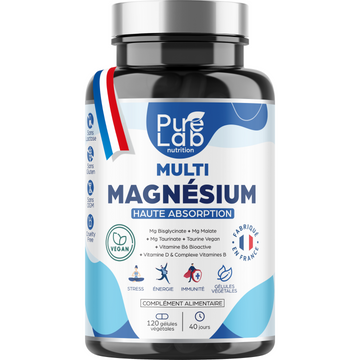
🧬 Magnesium and fatigue
Magnesium is a mineral involved in numerous bodily functions. In accordance with Regulation (EU) No 432/2012, magnesium contributes to the reduction of fatigue, to normal muscle function, to electrolyte balance, and to the normal functioning of the nervous system. For a runner whose dietary intake is limited (few green vegetables, oilseeds, whole grains), a supplement can help cover needs. To learn more about choosing the right form, consult our article What is the best form of magnesium?.
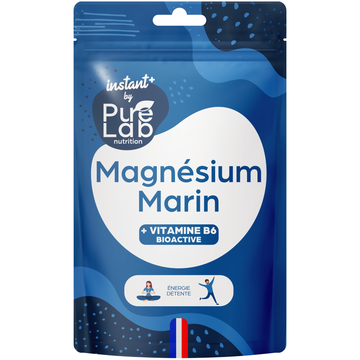
✅ Our Multi Magnesium from Pure Lab Nutrition: a formula combining several forms of magnesium, designed for daily intake.
👉 Discover our Multi Magnesium here.
🧬 Carbohydrates, the real key
In the 2 to 3 days preceding a marathon, expert recommendations suggest gradually increasing carbohydrate intake to fill glycogen stores. Once again, it is about nutrition above all else: pasta, rice, bread, potatoes, fruits. Avoid excess fiber the day before if you have a sensitive digestion.
🔬 During the race: hydration and electrolytes
During exertion, sweat leads to losses of water and minerals, mainly sodium, but also, to a lesser extent, potassium and magnesium. The position of the American College of Sports Medicine (Sawka et al., 2007) highlights that fluid needs vary greatly from one runner to another, depending on intensity, weather, and sweat rate. The idea is neither to drink as much as possible nor to deprive yourself: excess pure water can also cause problems during long events.
🧬 Drink according to thirst and sensations
For most runners, drinking regularly in small sips, based on thirst and the experience gained in training, is a reasonable strategy. On a long trail run or in hot conditions, a drink containing sodium and carbohydrates, or salty foods (broth, cheese, salty biscuits), helps compensate for losses. Test your hydration plan during your long runs.
🧬 And what about electrolyte supplements?
Electrolyte powders and tablets are practical, especially in trail running where aid stations are spaced out. Choose them according to their composition (sodium, potassium, magnesium) and digestive tolerance. To date, we do not have an electrolyte product in our range: we prefer to guide you toward appropriate sports drinks or salty foods, and toward daily magnesium intake outside of races.
🔬 After the race: recovery and connective tissues
In the hour following the finish, the goal is to rehydrate, replenish carbohydrates, and provide proteins. Our article How to promote effective sports recovery? details these steps. In the following days, sleep and a varied diet remain your best allies.
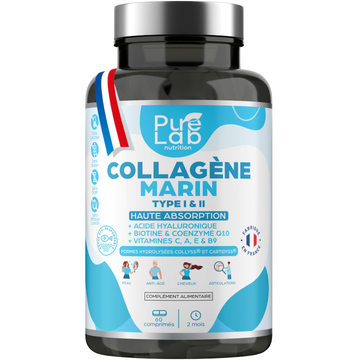
🧬 Collagen: tendons, cartilage, and skin
Tendons and cartilage are rich in collagen, and they are put to the test during running, especially on descents. A study by Shaw et al. (2017), published in the American Journal of Clinical Nutrition, observed that taking gelatin enriched with vitamin C before brief exertion increased a collagen synthesis marker in volunteers. These results are interesting but preliminary: they do not alone demonstrate a benefit for a runner's performance or recovery. No health claim is authorized in the European Union for collagen. We therefore present it as a source of protein used in a maintenance routine, which you can combine with a vitamin C-rich diet. More details in Is marine collagen good for athletes?.
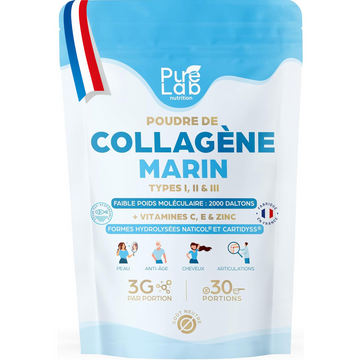
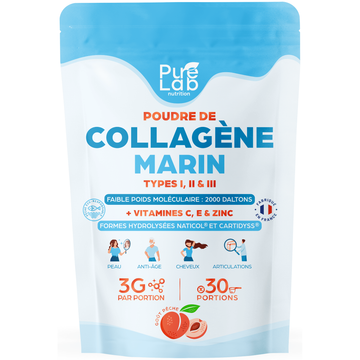
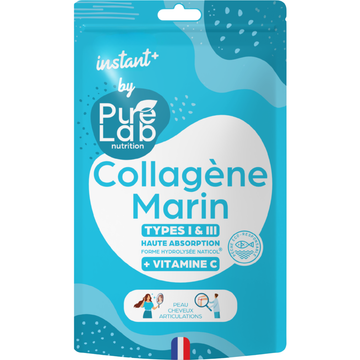
✅ Our Marine Collagen from Pure Lab Nutrition: a marine collagen powder, simple to incorporate into a drink or a shaker after training.
👉 Discover our Marine Collagen (powder) here.
🔬 Does creatine have a place for runners?
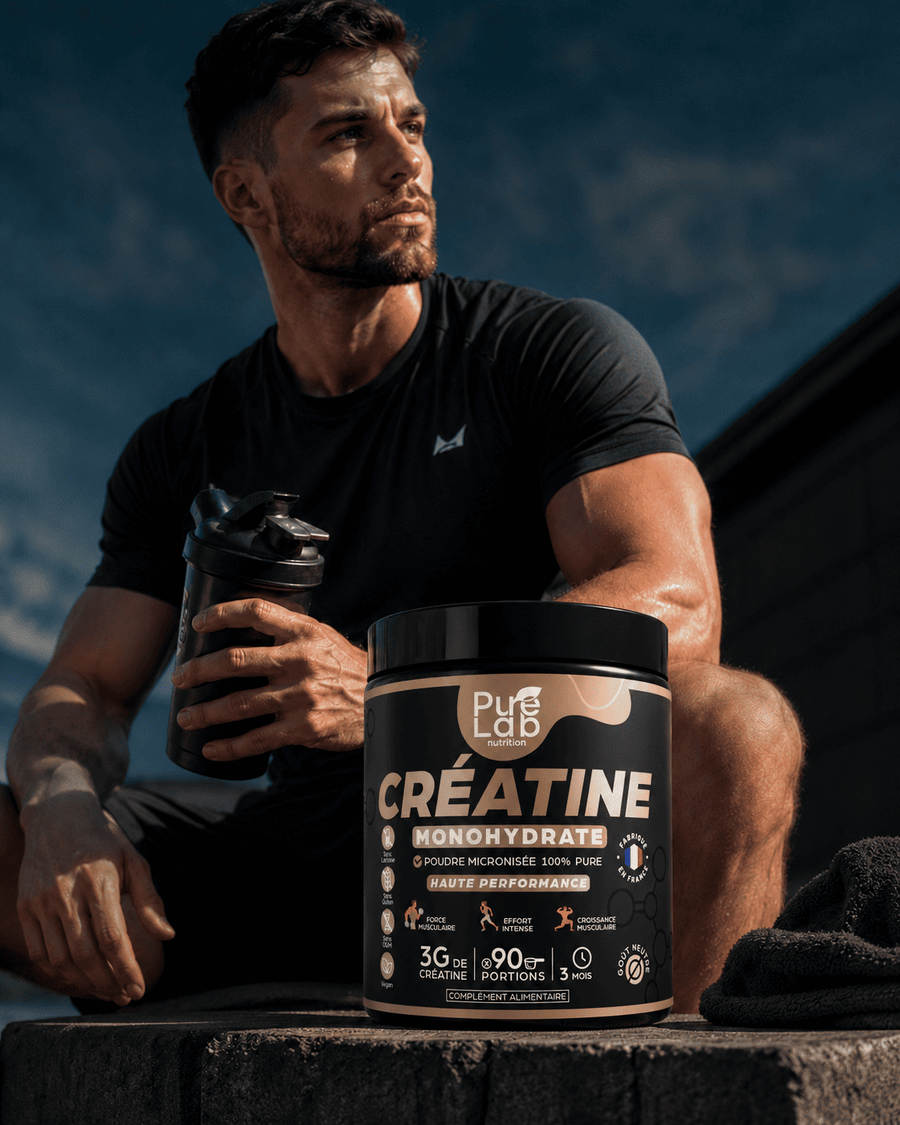
Creatine is best known in strength sports, and it is one of the most studied supplements. The position statement of the International Society of Sports Nutrition (Kreider et al., 2017) considers it safe and effective for high-intensity exercise. Regulation (EU) No 432/2012 authorizes the following claim: creatine contributes to an increase in physical performance during successive bursts of short-term, high-intensity exercise, with the effect obtained by a daily intake of 3 g for adults.
🧬 Relevance for endurance
A marathon is a long-duration effort at moderate intensity: the authorized claim therefore does not directly concern this type of exertion. However, creatine can be of interest during preparation, for muscle strengthening sessions, sprint hills, or short interval training, often included in trail training plans. One point of attention: it can lead to slight weight gain linked to water retention in the muscle, which may matter to some runners. Weigh the pros and cons, and test it outside of competition periods. Our article Creatine 3g or 5g clarifies the dosages.
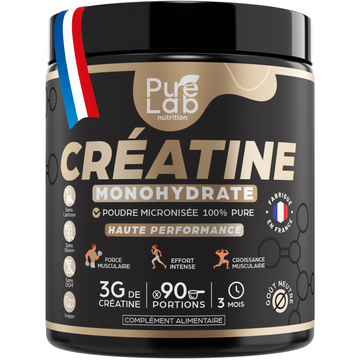
✅ Our Creatine monohydrate from Pure Lab Nutrition: creatine monohydrate, the most documented form, for your strengthening and high-intensity sessions.
👉 Discover our Creatine monohydrate here.
🔬 Building your routine without making mistakes
To structure your approach, here is a simple way of reasoning, to be adapted to your profile and your doctor if you have a medical condition or are following a treatment.
🧬 A three-step logic
Before: stabilize micronutrient intake and test everything you plan to use. During: focus on energy, hydration, and sodium according to your needs. After: rehydrate, eat protein and carbohydrates, sleep. Supplements fit into this framework, without replacing it. For an overview according to your practice, read Which supplements for athletes?.
🧬 Useful precautions
Do not exceed the doses recommended on the label. Supplements should not replace a varied and balanced diet or a healthy lifestyle. Seek advice from a healthcare professional in case of pregnancy, treatment, or kidney problems. Finally, no product guarantees a personal best: consistent training remains the deciding factor.
✅ In summary
1️⃣ Fundamentals first: carbohydrates, hydration, sleep, and progressive training.
2️⃣ Magnesium contributes to the reduction of fatigue and to normal muscle function, as part of a varied diet.
3️⃣ Collagen should be considered as maintenance support, with no authorized health claim, and creatine is mainly intended for high-intensity efforts.
4️⃣ Test everything in training, never on the big day.
Pure Lab Nutrition — The art of nourishing your well-being.
Scientific sources:
- Kreider RB, et al. International Society of Sports Nutrition position stand: safety and efficacy of creatine supplementation in exercise, sport, and medicine. J Int Soc Sports Nutr. 2017;14:18.
- Jeukendrup A. Nutrition for endurance sports: marathon, triathlon, and road cycling. J Sports Sci. 2011;29(Suppl 1):S91-S99.
- Thomas DT, Erdman KA, Burke LM. Position of the Academy of Nutrition and Dietetics, Dietitians of Canada, and the American College of Sports Medicine: Nutrition and Athletic Performance. J Acad Nutr Diet. 2016;116(3):501-528.
- Shaw G, et al. Vitamin C-enriched gelatin supplementation before intermittent activity augments collagen synthesis. Am J Clin Nutr. 2017;105(1):136-143.
- Sawka MN, et al. American College of Sports Medicine position stand: Exercise and fluid replacement. Med Sci Sports Exerc. 2007;39(2):377-390.


Restez informé 🌿
Recevez nos derniers articles et conseils santé directement dans votre boîte mail.