























Creatine: hair, kidneys, water retention… separating fact from fiction
"Creatine causes hair loss." "It damages the kidneys." "It's basically a steroid." You have surely heard these phrases before, at the gym, on social media, or from people around you. Yet, creatine is one of the most studied supplements in the world.
At Pure Lab Nutrition, we love to separate fact from fiction. We have relied on two benchmark publications from the International Society of Sports Nutrition (ISSN) to answer the most common misconceptions, with their nuances.
📑 Table of Contents
- "Creatine causes hair loss"
- "Creatine damages the kidneys"
- "Creatine causes bloating"
- "It's a steroid"
- "A loading phase is mandatory"
- "The more you take, the better"
- "It's only for bodybuilders"
- Summary table
- Frequently asked questions
- In summary
"Creatine causes hair loss"
Mostly false, based on current knowledge. This fear stems from a single 2009 study conducted on rugby players, which observed an increase in DHT (a hormone linked to male pattern baldness) over 14 days. However:
- this result has never been replicated
- other studies did not find an increase in DHT
- this study did not measure hair loss itself
- many types of training also cause DHT levels to fluctuate
In 2021, experts from the ISSN (Antonio et al.) concluded that current data does not show that creatine causes hair loss.
Our advice: if you notice hair loss, talk to your doctor or a dermatologist. There are many possible causes (genetics, stress, deficiencies, hormonal changes), and it is better to identify the origin.
"Creatine damages the kidneys"
False in healthy individuals. This idea is largely based on an isolated case published in 1998, involving a patient who already had kidney disease.
There is also an interpretation trap: creatine naturally increases creatinine in the blood, the marker used to monitor kidneys. A slightly higher level does not necessarily mean the kidneys are unhealthy.
The 2017 position stand by the ISSN (Kreider et al.), based on more than 200 studies, concluded that there is no convincing evidence of a harmful effect of creatine on the kidneys in healthy people.
Good practice: if you get blood work done, mention that you take creatine. And in case of kidney disease, seek your doctor's advice before taking any.
"Creatine causes bloating"
Partly true, but temporary and harmless. Some studies observe slight water retention in the first few days, especially with a loading phase. This effect is transient. Most importantly, water is stored primarily in the muscles, not under the skin: creatine does not cause a "puffy" look.
Concretely, if you see the scale go up a bit at the beginning of a cycle, don't worry: it's not fat.
"It's a steroid"
False. Creatine is a molecule naturally present in our body, made from amino acids, and found in meat and fish. It has neither the structure nor the mode of action of an anabolic steroid. It is a legal food supplement, authorized in sports.
"A loading phase is mandatory"
False. The loading phase (taking it several times a day for a few days) allows muscles to be saturated faster, but regular daily intake achieves the same result in a few weeks. This is the whole subject of our article 3g or 5g Creatine.
Note: creatine increases physical performance during short, repeated, high-intensity exercises, a European claim associated with a 3g daily intake.
"The more you take, the better"
False. Muscles have a limited storage capacity. In their 2021 review, Antonio and his co-authors point out that creatine is generally well tolerated, especially at commonly recommended intakes of about 3 to 5g per day. There is no need to multiply doses: consistency matters much more than quantity.
"It's only for bodybuilders"
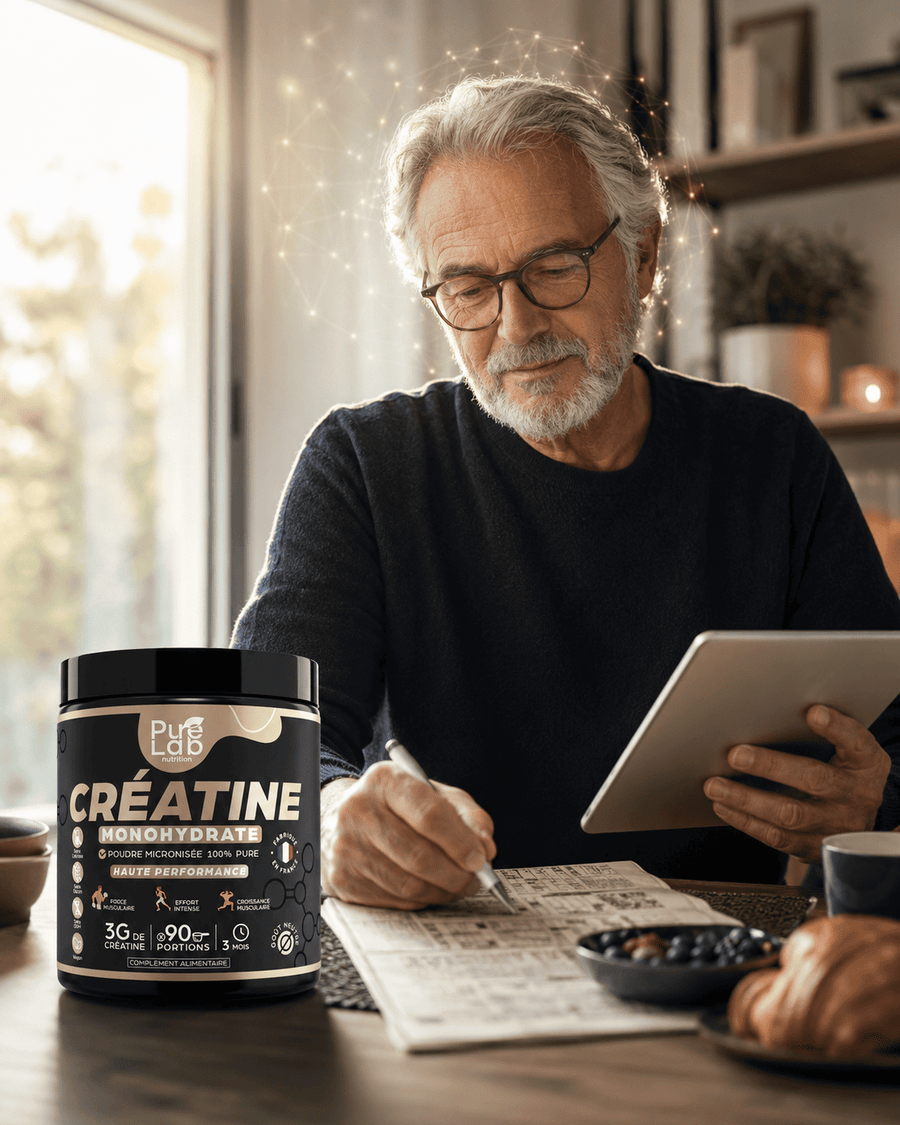
False. Creatine is of interest to everyone who performs short and intense efforts: team sports, sprinting, fitness, combat sports. Research is also focusing on women, whose natural stores are on average lower (read Creatine for women), and the elderly (read Creatine for the elderly).
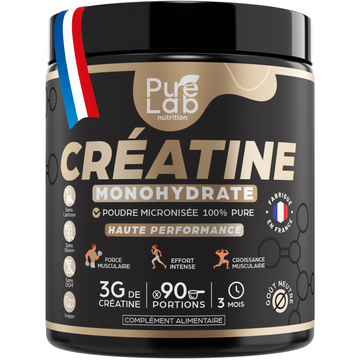
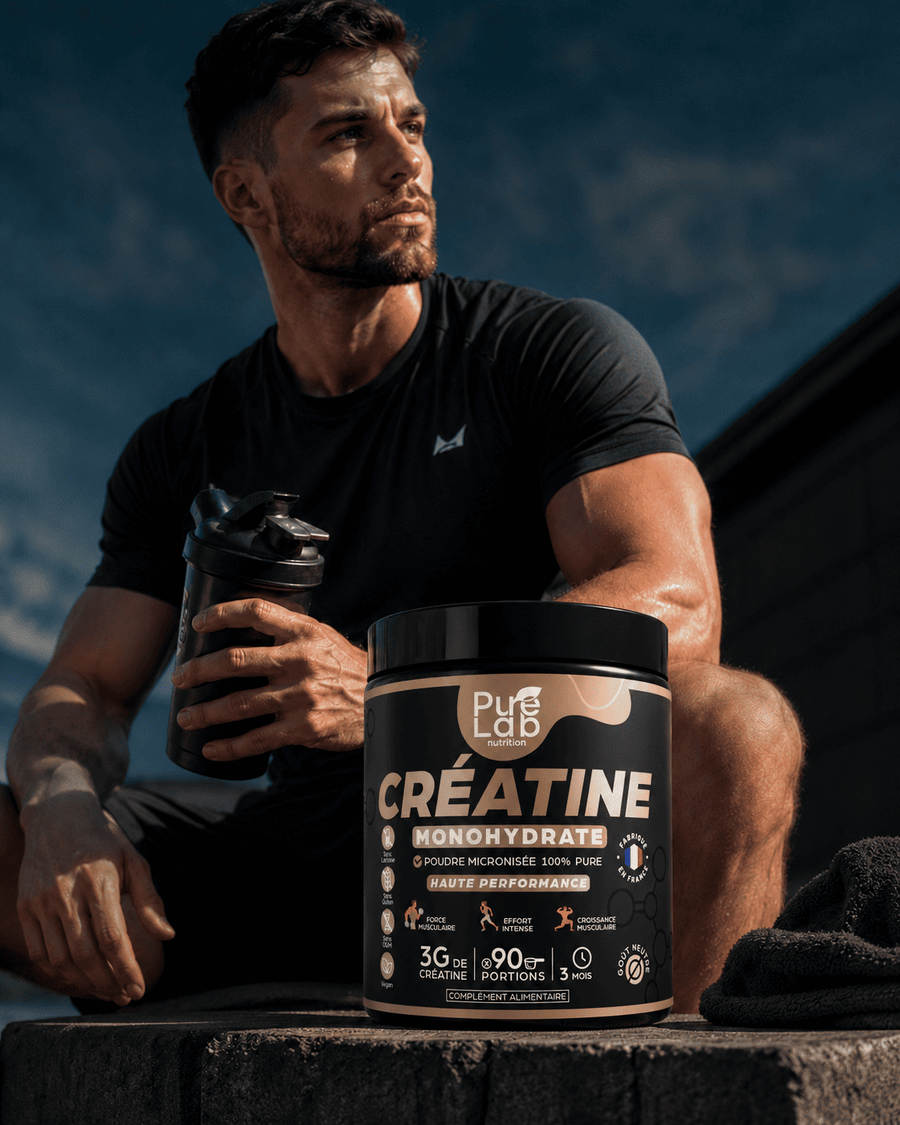
💪 Our Creatine monohydrate
✅ Creatine monohydrate, the most studied form
✅ Simple daily intake, at a fixed time
👉 Discover our Creatine monohydrate here.
Summary table
| Misconception | Verdict | Key takeaway |
|---|---|---|
| Hair loss | Mostly false | One old study from 2009, never replicated |
| Kidney damage | False in healthy individuals | Be careful with creatinine interpretation |
| Water retention | Partly true | Slight, transient, in the muscle |
| Steroid | False | Molecule naturally present in the body |
| Mandatory loading phase | False | Regular daily intake is sufficient |
| More = better | False | 3 to 5 g per day commonly recommended |
Frequently asked questions
❓ Should I drink more water when taking creatine?
It is always helpful to stay well hydrated when exercising. Drink regularly throughout the day, without overdoing it.
❓ Can I take creatine with coffee?
Nothing prevents you from taking it at breakfast. The most important thing is to take it every day, at a time that works for you.
❓ Who should seek medical advice before starting?
People with kidney disease, pregnant or breastfeeding women, adolescents, and anyone on medication.
❓ How can I spot reliable information?
Be wary of isolated testimonials and alarmist headlines. Look instead for literature reviews and expert positions, such as those from the ISSN cited in this article.
In summary
1️⃣ Hair: a single old study, never replicated
2️⃣ Kidneys: no evidence of harmful effect in healthy people
3️⃣ Water retention: slight, transient, in the muscle
4️⃣ Neither a steroid nor a mandatory loading phase, and no need for high doses
Pure Lab Nutrition ... The art of nourishing your well-being.
Sources:
- Antonio J. et al. (2021). Common questions and misconceptions about creatine supplementation: what does the scientific evidence really show? Journal of the International Society of Sports Nutrition, 18, 13. JISSN
- Kreider R.B. et al. (2017). International Society of Sports Nutrition position stand: safety and efficacy of creatine supplementation in exercise, sport, and medicine. Journal of the International Society of Sports Nutrition, 14, 18. JISSN
- Smith-Ryan A.E., Cabre H.E., Eckerson J.M., Candow D.G. (2021). Creatine Supplementation in Women's Health: A Lifespan Perspective. Nutrients, 13(3), 877. PMC
- Regulation (EU) No 432/2012 establishing a list of permitted health claims. EUR-Lex


Restez informé 🌿
Recevez nos derniers articles et conseils santé directement dans votre boîte mail.


