





















Vegan or vegetarian: supplements to consider
Do you eat few or no animal products? Good news: a well-planned vegetarian or vegan diet can cover most of your nutritional needs. However, some nutrients require special attention, and one of them is virtually non-existent in the plant world.
At Pure Lab Nutrition, we rely on the guidelines published by ANSES in 2025 to help you understand what to monitor, how to compose your meals, and when a supplement is actually useful.
📑 Summary
- Vegetarian, vegan: what's the difference?
- What ANSES says in 2025
- Vitamin B12, non-negotiable
- Other nutrients to watch
- Summary table
- A well-planned typical day
- Common misconceptions
- Frequently asked questions
- In summary
Vegetarian, vegan: what's the difference?
A vegetarian excludes meat and fish but consumes eggs and dairy products. A vegan excludes all products of animal origin. Between the two, there are many variations: flexitarian who reduces meat, pesco-vegetarian who keeps fish... The more restrictive the diet, the greater the vigilance must be.
🔁 A transition, not a revolution
Many people gradually transition from an omnivorous diet to a plant-based one. It is often during this transition that imbalances appear: we remove meat without truly replacing it with legumes, whole grains, or nuts and seeds. Taking the time to reorganize your meals is the first step.
What ANSES says in 2025
In March 2025, ANSES published its first dietary guidelines intended for vegetarian adults. The agency highlights that the iron, iodine, and vitamin B12 status of vegetarians is less favorable than that of non-vegetarians, and that it is difficult to meet requirements for certain omega-3s (EPA, DHA) and vitamin D. For vegans, it also points to the difficulty of meeting vitamin B12 requirements and, in men, zinc requirements.
As for the plate, ANSES notably proposes a benchmark of 75 g of dried legumes per day for lacto-ovo-vegetarians and 120 g per day for vegans. These guidelines apply to adults: for children, adolescents, and pregnant women, guidance from a healthcare professional is highly recommended.
Vitamin B12, non-negotiable
Vitamin B12 is only present in useful quantities in foods of animal origin. For a vegan, there is therefore no reliable dietary solution other than fortified foods: a B12 supplement is the simplest path, and everyone following these diets should have their status monitored. Algae and spirulina are not reliable sources. For reference, EFSA set an adequate intake of 4 µg per day for adults in 2015.
B12 contributes to the reduction of fatigue, the normal functioning of the nervous system, normal red blood cell formation, and normal psychological functions. A deficiency sets in slowly because the body has reserves: that is precisely why you must anticipate it. To understand everything, read Vegetarians and vegans: why vitamin B12 is essential and Methylcobalamin or cyanocobalamin: which form to choose?
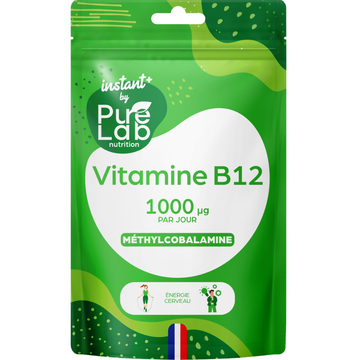
👉 Discover our Vitamin B12 Instant+, in vegetable capsules, here.
Other nutrients to watch
🩸 Iron
Iron from plants is less well absorbed than iron from meat. Tip: combine legumes and whole grains with a source of vitamin C (bell peppers, citrus fruits, kiwi), which increases iron absorption. Avoid tea and coffee during meals, as they can hinder this absorption. Only take an iron supplement after a blood test.
🛡️ Zinc
This is also less well absorbed from plants. It contributes to the normal functioning of the immune system and the maintenance of normal skin, hair, and nails. Soaking or sprouting legumes and opting for sourdough bread are simple actions often recommended. Read Zinc: roles, requirements, and signs of deficiency.
🧂 Iodine
Without fish or dairy products, intake can be low. Iodized salt, used in moderation, is a simple solution.
☀️ Vitamin D
Rarely present in plants, apart from certain mushrooms and fortified products. According to ANSES, sun exposure remains the main source, at 15 to 20 minutes per day, but it is limited in winter. Vitamin D contributes to the maintenance of normal bones and the normal functioning of the immune system. However, avoid combining several products that contain it: overdosing is possible.
🐟 Omega-3 EPA and DHA
These are found primarily in fatty fish. Plants (walnuts, rapeseed, flax) provide another omega-3, ALA, which the body only partially converts. Include these sources every day, and talk to your doctor or a dietician if your diet is strictly plant-based.
Summary table
| Nutrient | Vegetarian | Vegan |
|---|---|---|
| Vitamin B12 | Monitor | Supplement necessary |
| Iron | Monitor | Monitor |
| Zinc | Caution | Monitor |
| Iodine | Caution | Monitor |
| Vitamin D | Monitor | Monitor |
| Omega-3 EPA/DHA | Caution | Monitor |
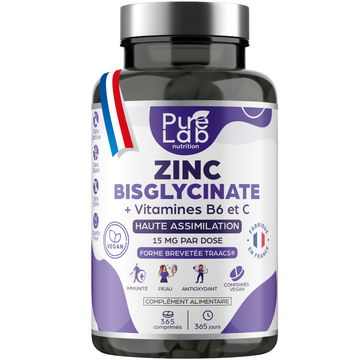
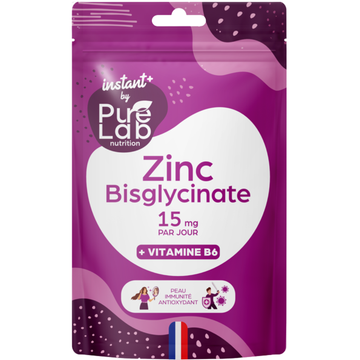
👉 Discover our Zinc Bisglycinate and our Zinc Instant+ here.
A well-planned typical day
✅ Breakfast: sourdough whole-wheat bread, nut butter, a fruit rich in vitamin C
✅ Lunch: lentils or chickpeas, whole grain, vegetables, rapeseed oil
✅ Snack: a handful of walnuts or almonds
✅ Dinner: tofu or tempeh, seasonal vegetables, a seasoned raw vegetable side
✅ Every day: your B12 supplement if you are vegan, and iodized salt in moderation
Common misconceptions
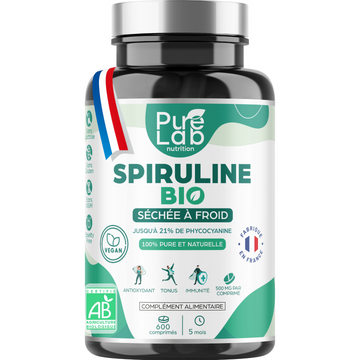
❌ "Spirulina provides B12": false, it is not a reliable source of B12. It remains interesting for other reasons: read Spirulina and iron.
❌ "You inevitably lack protein": no, by combining legumes, grains, soy, and nuts/seeds.
❌ "You have to take lots of supplements": no, B12 is the only essential one for vegans; the rest depends on your diet and your blood test results.
❌ "A check-up is for sick people": on the contrary, regular blood tests allow you to adjust before a deficiency sets in.
Frequently asked questions
❓ Does a vegetarian who eats eggs and dairy need B12?
Not necessarily, but their status is on average less favorable than that of an omnivore. Have it checked during a check-up, especially if you consume few eggs and dairy products.
❓ Is a multivitamin enough?
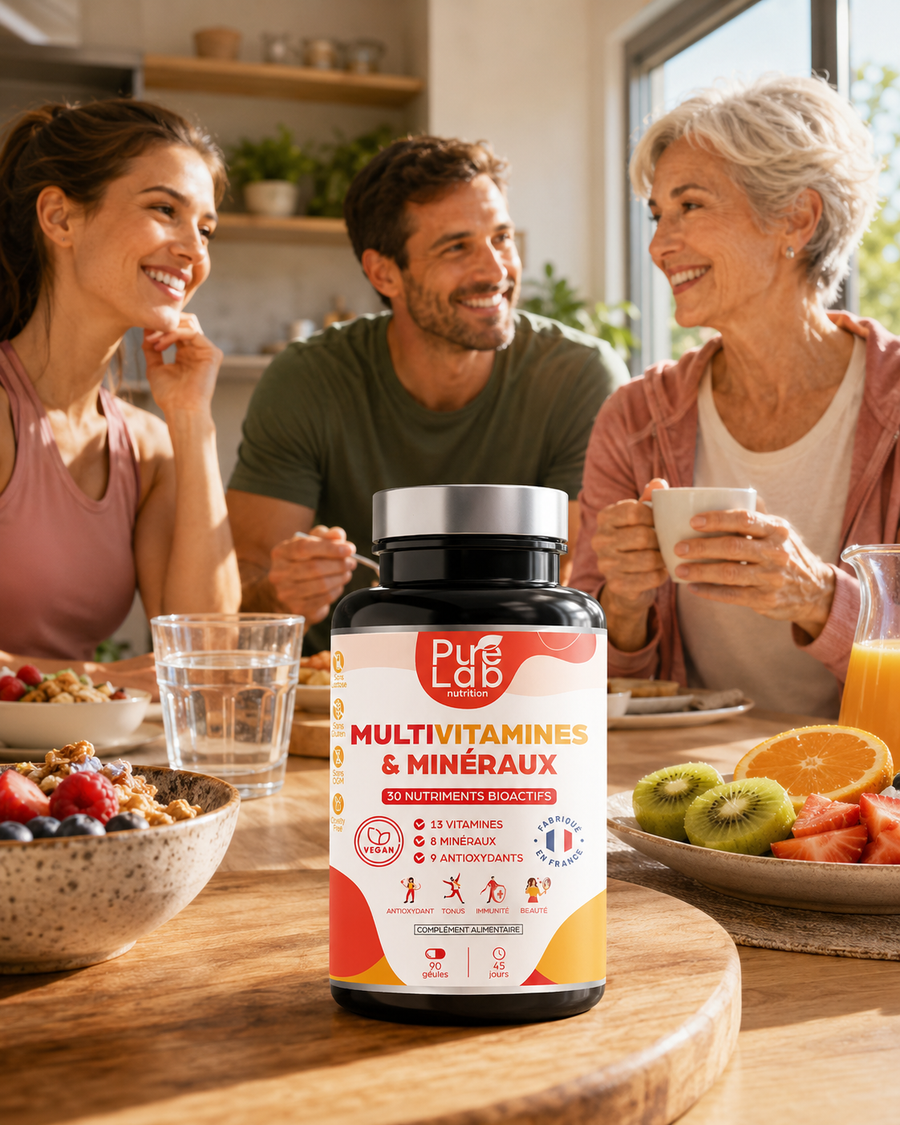
It can help cover several needs at once, but check the amount of B12 it provides. Our guide Should you take a multivitamin? helps you choose.
❓ Can children and pregnant women follow these guidelines?
The ANSES guidelines published in 2025 concern adults. For a child, an adolescent, or a pregnant or breastfeeding woman, seek a doctor's advice before any supplementation.
❓ Are the capsules compatible with a vegan lifestyle?
Always check the label: the capsule itself can be of animal origin. Our Vitamin B12 Instant+ is offered in vegetable capsules.
In summary
1️⃣ B12 is essential for vegans
2️⃣ Iron, zinc, iodine, vitamin D, and omega-3s to monitor
3️⃣ Regular blood tests to make adjustments
4️⃣ A varied diet, rich in legumes, remains the foundation
Pure Lab Nutrition ... The art of nourishing your well-being.
Sources:
- ANSES (2025). Vegetarian diets: health effects and dietary guidelines. anses.fr
- ANSES. Food supplements containing spirulina: importance of choosing trustworthy supply channels. anses.fr
- EFSA (2015). Scientific opinion on dietary reference values for vitamin B12. efsa.europa.eu
- ANSES. Vitamin D: why and how to ensure adequate intake? anses.fr
- Regulation (EU) No 432/2012 on authorized health claims. EUR-Lex


Restez informé 🌿
Recevez nos derniers articles et conseils santé directement dans votre boîte mail.


