















Creatine for women: benefits, dosage, and misconceptions
“Creatine is for men who want to be huge.” This misconception is hard to shake. Yet, research is increasingly focusing on women, and the results are worth taking note of.
At Pure Lab Nutrition, our female customers often ask us this question. Here is what science really says about creatine for women, and how to use it.
📑 Table of Contents
- Why should women be interested in creatine?
- What research says, step by step
- Common misconceptions
- How to take it?
- In summary
Why should women be interested in creatine?
Creatine is a molecule naturally present in our muscles and brain, where it serves as a rapid energy reserve. It is partly produced by the body and partly provided by meat and fish.
In 2021, a review published in Nutrients (Smith-Ryan et al.) examined the role of creatine in women's health. The authors highlight that, on average, women have lower natural creatine stores than men and that this topic remains understudied.
What research says, step by step
🏋️♀️ Before menopause
According to this review, creatine supplementation appears effective for improving strength and physical performance, just as it is for men.
🌸 After menopause
The authors report that creatine, especially combined with strength training, could help preserve muscle mass and function, with potentially favorable effects on bones. These are interesting results at an age when muscle loss accelerates.
🧠 Mood and mental fatigue
Preclinical and clinical work suggests benefits for mood and mental fatigue, possibly by supporting brain energy. These avenues are promising but still require further confirmation.
🤰 Pregnancy and breastfeeding
The review notes potential interest, but data remains limited. During pregnancy and breastfeeding, do not take creatine without medical advice.
Common misconceptions
❌ “Creatine makes you gain weight”
False, in the way it is meant. Creatine draws water into the muscles. This may lead to a slight increase on the scale at first, but it is not fat, and the muscle actually appears firmer.
❌ “It will give me big, bulky muscles”
False. Creatine helps you train more effectively; muscle development depends primarily on training, diet, and hormones. It does not transform your physique.
❌ “It’s dangerous”
False for healthy individuals. The 2017 position stand from the International Society of Sports Nutrition, based on over 200 studies, concludes that there are no clinically significant adverse effects of creatine monohydrate and no convincing evidence of harmful effects on the kidneys in healthy individuals. If you have kidney disease, consult your doctor.
How to take it?
- The form: creatine monohydrate, which is the most studied
- The dose: 3g per day, the dose associated with the European claim: creatine increases physical performance in successive bursts of short-term, high-intensity exercise
- Consistency: take it every day at the same time, including rest days
- With water, and make sure to drink enough throughout the day
- With strength training: this is where its effects are most clear
For everything you need to know about dosing, read Creatine 3g or 5g. And for seniors, read Creatine for the elderly.
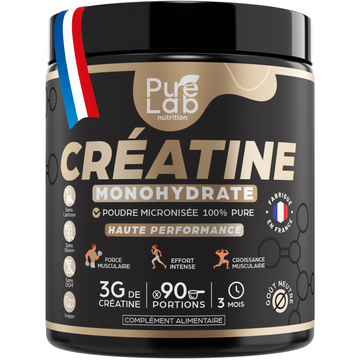
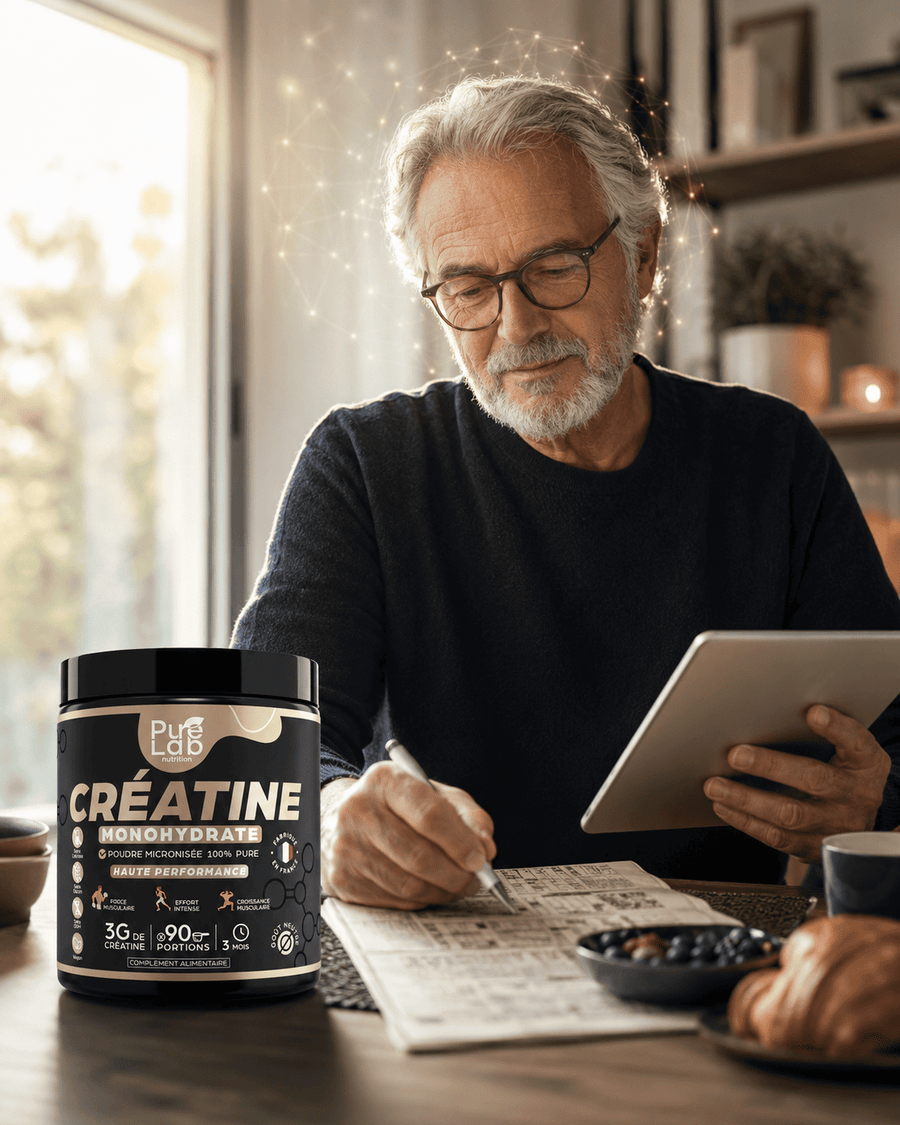
💪 Our Creatine monohydrate
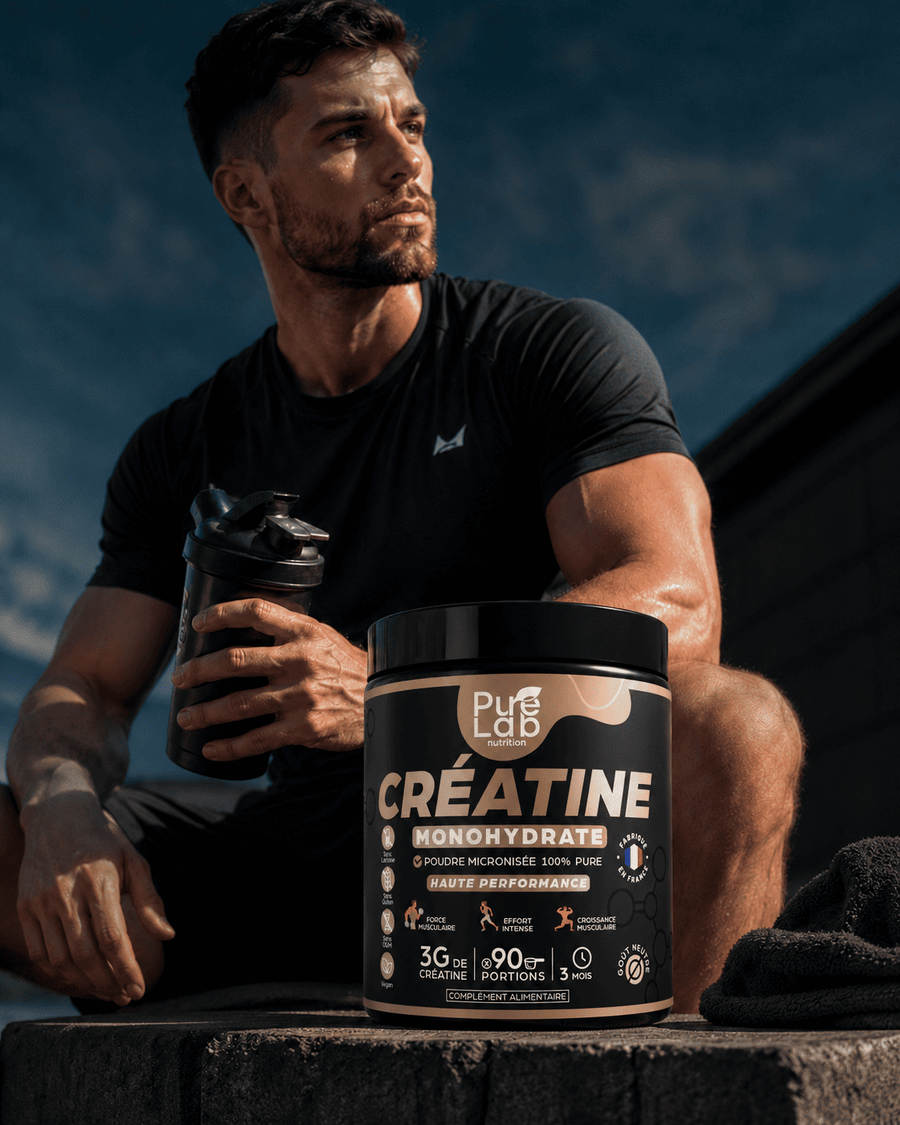
✅ Micronized creatine monohydrate, 100% pure
✅ No additives, easy to mix
✅ Made in France
👉 Discover our Creatine monohydrate here.
In summary
1️⃣ Not just for men: women have lower stores
2️⃣ Strength and performance before menopause, muscles and bones after
3️⃣ It does not make you gain fat or transform your physique
4️⃣ 3g per day, consistently; consult a doctor during pregnancy
Pure Lab Nutrition ... The art of nourishing your well-being.
Sources:
- Smith-Ryan A.E., Cabre H.E., Eckerson J.M., Candow D.G. (2021). Creatine Supplementation in Women's Health: A Lifespan Perspective. Nutrients, 13(3), 877. PMC
- Kreider R.B. et al. (2017). International Society of Sports Nutrition position stand: safety and efficacy of creatine supplementation in exercise, sport, and medicine. Journal of the International Society of Sports Nutrition, 14, 18. JISSN
- Regulation (EU) No 432/2012 establishing a list of permitted health claims. EUR-Lex


Restez informé 🌿
Recevez nos derniers articles et conseils santé directement dans votre boîte mail.