






















Weight loss: which supplements can really help?
“Lose 5 kilos effortlessly!” You have surely seen this kind of promise before. The reality is less spectacular, but more reassuring: certain supplements can support a weight-loss journey, provided you know what you can really expect from them.
At Pure Lab Nutrition, we prefer to tell you the truth rather than sell you a dream. Here is the situation, backed by studies and official opinions, along with concrete advice for building a sustainable approach and the mistakes to avoid.
📑 Summary
- The truth about weight-loss supplements
- The trap of restrictive diets
- Hunger, satiety, and cravings: understanding them
- The foundations of a sustainable approach
- Fiber, the most studied approach
- Nutrients that support the process
- How to properly use a weight-loss supplement
- A typical month, week by week
- Myths and reality
- What to avoid
- Frequently Asked Questions
- In summary
The truth about weight-loss supplements
No supplement makes you lose weight on its own. Weight loss is based on a balance between what you eat and what you burn. Supplements can, at best, facilitate a process: helping to manage hunger, support energy levels, and prevent deficiencies. This is precisely why European regulations prohibit mentioning a specific rate or amount of weight loss on a supplement.
Also, keep in mind that the number on the scale doesn't tell the whole story: it varies from one day to the next depending on hydration, digestive content, or the menstrual cycle. Waist measurement, daily energy levels, and how your clothes fit are often better indicators of progress.
The trap of restrictive diets
In 2011, ANSES published an evaluation of slimming diets. It warned about the risks of very restrictive diets: nutritional imbalances, muscle mass loss, and frequent weight regain once the diet is stopped. It recommends adapted and personalized care, combining a balanced diet and physical activity.
In practice, the stricter a diet is, the harder it is to maintain, and the greater the risk of "rebound." Modest changes that can be kept over the long term are better.
Hunger, satiety, and cravings: understanding them
Three things are often confused. Hunger is a physical need that builds gradually, a few hours after a meal. Satiety is the feeling of being full, which takes time to set in after starting a meal: that is why eating quickly leads to eating more. Finally, cravings are often linked to emotion, fatigue, boredom, or habit, and often target sweet or fatty foods.
Identifying what is happening to you will guide the solutions. If you are hungry two hours after lunch, the composition of the meal needs to be reviewed (more vegetables, fiber, a real source of protein). If you snack in the evening in front of a screen, it is more about habits and fatigue that need to be addressed. A supplement does not fix emotional cravings; at best, it can support a better meal structure.
📝 A diary for one week
Simply note the time, what you eat, your hunger level from 1 to 10, and the context (stress, screen, fatigue). After a few days, sensitive moments will appear clearly, and you will know where to take action first.
The foundations of a sustainable approach
✅ Structured meals, with vegetables, a source of protein, and whole grains
✅ Fiber at every meal: vegetables, fruits, legumes, whole grains
✅ Water as the main drink, limiting sugary beverages
✅ Regular physical activity, which also helps preserve muscle mass
✅ Sufficient sleep: fatigue often leads to snacking
✅ Eating slowly and without screens, to better perceive satiety
If you have a lot of weight to lose, a chronic illness, or are on medication, seek support from a doctor or a dietitian.
Fiber, the most studied approach
Dietary fibers swell upon contact with water and slow down stomach emptying, which promotes a feeling of satiety. A systematic review published in 2011 in Obesity Reviews (Wanders et al.) analyzed randomized trials on the subject: effects vary depending on the type of fiber, with viscous fibers being most associated with a decrease in appetite.
This result reminds us of an important thing: not all fibers are created equal, and an effect observed with a specific fiber does not automatically translate to another. That is why you should always read the composition of a product and not rely solely on the mention of "fiber."
To understand these mechanisms, read Natural appetite suppressants: fiber, plants, and satiety.
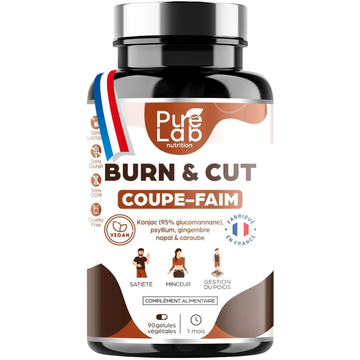
👉 Discover our Burn & Cut, based on fiber and plants, here.
Nutrients that support the process
| Nutrient | Why during rebalancing |
|---|---|
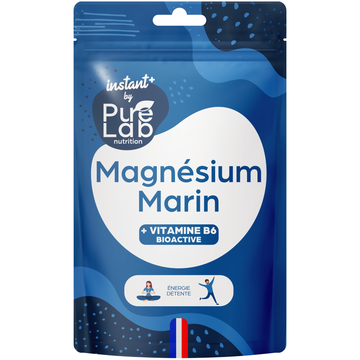
| Magnesium | Helps reduce fatigue and supports normal energy-yielding metabolism |
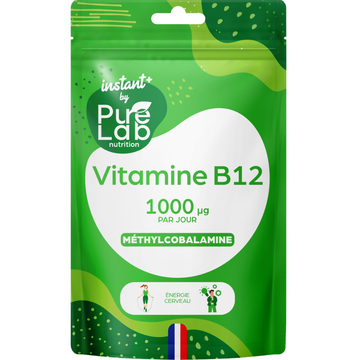
| B Vitamins | Contribute to normal energy-yielding metabolism |
| Chromium | Contributes to the maintenance of normal blood glucose levels |
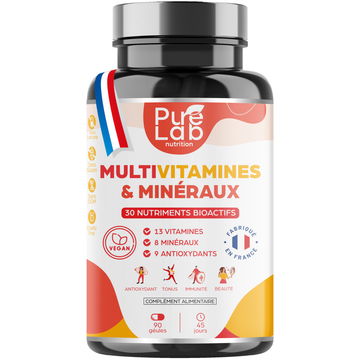
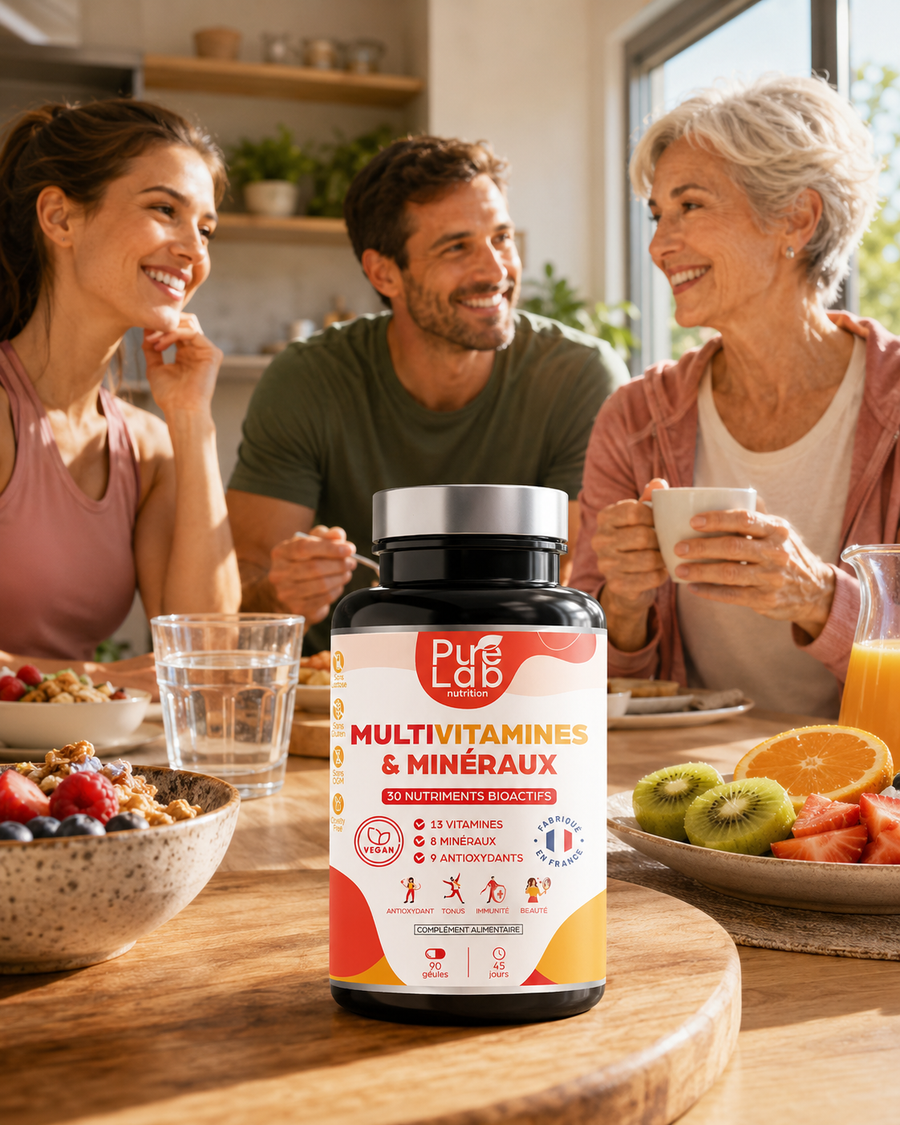
| Multivitamins | Helps meet needs when eating less |
When reducing portions, it becomes more difficult to meet all your vitamin and mineral needs. This is one of the reasons why ANSES warns against overly restrictive diets. A multivitamin can help occasionally, without replacing a varied diet.
To choose between our two formulas, read Burn & Fit or Burn & Cut: which one to choose? and Natural fat burners: what really works.
How to properly use a weight-loss supplement
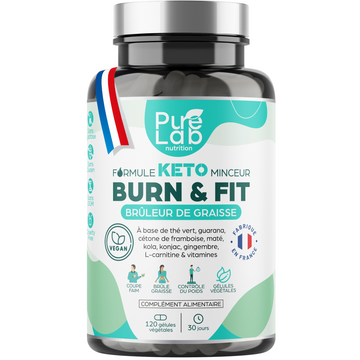
🌿 Burn & Fit
Formulated with plants and vitamins, it should be taken at a rate of 2 capsules per day, at breakfast and lunch, for a one-month course. It is vegan, lactose-free, and gluten-free.
💧 Burn & Cut
Formulated with plant-based fibers and plant extracts, it should be taken at a rate of 3 capsules, 15 to 30 minutes before main meals, with a large glass of water, for a one-month course. It is vegan. As with any fiber-based product, take it separately from your medications.
🧭 Which one based on your schedule?
The method of intake can help you choose. Burn & Cut requires anticipating each main meal: it is suitable for people who eat at regular times. Burn & Fit, with its two doses linked to breakfast and lunch, fits more simply into busy days.
📅 Good habits
Choose only one weight-loss product at a time, respect the indicated dose, drink enough water, and combine the course with habit changes. At the end of the month, take stock: energy, appetite, consistency of your meals. It is this routine that will make the difference over time. Our article How long until you see the effects of a supplement? helps you set realistic expectations.
A typical month, week by week
Week 1: you keep your diary, structure three meals a day, and replace sugary drinks with water.
Week 2: you add a portion of vegetables at lunch and dinner, and schedule two 30-minute walks in addition to your usual commute.
Week 3: you work on the sensitive moment identified in your diary (planned afternoon snack, going to bed earlier if fatigue leads to snacking).
Week 4: you assess your progress using your waist measurement, energy levels, and the consistency of your meals, rather than just the scale.
If you accompany this month with a supplement, follow its dosage from the first to the last day: this is the duration planned for both Burn & Fit and Burn & Cut.
Myths and reality
❌ “The more I sweat, the more fat I lose”: sweat is mostly water, which is quickly recovered by drinking.
❌ “Skipping a meal helps you lose weight”: it mostly puts you at risk of arriving starving at the next meal and snacking.
❌ “A natural product carries no risks”: "natural" does not guarantee effectiveness or the absence of side effects: always read the composition and precautions for use.
❌ “You just need to double the dose to go faster”: never. The indicated daily portion is a maximum.
✅ “Small changes maintained over time count the most”: true, this is the intent of the ANSES recommendations.
What to avoid
ANSES warns against supplements intended to reduce body fat, particularly those purchased outside of controlled channels:
❌ Products with numerical promises (“-10 kg in one month”)
❌ Combining several fat burners
❌ Products with a vague composition
❌ Their use by children and adolescents, pregnant or breastfeeding women, and people with health problems without medical advice
Let’s add a few frequent mistakes: relying only on the scale, stopping all physical activity as soon as you "pay attention" to your diet, or chaining courses together without ever reviewing your habits. To identify a serious product, read How to read a food supplement label.
Frequently Asked Questions
❓ Can you take Burn & Fit and Burn & Cut at the same time?
We advise you to choose one formula or the other according to your needs, rather than combining them. Our comparison guide helps you decide.
❓ Should you exercise during the course?
Yes, physical activity is part of any sustainable approach, as reminded by ANSES. It particularly helps preserve muscle mass.
❓ What if my relationship with food is difficult?
Compulsive eating, very strong restriction, or constant guilt around meals deserve support from a doctor or a specialized professional. In this case, a weight-loss supplement is not an appropriate response.
❓ What to do after one month?
Take stock of your habits. Changes in diet and activity are what matter most in the long term, with or without a supplement.
❓ Is there an authorized claim for weight loss?
Yes, for one specific ingredient: glucomannan, a fiber derived from konjac. According to Regulation (EU) No 432/2012, it contributes to weight loss in the context of a low-calorie diet, at a rate of 3 g per day in three 1 g doses, with 1 to 2 glasses of water before meals. This claim only applies to products that contain it in these amounts: always check the composition on the label.
In summary
1️⃣ No supplement causes weight loss on its own
2️⃣ Fiber is the most studied approach for satiety
3️⃣ Avoid very restrictive diets and numerical promises
4️⃣ Diet, physical activity, and sleep remain the foundation
Pure Lab Nutrition ... The art of nourishing your well-being.
Sources:
- ANSES (2011). Evaluation of the risks associated with weight-loss diets. anses.fr
- Wanders A.J. et al. (2011). Effects of dietary fibre on subjective appetite, energy intake and body weight: a systematic review of randomized controlled trials. Obesity Reviews. PubMed
- ANSES. Food supplements for developing muscle or reducing body fat. anses.fr
- DGCCRF. Labeling, presentation, and advertising of food supplements: rules to know. economie.gouv.fr
- Regulation (EU) No 432/2012 on authorized health claims. EUR-Lex


Restez informé 🌿
Recevez nos derniers articles et conseils santé directement dans votre boîte mail.