



















French dietary supplement brand: what it really changes
When you buy a dietary supplement, you are placing your trust in a label, a brand, and a regulatory framework. But do you know precisely what this framework guarantees, where its limits lie, and what really depends on the brand? In France, as in the entire European Union, the rules are precise, binding, and strictly monitored. Understanding them means choosing with discernment.
At Pure Lab Nutrition, we believe that transparency is the best form of trust. Here is what the European and French framework guarantees, what it does not, and how to use this knowledge to choose a high-quality supplement.
📑 Table of Contents
- The European regulatory framework
- Strictly regulated health claims
- Real-world monitoring and enforcement
- Nutrivigilance: a safety net
- What a French brand concretely provides
- Identifying a reliable brand
- Frequently Asked Questions
- In summary
The European regulatory framework
Dietary supplements sold within the European Union are governed by Directive 2002/46/EC, which sets common rules on composition, labeling, and safety. In France, this directive was transposed via the decree of March 20, 2006, supplemented by ministerial orders that specify the authorized ingredients.
📄 What regulations require on every label
According to the DGCCRF, the label must mandatorily include:
- the term "dietary supplement" and the name of the nutrients or substances that characterize it
- the recommended daily portion and a warning against exceeding it
- a statement that it is not a substitute for a varied diet
- a statement to keep out of the reach of young children
- the name and address of the responsible party, the list of ingredients, allergens, and the minimum durability date
Authorized ingredients fall under positive lists: a nutrient, plant, or substance not listed cannot be included in the composition. Furthermore, any product launch is subject to a prior declaration to the General Directorate for Food (DGAL).
Strictly regulated health claims
Regulation (EU) No 432/2012 sets the list of authorized health claims. Only formulations validated by the EFSA (European Food Safety Authority) after rigorous scientific examination may be used. Each claim is specific to a nutrient and a minimum dose.
Validated examples: "Magnesium contributes to a reduction of tiredness and fatigue," "Vitamin C contributes to the normal function of the immune system," "Zinc contributes to the maintenance of normal skin."
What a supplement can never do:
❌ claim to prevent, treat, or cure a disease
❌ refer to the rate or magnitude of weight loss
❌ imply that a balanced diet is not enough
❌ rely on the named recommendation of a doctor or health professional
For plants, no health claims have been authorized yet at the European level. A serious brand will therefore present available scientific studies using conditional language and noting their limitations, rather than making quantified promises.
Real-world monitoring and enforcement
These rules are not merely theoretical. The DGCCRF (French consumer protection agency) regularly inspects the market. During an investigation conducted in 2023 across 270 establishments—manufacturers, distributors, and e-retailers—it found anomalies in about one-third of them.
Among the most frequent infractions:
- forbidden therapeutic claims ("cures," "treats")
- unauthorized or unjustified health claims
- missing mandatory information
- vitamin or mineral levels differing from those advertised
The investigation resulted in 71 injunctions, 25 criminal reports, and 67 warnings. The severity of these sanctions shows that the framework is not just formal: it is enforced. For a consumer, this means that the information on a compliant label has been subjected to this level of scrutiny.
Nutrivigilance: a safety net
In addition to preventive controls, ANSES has been managing the nutrivigilance system since 2009. It collects reports of adverse effects following the consumption of dietary supplements, fortified foods, or other specific food products.
This system allows ANSES to identify emerging risk signals and, if necessary, issue recommendations or expert opinions. This is how the agency published an opinion in 2024 advising against ashwagandha for pregnant or breastfeeding women, minors, and individuals with certain health conditions or treatments. Health professionals can report adverse effects online; individuals can as well, although the agency recommends going through a healthcare professional.
This post-market monitoring system is an asset of European regulation: it allows for continuous surveillance, far beyond simple checks at the time of market entry.
What a French brand concretely provides
The regulatory framework is common to all products sold in France, regardless of the brand's origin. What differs is what the brand does beyond this legal minimum.
🗣️ Service and information in French
The law of August 4, 1994, mandates the use of French in the designation, presentation, and instructions for any product sold in France. A French brand goes further: product sheets, usage tips, and answers to questions are designed directly in French, without approximate translations.
🔍 Transparency in composition
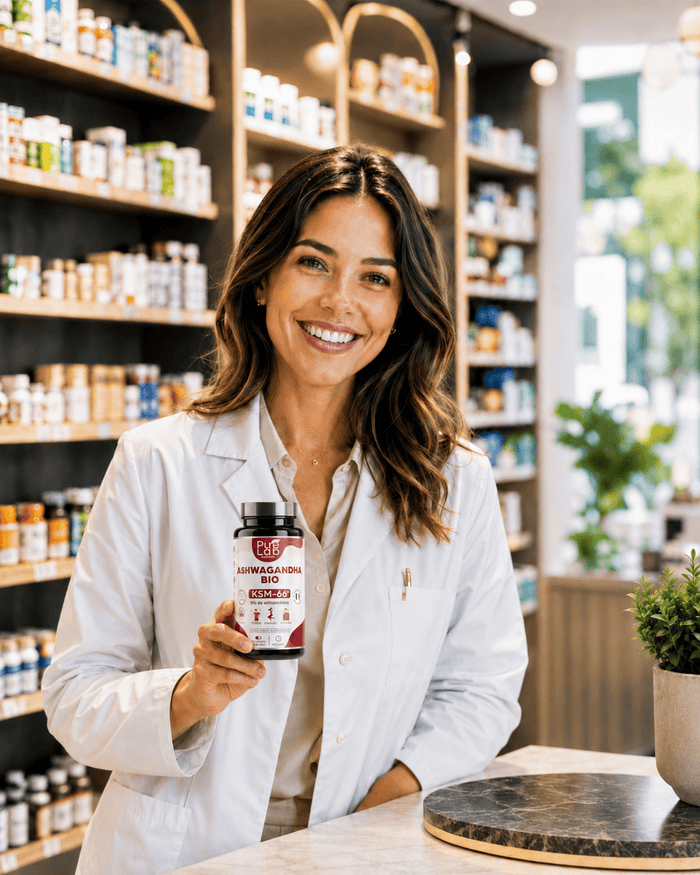
A committed brand details each active ingredient, its chemical form, and its dose per serving. Our Organic Ashwagandha specifies a KSM-66 root extract, titrated to 5% withanolides, at 300 mg per capsule. This information allows you to compare directly with the doses used in scientific studies—and to know exactly what you are paying for.
📚 Awareness of local regulatory updates
Following DGCCRF and ANSES notices is part of the work of a brand established in France. When ANSES publishes a cautionary notice, an attentive brand relays it in its usage advice, even if it is not legally mandatory. This is a tangible difference for you.
Identifying a reliable brand
Whether a brand is French or not, the same criteria allow you to judge its integrity:
| Criterion | What to verify |
|---|---|
| Detailed composition | Each active ingredient with its quantity per daily serving, without opaque "proprietary blends" |
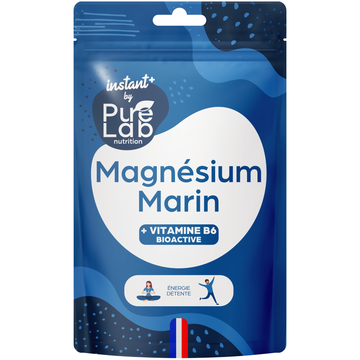
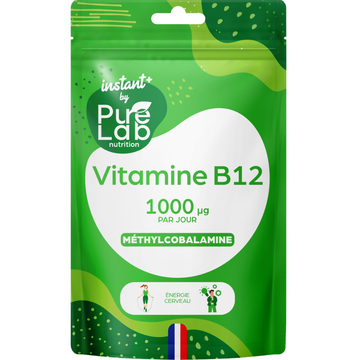
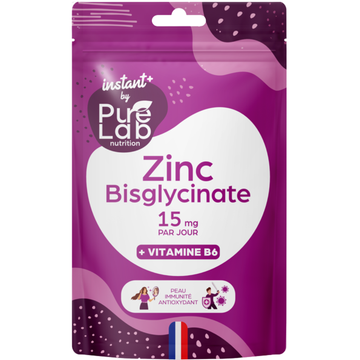
| Specified forms | Bisglycinate, methylcobalamin… and, for plants, the extract and its titration |
| Measured claims | Authorized formulations that "contribute to," no promises of a cure |
| Identified responsible party | Legible name and address, accessible customer service |
| Clear precautions | People for whom the product is not recommended, duration of use, reminder of medical advice |
🚩 Red flags
❌ Spectacular or quantified promises
❌ Composition without precise quantities
❌ No identifiable responsible party
❌ Missing or untranslated usage precautions
❌ Very high doses without explanation
Compare labels rather than packaging. The composition tells almost everything; the box design says nothing about the formula.
Frequently Asked Questions
❓ Is a French brand subject to stricter rules?
No: the rules on labeling, ingredients, and claims apply to any supplement sold in France. The difference lies in transparency, the quality of information, and the availability of customer service.
❓ What does Regulation (EU) No 432/2012 guarantee?
It establishes the list of authorized health claims for nutrients. Only claims scientifically validated by the EFSA can appear on a product. This is what distinguishes a legitimate claim from a marketing promise.
❓ Can you combine products from multiple brands?
Yes, provided that you add up the quantities of each nutrient. Read Can you take several supplements at the same time?
❓ What should you do in case of an adverse effect?
Stop using the product, talk to your doctor or pharmacist, and contact the responsible party listed on the label. The effect can be reported to the ANSES nutrivigilance system.
❓ Does Directive 2002/46/EC apply to products sold online from abroad?
Yes: any product sold to French consumers, including online from abroad, is subject to French and European rules. The DGCCRF can intervene regarding these products, and the 1994 law mandates the use of French in the presentation and instructions.
In summary
1️⃣ Directive 2002/46/EC and Regulation 432/2012 set a demanding common framework for all supplements sold in the EU
2️⃣ DGCCRF inspections are real and carry sanctions: anomalies represent a serious infraction
3️⃣ The ANSES nutrivigilance system ensures continuous post-market surveillance
4️⃣ A French brand provides proximity, information in French, and monitoring of local regulatory developments
5️⃣ Judge by the facts: composition, forms, claims, and precautions
Pure Lab Nutrition ... The art of nourishing your well-being.
Sources:
- Directive 2002/46/EC of the European Parliament and of the Council on the approximation of the laws of the Member States relating to food supplements. EUR-Lex
- Regulation (EU) No 432/2012 regarding authorized health claims. EUR-Lex
- DGCCRF. Labeling, presentation, and advertising of dietary supplements: rules to know. economie.gouv.fr
- DGCCRF (2025). Dietary supplements: still too many anomalies. economie.gouv.fr
- ANSES. Everything you need to know about the nutrivigilance system. anses.fr
- ANSES (2024). Opinion regarding the risks related to the use of *Withania somnifera* preparations. anses.fr
- Ministry of Culture. Guaranteeing the use of French (Law No. 94-665 of August 4, 1994). culture.gouv.fr


Restez informé 🌿
Recevez nos derniers articles et conseils santé directement dans votre boîte mail.