

















Iron and pregnancy: why requirements increase and how to meet them
Pregnancy is one of the periods in life when iron requirements reach their highest level. Yet, iron deficiency remains the most common nutritional deficiency in pregnant women in France and worldwide. Here is why and how to address it effectively.
📑 Contents
- Why iron requirements skyrocket during pregnancy
- Risks of iron deficiency during pregnancy
- How to detect iron deficiency when pregnant?
- Iron-rich diet during pregnancy
- Iron bisglycinate supplementation: the gentle and effective form
🔬 Why iron requirements skyrocket during pregnancy
During pregnancy, the maternal body must meet both its own physiological iron needs and those related to the development of the unborn child. This dual demand leads to an increase in iron requirements of nearly 50% compared to the pre-conception period.
🩸 Expansion of maternal blood volume
From the first trimester, the pregnant woman's blood volume increases progressively. By the end of pregnancy, it will have grown by about 40 to 50% compared to pre-pregnancy volume. This increase in plasma volume dilutes red blood cells, but their absolute number must also increase to maintain adequate oxygen-carrying capacity. Iron contributes to the normal formation of red blood cells and hemoglobin and to the normal transport of oxygen in the body — two functions that are particularly strained during pregnancy.
👶 Development of the fetus and placenta
The fetus actively draws from maternal iron stores to cover its own needs, particularly to:
- Synthesize its fetal hemoglobin (which has a better affinity for oxygen than maternal hemoglobin).
- Build its own hepatic iron stores — which must suffice for the first 4 to 6 months of extrauterine life, a period when breastfeeding alone is not enough to cover its growing iron needs.
- Support the rapid neurological development of the fetal brain, which is very sensitive to iron status.
The placenta itself is an organ with high iron requirements, especially for its hormonal functions and materno-fetal exchange.
📊 The numbers: requirements triple by the end of pregnancy
According to data from the European Food Safety Authority (EFSA, 2015), iron requirements during pregnancy are estimated as follows:
- 1st trimester: about 10 mg/day (similar to a woman's usual requirements)
- 2nd trimester: about 20 mg/day
- 3rd trimester: 30 to 35 mg/day, due to rapid fetal growth
For comparison, the standard diet of a French woman provides an average of 12 to 15 mg of iron per day, with a real absorption rate of about 15 to 18%. It therefore becomes very difficult to cover 3rd-trimester requirements through diet alone.
⚠️ Risks of iron deficiency during pregnancy
👩🦰 For the mother
An iron deficiency during pregnancy can have significant consequences for the mother:
- Profound fatigue and exhaustion: iron contributes to the reduction of fatigue and to normal energy-yielding metabolism. Iron-deficiency anemia during pregnancy is associated with severe fatigue that compromises the quality of daily life.
- Vulnerability to infections: iron contributes to the normal functioning of the immune system. A deficiency can reduce immune defenses at a time when the maternal body is already undergoing complex immunological adaptations.
- Perinatal hemorrhage risk: women who are anemic before childbirth tolerate the inevitable blood loss that accompanies delivery less well. Pre-existing anemia increases the risk of requiring a transfusion.
- Postpartum depression: several studies suggest a link between postpartum anemia and an increased risk of postnatal depression.
👶 For the baby
The fetus is protected from maternal iron deficiency up to a certain point, as the placenta ensures active transport of iron to the fetus at the expense of maternal stores. However, a severe deficiency in the mother has repercussions for the child:
- Low birth weight and prematurity: numerous epidemiological studies have established an association between maternal iron-deficiency anemia, particularly in the first trimester, and an increased risk of prematurity and low birth weight.
- Insufficient neonatal iron stores: if maternal stores are too low, the newborn may be born with insufficient iron reserves, which increases their own risk of anemia in the first months of life.
- Neurological development: iron is essential for the myelination of neurons and the development of cognitive functions. Studies have shown effects on the psychomotor and cognitive development of the child in cases of fetal iron deficiency.
🩺 How to detect iron deficiency when pregnant?
🔬 Recommended biological tests
The French National Authority for Health (HAS) and gynecological-obstetric professional societies recommend an iron assessment at the beginning of pregnancy, including:
- Complete Blood Count (CBC): screening for anemia (hemoglobin, MCV, MCH)
- Serum ferritin: a marker of iron stores. Ferritin levels below 30 µg/L before 28 weeks of gestation, or below 15 µg/L at any point during pregnancy, warrant iron supplementation.
These tests are generally included in the first-trimester prenatal biological exams, but it is possible to discuss them with your doctor or midwife at any time during pregnancy.
⚠️ Interpreting ferritin in an inflammatory context
Ferritin is an acute-phase protein: it can rise during an inflammatory state, masking an underlying iron deficiency. During pregnancy, in the event of infection or an inflammatory state, other markers such as transferrin saturation or soluble transferrin receptor can be useful to refine the diagnosis.
🥗 Iron-rich diet during pregnancy
🥩 Maximize heme iron
Heme iron, found in meat and fish, is absorbed at a rate of 15 to 35%, regardless of other foods consumed during the same meal. The best sources are:
- Red meat: beef, lamb, veal (to be consumed well-cooked during pregnancy to avoid toxoplasmosis if no immunity is present)
- Poultry: chicken, turkey, duck
- Fish: sardines, tuna, mackerel (to be limited for species with high mercury content)
- Black pudding (boudin noir): one of the most concentrated sources of heme iron
- Organ meats: liver (to be consumed in moderation, not recommended in excess during pregnancy due to high content of preformed vitamin A)
🌿 Optimize non-heme plant-based iron
To maximize the absorption of non-heme iron:
- Consume legumes (lentils, chickpeas, beans) with sources of vitamin C (lemon juice, raw bell pepper).
- Prefer iron-fortified cereals at breakfast with orange or kiwi juice.
- Avoid tea and coffee during meals rich in iron.
- Incorporate pumpkin seeds, sesame seeds, and quinoa into your diet.
💊 Iron bisglycinate supplementation: the gentle and effective form
🧬 Why bisglycinate is ideal during pregnancy
Iron bisglycinate offers advantages that are particularly valuable during pregnancy:
- Superior absorption: a study by Milman et al. (2014) published in the Journal of Perinatal Medicine showed that 25 mg of iron in bisglycinate form was as effective as 50 mg of ferrous sulfate in limiting the risk of iron deficiency and anemia during pregnancy.
- Excellent digestive tolerance: nausea and vomiting in the first trimester of pregnancy make digestive tolerance of supplements particularly important. Iron bisglycinate causes significantly fewer gastrointestinal effects than iron sulfate, which improves compliance.
- Effectiveness even at low doses: its superior bioavailability makes it possible to cover requirements with lower doses, reducing the risk of overdose.
⚠️ Important precautions
Iron supplementation during pregnancy should be discussed with your doctor or midwife, who will prescribe the correct dose based on your biological assessment. An excess of iron is not desirable: excessively high iron levels are associated with an increased risk of gestational diabetes and oxidative stress. The dose should be adapted to your actual status, not systematically maximized.
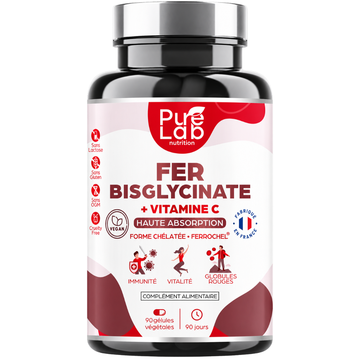
✅ Our iron bisglycinate at Pure Lab Nutrition: a gentle and highly bioavailable form, particularly suitable for pregnant women who wish to maintain optimal iron status throughout their pregnancy.
👉 Discover our full range of supplements here.


Restez informé 🌿
Recevez nos derniers articles et conseils santé directement dans votre boîte mail.