

























Winter fatigue: which supplements should you prioritize?
It’s dark when you leave in the morning, dark when you get home in the evening, and your energy is following the same curve? Winter is a demanding season for the body: less light, less sun on the skin, less outdoor activity, and often a diet less varied in fresh fruits and vegetables.
At Pure Lab Nutrition, we have sorted through what really matters and what is just marketing. Here are the nutrients to monitor, the mistakes to avoid, and a simple routine to stay in shape this winter.
📑 Summary
- Why winter makes us tired
- Vitamin D, the great overlooked nutrient
- Vitamin C, magnesium, B12
- Summary table
- Which supplement for your profile?
- A simple winter routine
- A typical winter week
- Common mistakes
- Signs that should prompt you to consult a doctor
- Frequently asked questions
- In summary
Why winter makes us tired
Several factors add up:
- Less natural light, which sets our internal clock
- Less sun on the skin, and therefore less Vitamin D production
- More time indoors and less physical activity
- A richer diet and sometimes less variety
- Winter infections, which often leave behind lasting fatigue
The pace of the end of the year doesn't help: holidays, late meals, disrupted bedtimes, and peak workloads. Before thinking about supplements, it is useful to look at these daily habits, over which you often have more control than you think.
Vitamin D, the great overlooked nutrient
Our skin synthesizes Vitamin D under the effect of the sun. According to ANSES, 15 to 20 minutes of exposure in the late morning or afternoon is enough to produce sufficient amounts. But in winter, the sun is rare.
In terms of diet, intake is low: in France, adults consume an average of 3.1 µg per day through their diet, while the nutritional reference is 15 µg per day. The main sources are fatty fish (sardines, mackerel, herring, salmon, anchovies), fish roe, certain mushrooms like chanterelles, porcini, and morels, as well as fortified products (certain cereals, fats, or dairy products). ANSES recommends consuming two servings of fish per week, including one serving of fatty fish.
👥 The most exposed profiles
According to ANSES, the body's ability to absorb or synthesize Vitamin D decreases with age: the elderly are therefore particularly affected. Infants, pregnant women, post-menopausal women, people with dark skin (skin synthesis is less efficient), as well as people who exclude meat, fish, eggs, and dairy products are also more exposed. For some of these populations, ANSES indicates that supplementation is necessary: this should be discussed with your doctor.
🛡️ Its role
Vitamin D contributes to the normal functioning of the immune system, the maintenance of normal bones, and the maintenance of normal muscle function.
🍽️ Take it with a meal
Vitamin D is fat-soluble. A study published in 2015 in the Journal of the Academy of Nutrition and Dietetics (Dawson-Hughes et al.) gave 50 healthy older adults a single dose of Vitamin D3 with breakfast, either with or without fat. The peak of Vitamin D3 in the blood was 32% higher with the fat-containing meal. The good habit: take your supplement with a real meal rather than on an empty stomach.
⚠️ No excess
ANSES reminds us that excess Vitamin D can be dangerous, especially in children. Do not combine several products that contain it, and talk to your doctor if you are considering high-dose supplementation.
Vitamin C, magnesium, B12
🍊 Vitamin C
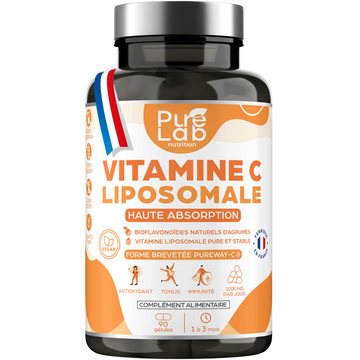
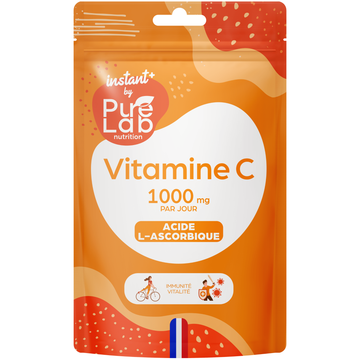
It contributes to the normal functioning of the immune system and to reducing fatigue. It is found in citrus fruits, kiwi, peppers, and cabbage, but it is fragile when cooked.
Beware of common misconceptions: according to the 2013 Cochrane review (Hemilä and Chalker), regular supplementation does not reduce the number of colds in the general population. However, it has been associated with a slightly shorter cold duration (about 8% in adults and 14% in children). And in people subject to intense physical exertion, the risk of a cold was approximately halved. To learn more, read Can you cure a cold with Vitamin C?
👉 Discover our Vitamin C Instant+ here.
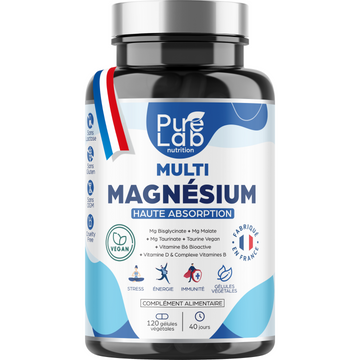
🧂 Magnesium
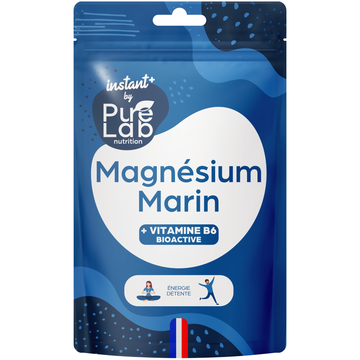
It contributes to reducing fatigue and to the normal functioning of the nervous system. A welcome help when the pace accelerates at the end of the year.
👉 Discover our Multi Magnesium here.
⚡ Vitamin B12
It contributes to reducing fatigue and to the normal functioning of the immune system. Particularly important if you eat few or no animal products.
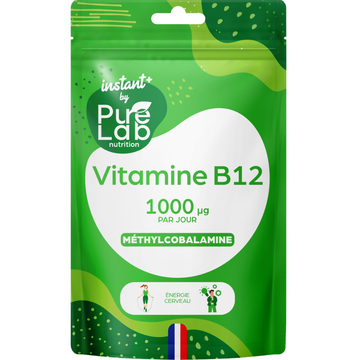
👉 Discover our Vitamin B12 Instant+ here.
Summary table
| Nutrient | Recognized role | Food sources |
|---|---|---|
| Vitamin D | Immune system, bones, muscles | Fatty fish, fish roe, certain mushrooms |
| Vitamin C | Immune system, fatigue | Citrus, kiwi, pepper, cabbage |
| Magnesium | Fatigue, nervous system | Oilseeds, whole grains, legumes |
| Vitamin B12 | Fatigue, immune system | Meat, fish, eggs, dairy products |
Which supplement for your profile?
| Your situation | Pathway to consider |
|---|---|
| Office work all day, little fish intake | Multivitamin with Vitamin D3, taken with a meal |
| Busy end of year, mentally tired | Magnesium |
| Vegetarian or vegan | Vitamin B12, year-round |
| Athlete who trains outdoors, even in winter | Vitamin C, which contributes to the normal functioning of the immune system during and after intense physical exercise |
No need to take everything: choose the pathway that best fits your situation, and check the composition of each product to avoid doubling up on the same nutrient.
A simple winter routine
✅ Go outside in the daylight, especially in the morning or at noon
✅ Eat fatty fish once or twice a week
✅ One fruit rich in Vitamin C every day
✅ Maintain physical activity, even indoors
✅ Keep a regular sleep schedule, even during the holidays
✅ A basic supplement if your diet is not enough
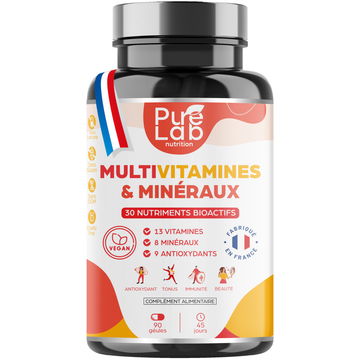
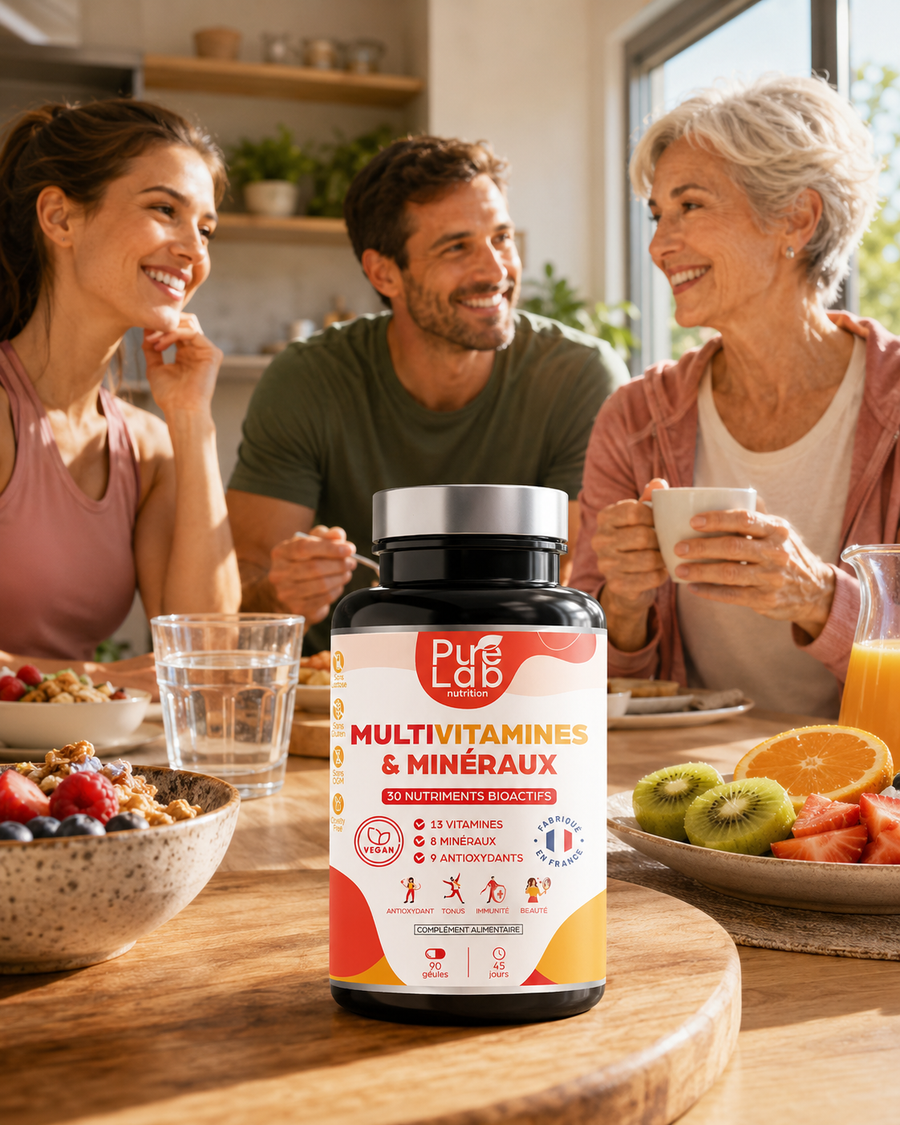
To cover several needs in a single intake, a multivitamin is often the simplest choice. Our Multivitamins & Minerals contains Vitamin D3 combined with Vitamin K2 (K2VITAL), folate in the Quatrefolic form, and bisglycinate minerals, in 2 capsules per day, with no iron or copper. To learn how to take it, read Multivitamins: when and how to take them?
A typical winter week
| Time | What you can do |
|---|---|
| Every morning | Open the shutters as soon as you wake up, breakfast with a fruit rich in Vitamin C (kiwi, orange) |
| Noon, 3 to 4 times a week | A 20 to 30-minute walk outside, even in gray weather |
| At lunch or dinner | Your optional supplements, during a real meal |
| Twice a week | Fish on the menu, including one serving of fatty fish (sardines, mackerel, salmon) |
| On the weekend | An outdoor activity: hiking, cycling, gardening |
| Every evening | Screens off early, bed at a regular time |
There is nothing spectacular in this list, and that is intentional: in winter, it is these small, repeated habits, more than any capsule, that make the difference for your energy.
Common mistakes
❌ Taking Vitamin D on an empty stomach with just a glass of water
❌ Combining a multivitamin with several isolated products containing the same vitamins
❌ Counting on Vitamin C to never get sick: that is not what studies show
❌ Staying locked indoors all weekend: even in gray weather, outside light remains precious
❌ Ignoring fatigue that lasts for more than a few weeks
Signs that should prompt you to consult a doctor
Winter fatigue is common, but it should not mask something else. Consult if:
✅ the fatigue lasts more than a few weeks despite rest
✅ it is accompanied by shortness of breath, marked paleness, or unexplained weight loss
✅ your mood drops significantly, with a loss of interest in what you used to enjoy
✅ you are having recurring infections or it takes you a very long time to recover
Frequently asked questions
❓ When to start a winter regimen?
As soon as the days get shorter, in the fall, and until the return of warmer days. Consistency is more important than the exact date.
❓ Should I get my Vitamin D levels checked?
It is not systematic. Talk to your doctor, especially if you have risk factors or are considering high-dose supplementation.
❓ Is winter sun enough?
In winter, the sun is lower and we spend less time outside, with our skin covered: Vitamin D production is therefore often low. Going outside remains very useful, however, for daylight and physical activity.
❓ Is a multivitamin enough?
For many people, it is a simple foundation. In case of targeted needs (vegan diet, significant fatigue), specific intake can be added, ideally after the advice of a professional.
If the fatigue persists despite everything, do not stay alone with it: read Persistent fatigue: which deficiencies to check? and talk to your doctor.
In summary
1️⃣ Vitamin D is the nutrient most often insufficient in winter; take it with a meal
2️⃣ Vitamin C, magnesium, and B12 help reduce fatigue
3️⃣ Light, sleep, and movement remain your first allies
4️⃣ A multivitamin can simplify your routine without combining too many products
Pure Lab Nutrition ... The art of nourishing your well-being.
Sources:
- ANSES. Vitamin D: why and how to ensure sufficient intake? anses.fr
- ANSES. Nutritional references for vitamins and minerals. anses.fr
- Dawson-Hughes B. et al. (2015). Dietary fat increases vitamin D-3 absorption. Journal of the Academy of Nutrition and Dietetics, 115(2):225-230. PubMed
- Hemilä H., Chalker E. (2013). Vitamin C for preventing and treating the common cold. Cochrane Database of Systematic Reviews. Cochrane
- Regulation (EU) No 432/2012 on authorized health claims. EUR-Lex


Restez informé 🌿
Recevez nos derniers articles et conseils santé directement dans votre boîte mail.