





























Skin type: identifying and understanding your epidermis
Have you ever bought a cream that didn't suit you at all? Too rich, too light, leaving your skin feeling tight or shiny after an hour... Very often, the problem isn't the product, but a poorly identified skin type. It is the very first step of a successful beauty routine, and yet it is one we almost always skip.
At Pure Lab Nutrition, we believe beauty starts with knowing yourself. In this guide, we present the five major skin types described by dermatologists, two simple methods to identify yours, the most frequent mistakes, and how your diet can support your skin on a daily basis.
📑 Summary
- Why should you know your skin type?
- The 5 skin types
- How to identify yours
- Which routine for which skin type?
- Common mistakes
- Common misconceptions: fact or fiction
- A skin type that evolves
- Taking care of your skin from the inside
- Frequently asked questions
- In summary
Why should you know your skin type?
Every skin type has different needs. Oily skin does not require the same care as dry skin, and sensitive skin reacts poorly to products too rich in active ingredients or fragrances. Correctly identifying your skin allows you to choose the right skincare, avoid irritation, and save time (and money).
The 5 skin types
😊 Normal skin
A good balance between sebum and hydration: no dry patches, no excessive shine, few imperfections, and no particular sensitivity. It does not require complicated care: gentle cleansing, regular hydration, and sun protection are generally enough to keep it in good condition.
🌵 Dry skin
It produces little sebum. It may look dull, feel tight, and show small flakes, especially after showering or in winter. It needs nourishing treatments that help it retain water. Do not confuse it with dehydrated skin, which is a temporary state that can affect all skin types: read Dehydrated skin vs. dry skin: how to tell the difference?
✨ Oily skin
It produces excess sebum: shine, enlarged pores, blackheads, sometimes breakouts. It needs light, non-comedogenic products that do not clog pores.
🌓 Combination skin
It combines an oily zone, usually the "T-zone" (forehead, nose, chin), and drier or normal cheeks. It sometimes requires different care depending on the area, or intermediate textures that do not make the T-zone greasy without drying out the cheeks.
🌸 Sensitive skin
It is defined by its reactivity, not by the amount of sebum it produces: it can therefore be dry, oily, or combination. Redness, tingling, burning, or itching are its signs. It prefers fragrance-free and dye-free products with a short list of ingredients.
How to identify yours
🔍 The observation method
- Cleanse your face with a gentle cleanser and pat it dry delicately
- Apply no skincare products for 30 minutes
- Observe your skin and how it feels
- Shiny everywhere: oily skin
- Shiny in the T-zone, normal elsewhere: combination skin
- Tight or peeling: dry skin
- Neither shiny nor tight: normal skin
- Redness, tingling: sensitive skin
📄 The blotting paper method
After the same 30-minute wait, press a sheet of blotting paper against your forehead, nose, chin, and then cheeks. The amount of sebum collected in each zone informs you about your skin type: traces everywhere suggest oily skin, traces only on the T-zone suggest combination skin, almost nothing suggests normal or dry skin.
In case of doubt, or if your skin reacts significantly, a dermatologist will be able to help you see things clearly.
Which routine for which skin type?
Once your skin type is identified, the broad outlines of the routine emerge quite naturally. Here is a simple reference:
| Skin type | Cleansing | Skincare | To avoid |
|---|---|---|---|
| Normal | Gentle, morning and night | Light moisturizer | Overloading with active ingredients |
| Dry | Cleansing milk or oil | Rich, nourishing cream | Very hot water, harsh soaps |
| Oily | Gentle gel, without scrubbing | Non-comedogenic fluid | Aggressive and repeated cleaning |
| Combination | Gentle gel or foam | Light texture, richer on the cheeks if needed | Treating the whole face like oily skin |
| Sensitive | Ultra-gentle, fragrance-free | Short, soothing formula | Fragrances, dyes, scrubs |
Common mistakes
⚠️ Confusing dry skin with dehydrated skin
Oily skin can perfectly well be dehydrated: it is shiny and tight at the same time. Applying a very rich "dry skin" cream to it risks worsening the shine without fixing the lack of water.
⚠️ Stripping oily skin
Increasing the frequency of cleansing or using very drying products gives an immediate feeling of cleanliness, but it irritates the skin. Gentle, regular cleansing is better.
⚠️ Changing your routine too often
Skin needs a few weeks to adapt to a new product. Testing three products in two weeks makes it impossible to know which one works and increases the risk of a reaction.
Common misconceptions: fact or fiction
❌ "Oily skin doesn't need cream"
False. Oily skin produces plenty of sebum, but it can lack water, especially if cleansed too often. A light, non-comedogenic fluid provides the comfort it needs without making it shine more.
❌ "Sensitive skin is always dry skin"
False. Sensitivity describes the skin's reactivity, not the amount of sebum. Oily or combination skin can definitely turn red and tingle upon contact with certain products.
❌ "The more a product stings, the more effective it is"
False. Tingling or burning is a sign that the skin is irritated. A well-tolerated product, applied regularly, will always be more useful than a "strong" product that you eventually stop using.
✅ "Sun protection applies to all skin types"
True. Light or dark, oily or dry skin: the sun remains the primary factor in skin aging. There are textures adapted to every skin type, including light fluids for oily skin.
A skin type that evolves
Your skin type is not fixed. It can change throughout life and with the seasons, under the influence of hormones (puberty, pregnancy, breastfeeding, menopause), stress, diet, or certain medications. Cold, wind, and heating tend to dry out the skin in winter, while heat can accentuate shine in summer.
Redo the test from time to time, and adapt your routine, for example by switching to a richer texture when temperatures drop, then to a lighter fluid during the warmer months.
A concrete example: combination skin at age 25, with a shiny T-zone, often becomes more normal, or even drier, over the years. The routine that suited it then (cleansing gel, mattifying fluid) may then become too drying: a gentler cleanser and a slightly richer cream on the cheeks will be more suitable.
Taking care of your skin from the inside
Regardless of your skin type, a varied diet remains the foundation. Furthermore, certain nutrients play an officially recognized role at the European level:
- Zinc contributes to the maintenance of normal skin
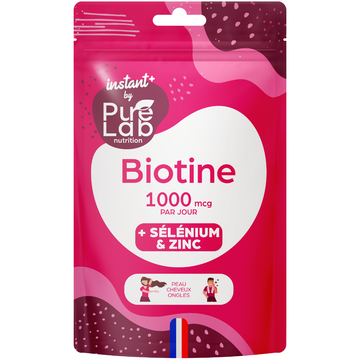
- Biotin contributes to the maintenance of normal skin
- Vitamin C contributes to normal collagen formation for the normal function of skin
To learn more about zinc, read our article Benefits of zinc for skin and hair, and for a global approach, Beauty routine from the inside: skin, hair, nails.
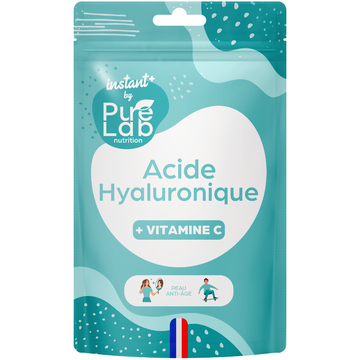
✅ Instant+ Hyaluronic Acid: hyaluronic acid + vitamin C, 1 capsule per day
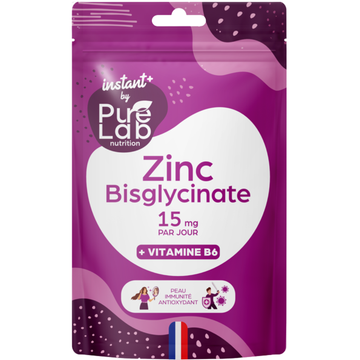
✅ Zinc Bisglycinate: zinc in bisglycinate form
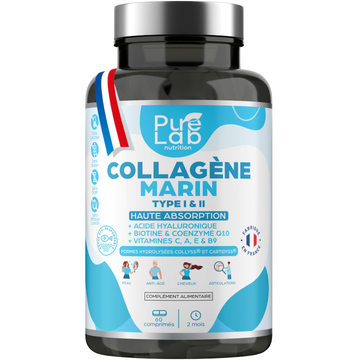
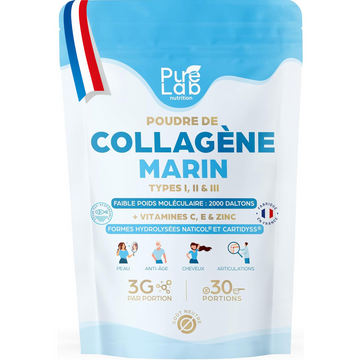
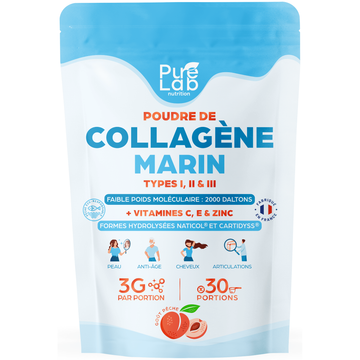
✅ Marine Collagen: our reference beauty formulas
👉 Discover our Instant+ Hyaluronic Acid, our Zinc Bisglycinate and our Marine Collagen.
Also read: Radiance and beauty: your skin's natural allies.
Frequently asked questions
❓ Can you have two skin types at once?
Yes, it is even common. Combination skin associates an oily zone and a drier zone, and sensitivity can be added to any type: for example, we talk about oily and sensitive skin.
❓ How often should I redo the test?
A test at each change of season is a good benchmark, as well as after an event that can change the skin: pregnancy, new treatment, moving to another climate.
❓ Can supplements change my skin type?
No. Your skin type mainly depends on genetic and hormonal factors. Certain nutrients, such as zinc or biotin, contribute to the maintenance of normal skin, but they replace neither a balanced diet nor adapted skincare.
❓ When should I consult a dermatologist?
If your skin reacts to almost all products, if redness, itching, or breakouts persist, or if significant dryness does not improve despite adapted care, medical advice is the best option.
In summary
1️⃣ Five skin types: normal, dry, oily, combination, and sensitive
2️⃣ A simple test: 30 minutes without products, then observation, to be repeated to confirm
3️⃣ A type that evolves with age, seasons, and hormones
4️⃣ Adapted skincare, and a diet that supports the skin
Pure Lab Nutrition ... The art of nourishing your well-being.
Sources:
- Cleveland Clinic (Zamborsky L.). Understanding Skin Types. clevelandclinic.org
- MSD Manual (consumer version). Dry skin (xeroderma). msdmanuals.com
- Regulation (EU) No 432/2012 establishing a list of permitted health claims. EUR-Lex


Restez informé 🌿
Recevez nos derniers articles et conseils santé directement dans votre boîte mail.