






















Dehydrated skin or dry skin: how to tell the difference?
Does your skin feel tight after a shower, does your foundation settle into fine lines, does your complexion lack radiance… You think you have dry skin? Perhaps. But it might also be that it is simply dehydrated, which is not at all the same thing.
At Pure Lab Nutrition, we believe that a good routine starts with a good diagnosis. Here is how to distinguish between the two, what is really happening in your skin, how to take care of it in each case, the mistakes that often make the situation worse, and our answers to your questions.
📑 Summary
- The difference in one sentence
- What happens in the skin
- Dry skin: a lack of lipids
- Dehydrated skin: a lack of water
- The quick test to find out
- The right actions in each case
- Adapting your routine to the seasons
- Common mistakes
- Frequently asked questions
- In summary
The difference in one sentence
Dry skin lacks oil; dehydrated skin lacks water. Dryness is more of a permanent skin type. Dehydration is a temporary state, which can affect all skin types, including oily skin.
| Dry skin | Dehydrated skin | |
|---|---|---|
| What is missing | Lipids (the protective film) | Water |
| Nature | More permanent | Temporary |
| Who is affected? | More frequent with age | All skin types, even oily |
| Typical signs | Roughness, small flakes, itching | Tightness, dehydration lines, dull complexion |
| Skincare priority | Nourish | Hydrate |
This distinction is important because it completely changes the choice of skincare. To better understand your skin type (normal, dry, oily, combination), also read our article Skin type: identifying and understanding your epidermis.
What happens in the skin
Imagine the outermost layer of your skin as a brick wall. The bricks are flattened cells; the cement connecting them is made of lipids. This "wall" acts as a barrier: it limits the evaporation of water contained in the skin and slows the entry of irritants.
When the lipid cement is insufficient, water escapes more easily: this is the environment of dry skin. When the wall is intact but the environment "sucks" water out faster than it is replenished (heated air, wind, sun, overly harsh cleansers), it is dehydration. The two mechanisms reinforce each other: dry skin dehydrates faster, and skin that has been dehydrated for a long time ends up with a weakened barrier.
This is why skincare treatments do not aim for the same thing: we nourish dry skin to repair the cement, and we hydrate dehydrated skin to restore water and help it retain it.
Dry skin: a lack of lipids
Healthy skin remains supple thanks to the lipids in its surface layer, which slow down water evaporation. When these lipids are produced in insufficient quantities, the skin becomes dry.
🌬️ Factors that aggravate it
- Cold and dry air
- Frequent baths and showers, especially with harsh soaps
- Age: according to the MSD Manual, dry skin is common, especially starting in middle age
- Certain conditions, such as atopic eczema
Dry skin is often felt most in winter: cold outside, heating inside, and hotter showers all add up. The most affected areas are often the legs, hands, and forearms.
Dehydrated skin: a lack of water
Dehydrated skin lacks water in its surface layers, temporarily. It can very well produce enough sebum, and even be shiny, while still feeling tight.
⚡ Common causes
- Heating and air conditioning
- Sun and wind
- Overly stripping skincare, particularly on oily skin
- Lack of sleep, stress
- Insufficient daily hydration
✈️ A typical case
Camille has combination skin, with a shiny T-zone. After a long flight and a week of meetings in air-conditioned offices, her face feels tight, her makeup "catches," and her fine lines are more visible. Her skin has not become dry: it is dehydrated. A light moisturizing treatment, a gentler cleanser, and a few days of rest will often be enough to restore her comfort.
The quick test to find out
Gently pinch the skin on your cheek between your thumb and index finger. If fine lines appear and disappear slowly, your skin is likely dehydrated.
Also observe your skin throughout the day:
- It feels tight but is shiny in the T-zone: oily or combination dehydrated skin
- It is rough, peels slightly, and is never shiny: dry skin
- It is rough and feels very tight: dry and dehydrated skin, the two can occur together
In case of significant itching, redness, or cracks, seek the advice of a doctor or dermatologist.
The right actions in each case
🧴 For dry skin: nourish
- Rich emollients applied right after showering, while the skin is still slightly damp
- Lukewarm showers rather than hot, and shorter ones
- No harsh soaps or scented products
- Drying by patting rather than rubbing
💧 For dehydrated skin: hydrate
- Light moisturizing skincare, for example based on hyaluronic acid or glycerin
- Gentle cleansing, without stripping
- Drink regularly throughout the day
- Protect your skin from the sun and wind
🍊 From the inside
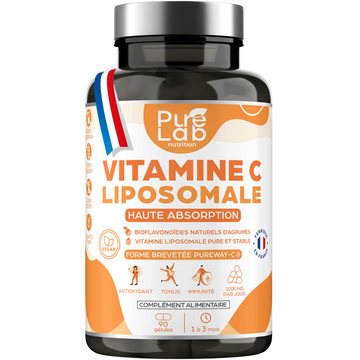
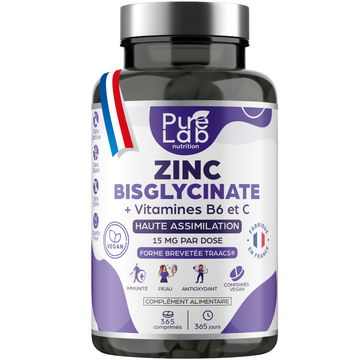
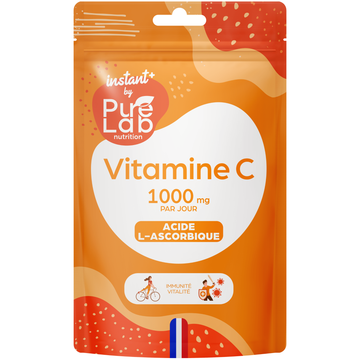
Vitamin C contributes to normal collagen formation for the normal function of the skin, and zinc contributes to the maintenance of normal skin. A varied diet, rich in fruits, vegetables, and healthy fats, also helps your skin.
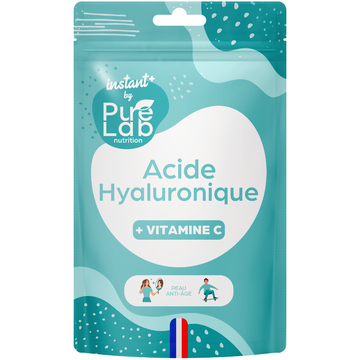
✅ Hyaluronic Acid Instant+: hyaluronic acid + vitamin C, 1 capsule per day, 30-day course in pocket format
👉 Discover our Hyaluronic Acid Instant+ here.
To understand what is known about oral hyaluronic acid, read Hyaluronic acid in capsules: is it effective? And for the role of vitamin C, The benefits of vitamin C for the skin.
Adapting your routine to the seasons
Your skin does not experience the same things in January and July. Rather than keeping the same cream all year round, adjust your textures and routine:
| Season | What attacks the skin | Recommended adjustment |
|---|---|---|
| Winter | Cold, wind, heating, hot showers | Richer textures, lukewarm showers, emollient for the body |
| Spring / Autumn | Temperature changes, wind | Gradual transition between textures |
| Summer | Sun, air conditioning, chlorine, salt | Light moisturizing skincare, sun protection, rinsing after swimming |
Common mistakes
| The mistake | What is better to do |
|---|---|
| Stripping oily skin that feels tight | A gentle cleanser and light moisturizing treatment |
| Applying a very rich cream to only dehydrated skin | Favor a light, hydrating texture |
| Taking long, very hot showers | Lukewarm and short showers, then emollient |
| Over-exfoliating | Space them out, especially in winter |
| Forgetting sun protection in winter | Protect the face whenever you are exposed |
Frequently asked questions
❓ Can oily skin really be dehydrated?
Yes. The amount of sebum and the amount of water are two different things. Oily skin can be shiny while still lacking water, especially if it is cleaned with products that are too harsh.
❓ Is drinking more water enough to hydrate the skin?
Staying well hydrated is one of the right things to do, but it is generally not enough on its own. Appropriate skincare, protection against cold, wind, and sun, and gentle cleansing count just as much.
❓ Can you have dry and dehydrated skin at the same time?
Yes, the two can occur together. In this case, you combine a hydrating treatment and a nourishing one, or choose a product that combines both.
❓ How long does it take for dehydrated skin to feel comfortable again?
As dehydration is a temporary state, it often improves as soon as the cause is removed (harsh cleanser, dry air) and an appropriate skincare routine is adopted. Dryness, which is more permanent, requires regular, long-term care.
❓ When should you see a doctor?
In case of significant itching, redness, cracks, or if the dryness does not improve despite appropriate care, seek the advice of a doctor or dermatologist.
In summary
1️⃣ Dry skin = lack of lipids, more permanent
2️⃣ Dehydrated skin = lack of water, temporary, even on oily skin
3️⃣ Nourish one, hydrate the other, by adapting your routine to the seasons
4️⃣ Seek medical advice in case of significant itching or redness
Pure Lab Nutrition ... The art of nourishing your well-being.
Sources:
- MSD Manual, consumer version. Dry skin (xeroderma). msdmanuals.com
- Paitraud D. (2021). Dry skin. Le Quotidien du Pharmacien. lequotidiendupharmacien.fr
- Regulation (EU) No 432/2012 establishing a list of permitted health claims. EUR-Lex


Restez informé 🌿
Recevez nos derniers articles et conseils santé directement dans votre boîte mail.