
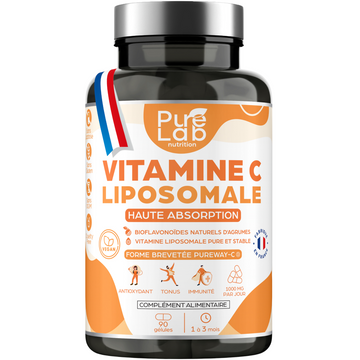
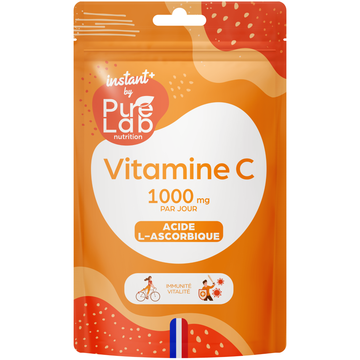

























Can vitamin C disrupt sleep? 😴
"Don't take vitamin C in the evening, it prevents you from sleeping!" How many times have you heard this phrase?
This belief, deeply rooted in the collective consciousness for decades, still influences our consumption habits today 🌙. But what does modern science really say about it?
The origin of a persistent misconception 📜
A historical mention that endures ⏰
This reputation of vitamin C as a sleep disruptor has its roots in a simple warning mention that appeared on the first boxes of food supplements in the 1930s. This precaution, initially prudent, transformed over time into an absolute truth in the popular imagination.
The pharmaceutical industry of the time, out of caution, preferred to warn consumers of a potential stimulating effect rather than risk complaints. This conservative approach created a lasting perception, rarely questioned thereafter.
The theoretical reasoning 🧠
The initial hypothesis was based on the role of vitamin C in the synthesis of certain neurotransmitters, particularly dopamine and noradrenaline. These molecules, associated with wakefulness and alertness, naturally led to fears of a stimulating effect from the vitamin.
This reasoning, though logical in theory, did not take into account the complexity of neurobiological mechanisms and the doses required to observe such effects.
What contemporary research reveals 🔬
Studies on sleep cycles 📊
Modern research using advanced brain imaging techniques shows a very different reality. Functional MRI analyses reveal no significant modification of nocturnal brain activity in people who have consumed vitamin C in the evening.
These studies, conducted on large control groups, demonstrate the absence of a correlation between vitamin C intake and sleep onset difficulties or sleep quality.
Dosage and physiological reality 💊
The doses usually consumed, even in supplementation, remain largely below the quantities theoretically necessary to significantly influence the production of stimulating neurotransmitters.
As vitamin C is water-soluble, the body quickly eliminates excess, further limiting any prolonged effect on the nervous system.
Deciphering biological mechanisms ⚗️
Role in neurotransmission 🧬
While vitamin C does participate in dopamine synthesis, its action is part of a complex balance involving many other factors. The body has sophisticated regulatory mechanisms that maintain neuronal homeostasis.
This participation in synthesis does not automatically mean an increase in dopaminergic activity, especially since other cofactors are necessary for this production.
Nocturnal metabolism 🌛
During the night, vitamin C metabolism proceeds normally without interfering with natural sleep cycles. Detoxification and cell regeneration processes, which intensify during rest, even use this vitamin beneficially.
The idea of a persistent stimulating effect therefore does not correspond to the observed physiological reality.
Potential benefits of evening intake ✨
Optimizing absorption 🎯
Contrary to popular belief, taking vitamin C in the evening can offer certain advantages. With the stomach generally less active at the end of the day, absorption can be optimized, especially if taken with a light meal.
This timing can also better integrate into certain daily routines, promoting regular and consistent intake.
Supporting recovery processes 🔄
During sleep, the body intensely activates its repair and regeneration mechanisms. Vitamin C, through its antioxidant properties, can effectively support these crucial nocturnal processes.
Its role in collagen synthesis is particularly important during deep sleep phases, where tissue regeneration reaches its peak activity.
Specific cases and nuances 🤔
Individual sensitivities 👤
Although the majority of people do not experience any effect on their sleep, a few particularly sensitive individuals might perceive a slight stimulation. These cases remain exceptional and generally involve very high doses.
It is advisable to listen to your body and adapt your habits based on your own observations, while keeping in mind that the placebo effect can play a role in this perception.
Interactions with other substances ⚠️
Vitamin C can enhance iron absorption, which could theoretically influence perceived energy. However, this effect remains marginal and does not justify systematically avoiding evening intake.
Significant interactions remain rare and primarily concern specific medications or very large doses.
Practical recommendations 💡
Flexibility in intake 🕐
Current scientific data allows for great flexibility regarding the time of vitamin C intake. Morning, noon, or evening, the essential thing remains regularity and adaptation to one's lifestyle.
For those who prefer to maintain their morning habits out of caution, this approach remains perfectly valid, even if it is no longer justified by conclusive scientific data.
Personal observation 👁️
Since each organism is unique, it may be interesting to test different intake times to identify what best suits one's personal biological rhythm.
This individualized approach allows for optimizing benefits while respecting one's preferences and daily constraints.
Conclusion: Let's free ourselves from the myth! 🎭
Modern science frees us from an unfounded constraint that unnecessarily limited our supplementation choices. Vitamin C does not deserve its reputation as a sleep disruptor 😊.
This revision of our beliefs perfectly illustrates the importance of regularly questioning received ideas in the light of current knowledge. Our understanding of biological mechanisms has evolved considerably since the 1930s.
Now, you can adapt your vitamin C intake to your personal constraints without fearing a negative impact on your sleep. The essential thing remains to maintain regular intake to fully enjoy the benefits of this essential vitamin 🌟.


Restez informé 🌿
Recevez nos derniers articles et conseils santé directement dans votre boîte mail.


