

















Iron and fatigue: what science really says
You sleep enough, you eat properly, and yet a persistent fatigue takes hold every day. This widespread clinical picture has a frequently overlooked cause: iron deficiency. Science establishes a direct, biological, and measurable link between iron status and the level of available energy.
📑 Summary
- The biological link between iron and energy production
- Iron-deficiency fatigue vs. other causes of fatigue
- What scientific studies say
- When and how to supplement with iron
- The iron + vitamin C combination: the essential synergy
🔬 The biological link between iron and energy production
The link between iron and fatigue is not a simple popular intuition: it is based on precise and well-documented physiological mechanisms.
🩸 Hemoglobin: the oxygen transporter
Iron is the central constituent of hemoglobin, the protein in red blood cells responsible for transporting oxygen from the lungs to all the body's tissues. Each hemoglobin molecule contains 4 iron atoms, each capable of binding to an oxygen molecule.
When iron stores decrease, hemoglobin production gradually collapses. The blood becomes less efficient at transporting oxygen, and the tissues—including muscles and the brain—function in a state of permanent oxygen deprivation. Fatigue is the direct translation of this depletion.
💪 Myoglobin: the muscular oxygen reservoir
In muscle fibers, myoglobin plays a role analogous to hemoglobin: it binds and stores oxygen to make it available during muscle contraction. An iron deficiency reduces myoglobin synthesis, which explains the premature muscle exhaustion felt during exercise and physical weakness in daily life.
⚡ The mitochondrial respiratory chain
At the cellular level, iron is an essential cofactor for several enzymes in the respiratory chain (complexes I, II, III) within the mitochondria. These enzymes catalyze oxidative phosphorylation, the central process by which ATP—the cell's energy currency—is produced. Without an adequate amount of iron, ATP production collapses at the cellular level, and fatigue becomes systemic.
This energy-cellular mechanism explains why iron-deficiency fatigue can persist even before frank anemia has set in: functional iron deficiency precedes anemia by several weeks or months.
🔍 Iron-deficiency fatigue vs. other causes of fatigue
Not all fatigue comes from iron. Identifying the specific signal of iron-deficiency fatigue allows you to act in the right place.
🔴 Signs pointing toward iron
Iron-related fatigue has a characteristic profile: it is constant (present from the morning, without notable improvement during the day), accompanied by shortness of breath during minimal exertion, pale mucous membranes, a tendency to feel cold, and sometimes mild dizziness or ringing in the ears. Hair loss and brittle nails are common associated signs.
In athletes, iron-deficiency fatigue often manifests as an inexplicable drop in performance: declining times, longer recovery times, and an increased resting heart rate.
🟢 Other causes of fatigue to rule out
Chronic fatigue can also be linked to other deficiencies (vitamin D, vitamin B12, magnesium), chronic stress, a thyroid disorder, burnout syndrome, or sleep disorders. This is why a complete blood panel is essential: measuring ferritin (the most sensitive indicator of iron stores) and hemoglobin remains the first diagnostic step.
📊 What scientific studies say
Scientific research solidly confirms the link between iron status, fatigue, and energy.
📝 Study 1: Fatigue and low ferritin in women (Verdon et al., 2003)
A randomized controlled trial published in the British Medical Journal (Verdon et al., 2003) evaluated the effect of iron supplementation in non-anemic women with low ferritin and chronic fatigue. After 4 weeks of supplementation, the group that received iron reported a significant reduction in fatigue compared to the placebo group (a 29% reduction vs. 13%). This study demonstrates that iron-deficiency fatigue can be present and clinically significant even before anemia is diagnosed.
📝 Study 2: Physical performance and iron deficiency (Hinton et al., 2000)
Researchers at the University of Maryland studied the effect of iron supplementation on endurance performance in female athletes with deficiency without anemia. After 6 weeks, women who received iron improved their maximal oxygen consumption (VO2max) and exercise performance, unlike the placebo group.
📝 Study 3: Quality of life and bisglycinate supplementation (Bovell-Benjamin et al., 2000)
A comparison between iron bisglycinate and ferrous sulfate in deficient subjects confirmed that bisglycinate restored iron stores as effectively (if not more so) as ferrous sulfate, with better tolerance, which translates to better adherence and therefore better long-term results.
These studies converge on a clear conclusion: iron contributes to reducing fatigue, and this action is recognized as an authorized health claim by Regulation (EU) No. 432/2012.
📋 When and how to supplement with iron
Iron supplementation is justified in two distinct situations: when a deficiency has been biologically confirmed, or when you belong to a high-risk group with suggestive symptoms.
📐 The biological assessment first
Before starting supplementation, measuring serum ferritin is essential. Ferritin is the most sensitive marker of iron stores: a value below 30 ng/mL is considered insufficient by many clinicians, even if the patient is not yet anemic (normal hemoglobin).
An iron supplementation course generally lasts 2 to 3 months, with a biological check at the end to ensure that stores have been restored. In certain cases (chronic pathologies, repeated bleeding), medical follow-up is necessary.
⏱ Timing of intake
Iron bisglycinate can be taken independently of meals, which makes it more convenient than ferrous sulfate. For very sensitive individuals, taking it during a light meal remains possible without significant loss of efficacy.
✅ Our bisglycinate iron at Pure Lab Nutrition: carefully formulated by Pure Lab Nutrition, our bisglycinate iron is your daily ally against iron-deficiency fatigue. High bioavailability, digestive gentleness, visible results.
👉 Discover our full range of supplements here.
🍊 The iron + vitamin C combination: the essential synergy
Vitamin C is the best ally of iron, whether it is dietary or in the form of a supplement.
🔬 The biochemical mechanism
Vitamin C (ascorbic acid) reduces ferric iron (Fe3+) to ferrous iron (Fe2+), the form directly absorbed by the intestinal wall via the DMT1 transporter. It also keeps iron in solution in the small intestine by forming a soluble chelate with it, preventing its precipitation by phytates and tannins.
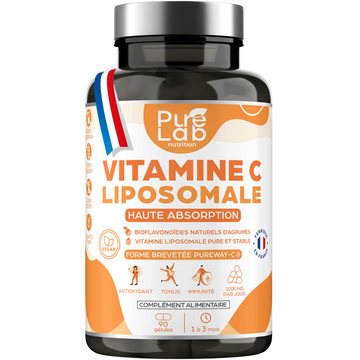
Modest doses of vitamin C (75 to 100 mg, equivalent to a glass of fresh orange juice) can double the absorption of non-heme iron. This effect is well documented in the scientific literature (Hallberg et al., 1987).
🍎 How to do it daily
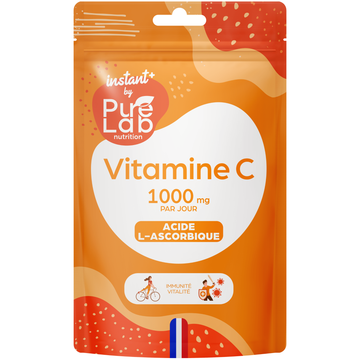
If you are consuming dietary iron, accompany your meals rich in plant-based iron with a source of vitamin C: kiwi, raw bell pepper, orange, lemon, blackcurrant. If you are taking an iron supplement, combine it with a glass of fresh citrus juice or a vitamin C supplement. This simple habit can significantly improve your results.
In summary
1️⃣ Iron is biologically essential for energy production: it supports hemoglobin, myoglobin, and the mitochondrial respiratory chain.
2️⃣ Iron-deficiency fatigue can be present and debilitating even before frank anemia is diagnosed—ferritin is the key marker.
3️⃣ Several clinical studies demonstrate that iron supplementation significantly reduces fatigue, in accordance with the claim authorized by Regulation (EU) No. 432/2012.
4️⃣ Iron bisglycinate, carefully formulated by Pure Lab Nutrition, combined with vitamin C, is the most effective and best-tolerated solution to regain your energy.
Pure Lab Nutrition, a French food supplement brand. The art of nourishing your well-being.
Scientific sources:
- Verdon F et al. (2003). Iron supplementation for unexplained fatigue in non-anaemic women: randomised double blind placebo controlled trial. BMJ, 326(7399):1124. DOI: 10.1136/bmj.326.7399.1124
- Hinton PS et al. (2000). Integrating iron supplementation for female collegiate rowers. International Journal of Sport Nutrition and Exercise Metabolism, 10(4):404-415. PMID: 11099371
- Bovell-Benjamin AC et al. (2000). Iron absorption from ferrous bisglycinate and ferric trisglycinate in whole maize. The American Journal of Clinical Nutrition, 71(6):1563-1569. PMID: 10837302
- Hallberg L et al. (1987). The role of vitamin C in iron absorption. International Journal for Vitamin and Nutrition Research Supplement, 30:103-108. PMID: 3110965
- Commission Regulation (EU) No 432/2012 establishing a list of permitted health claims made on foods.
- ANSES (2021). Nutritional references for vitamins and minerals. anses.fr


Restez informé 🌿
Recevez nos derniers articles et conseils santé directement dans votre boîte mail.