



















Travel supplements: the ideal kit
Are you heading away for a few days, and your supplement course is staying safely on the bathroom shelf? This is one of the most common pitfalls. Yet, consistency is the key to a successful course, and travel is precisely when the body is under strain: jet lag, short nights, and disrupted meals.
At Pure Lab Nutrition, a French brand, we created our Instant+ range to solve this problem. Here is how to put together your ideal kit, the checklist before departure, errors to avoid, and our answers to your questions.
📑 Table of Contents
- Why maintain your routine while traveling
- The kit according to your trip
- Nutritional deficits amplified by travel
- Jet lag: adapting your intake
- Example: a week-long business trip
- Checklist before departure
- Practical tips
- Common mistakes
- Why the pocket format
- Frequently asked questions
- In summary
Why maintain your routine while traveling
Interrupting a course for a few days is not a big deal. But a trip of one or two weeks can break a habit formed over months. And that is often when you feel more tired: transport, shifted schedules, and poorer quality sleep.
Upon returning, many people never resume their course. Therefore, taking your supplements with you is more about protecting a good habit than seeking a spectacular effect during your stay.
The kit according to your trip
✈️ Long-haul travel or jet lag
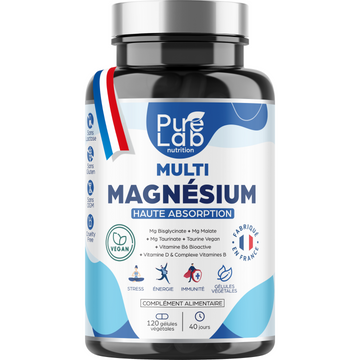
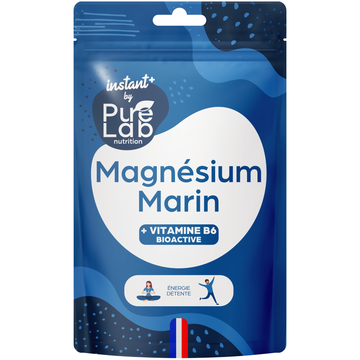
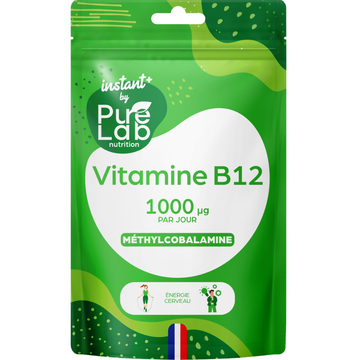
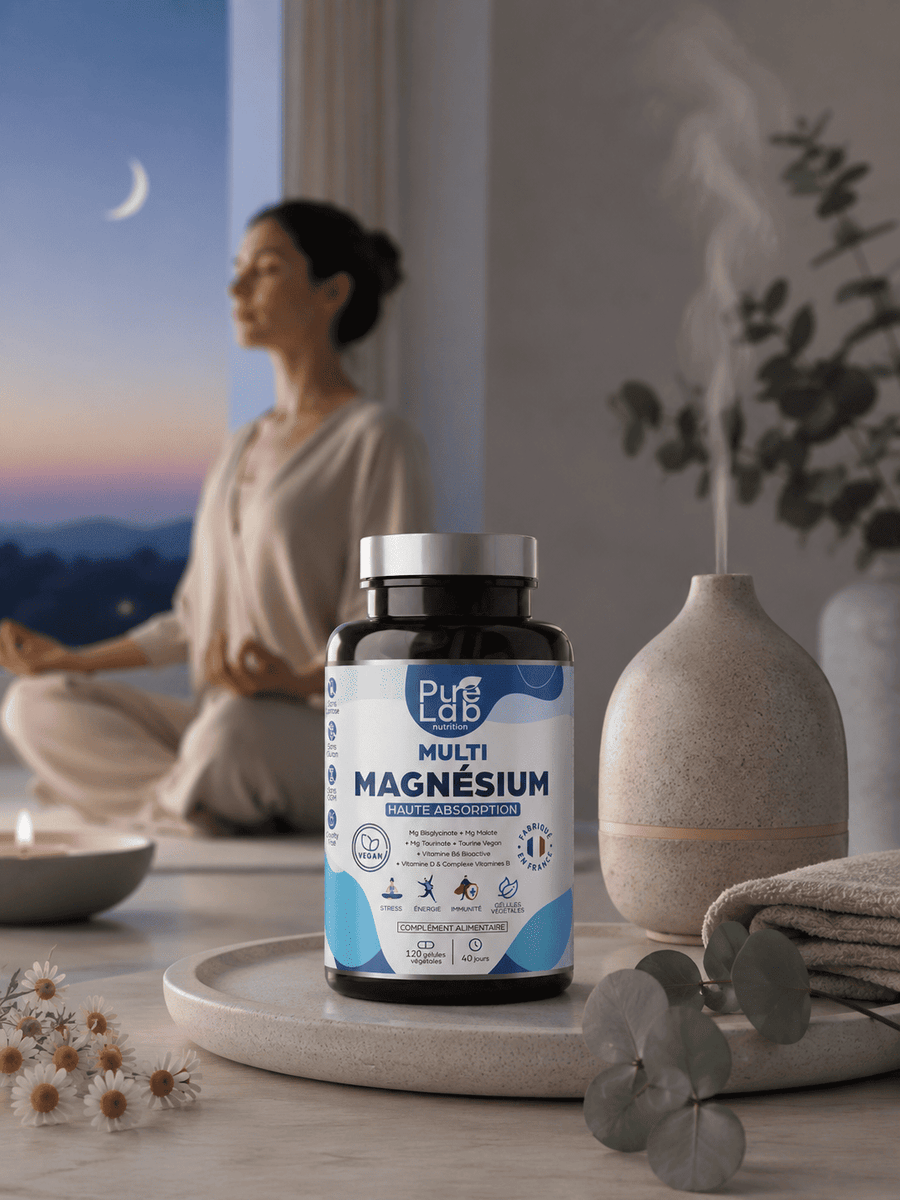
Magnesium and vitamin B12, both of which help reduce fatigue. Magnesium also contributes to the normal functioning of the nervous system, and the vitamin B6 associated in our Instant+ Marine Magnesium contributes to normal psychological functions.
☀️ Sun holidays
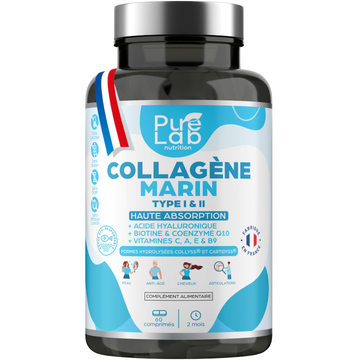
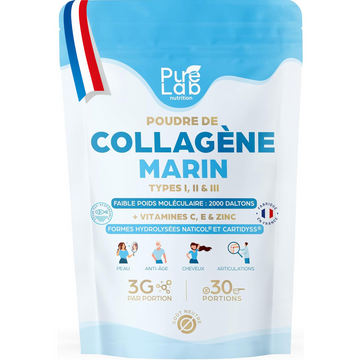
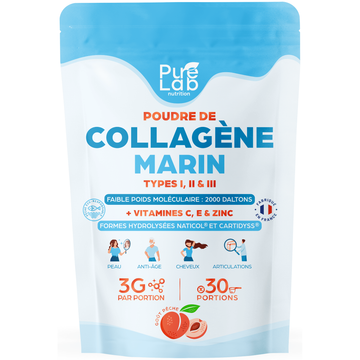
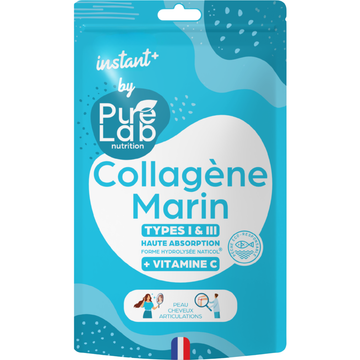
Collagen + vitamin C to support your skin routine: vitamin C contributes to normal collagen formation for the normal function of the skin. Don't forget sunscreen, which no supplement can replace!
💼 Business trips
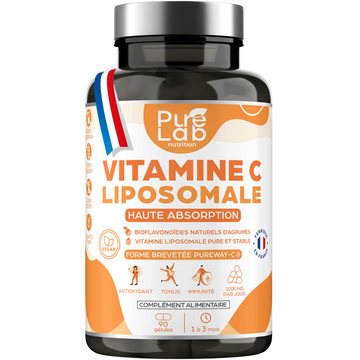
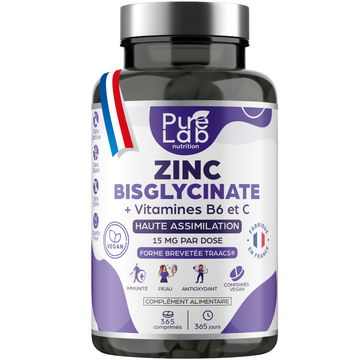
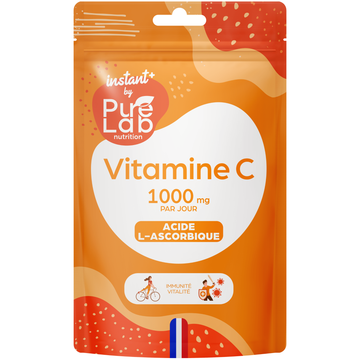
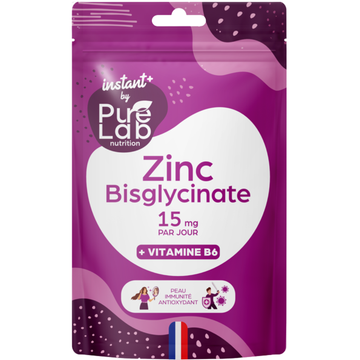
Vitamin C, which contributes to the normal functioning of the immune system and to reducing fatigue, and zinc, which also contributes to the normal functioning of the immune system.
🎒 Itinerant travel, hiking
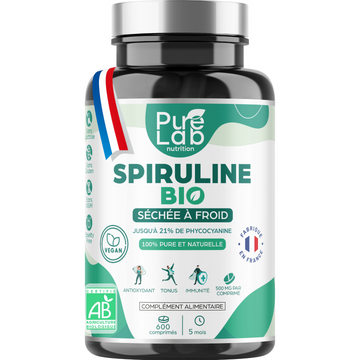
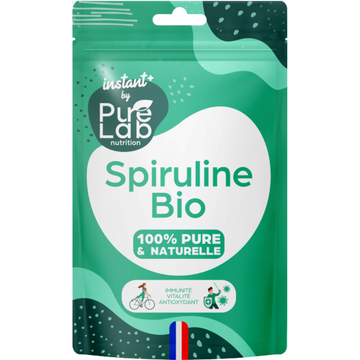
Spirulina, light and easy to slip into a bag, to supplement a diet that is sometimes less varied on the road. ANSES recommends choosing spirulina from reliable supply chains, as this type of product can be contaminated (toxins, bacteria, metals) when production is poorly controlled. It also advises against it for people with phenylketonuria or those with allergies, and reminds us that spirulina is not a reliable source of vitamin B12. To learn more, read Everything you need to know before starting spirulina.
| Type of trip | In the kit | Course duration |
|---|---|---|
| Long-haul | Instant+ Marine Magnesium, Instant+ Vitamin B12 | 15 days (magnesium), 30 days (B12) |
| Sun | Instant+ Marine Collagen | 15 days |
| Business | Instant+ Vitamin C, Instant+ Zinc | 15 days (vitamin C) |
| Itinerant | Instant+ Organic Spirulina | 15 days |
For a two-week trip, a 15-day course is perfect: you leave with a single sachet and come back with nothing to bring home.
🎯 One or two priorities, no more
The temptation to take everything is strong. It is better to choose one or two products related to your stay: a business traveler dealing with jet lag does not have the same needs as a family on vacation at the seaside. A light kit is also a kit that you actually use.
Nutritional deficits amplified by travel
Travel accentuates two imbalances already common in daily life:
- Magnesium: logistics stress, transport, and rhythm changes—all these factors increase urinary magnesium loss. However, dining while traveling, whether in airports, on the road, or in hotels, is often poor in oilseeds, legumes, and whole grains, which are the main dietary sources. A latent deficit sets in quickly.
- Vitamin C: fresh fruits and vegetables, rich in vitamin C, are often less present or less varied in travel meals. However, vitamin C contributes to the normal functioning of the immune system, an especially relevant argument in confined spaces (planes, trains, meetings) where viral circulation is more intense.
Taking a targeted course therefore means compensating for a structural deficit aggravated by an unusual context—not treating yourself to a superfluous luxury.
Jet lag: adapting your intake
The simplest approach is to align your intake with local mealtimes as soon as you arrive. If your magnesium is usually taken at dinner, take it at the local dinner, even if your internal clock is not yet adjusted.
During the flight, do not try to "catch up" on a dose. Drink water regularly, limit alcohol and caffeine, and expose yourself to daylight upon arrival: these are the best levers for regaining your rhythm. To learn more about sleep, read Restorative sleep: 7 expert strategies for peaceful nights.
Example: a week-long business trip
Let's take Claire, a consultant, who is going to Montreal for six days for a trade show. She is already taking a magnesium course at home and simply wishes not to interrupt it.
The day before departure: she slips her sachet of Instant+ Marine Magnesium into her carry-on bag, next to any potential medication, and sets a reminder on her phone.
Day 1, the flight: she does not take anything extra, drinks water regularly, and avoids alcohol on board. Her evening dose will be at dinner, local time.
Days 2 to 5: intake at local dinner, regardless of the trade show schedule. In the morning, she walks a little in daylight.
On return: she resumes her intake at dinner, French time, starting the first evening.
A single product, a fixed reference point, and a course that continues without interruption upon returning: that is all it takes.
Checklist before departure
✅ Count the days of travel and verify that you have enough product left
✅ Keep the original packaging with the legible label
✅ Pack your supplements in your carry-on, with any medications
✅ Set a reminder on your phone, adjusted to local time
✅ Check for interactions if you are also taking a treatment (e.g., antimalarial): seek advice from your doctor or pharmacist
Practical tips
✅ Protect them from heat: do not leave them in direct sunlight or in a car
✅ Sync your intake with a meal at the local time
✅ Do not double the doses if you forgot a dose
✅ Inform yourself about the rules of the destination country if traveling far
Common mistakes
❌ Transferring your capsules into an unlabeled pill organizer: impossible to know what you are taking afterwards
❌ Taking your entire collection of supplements "just in case"
❌ Leaving the kit in the car in the sun during excursions
❌ Doubling the dose the day after a missed dose
❌ Forgetting to resume the course upon return
Why the pocket format
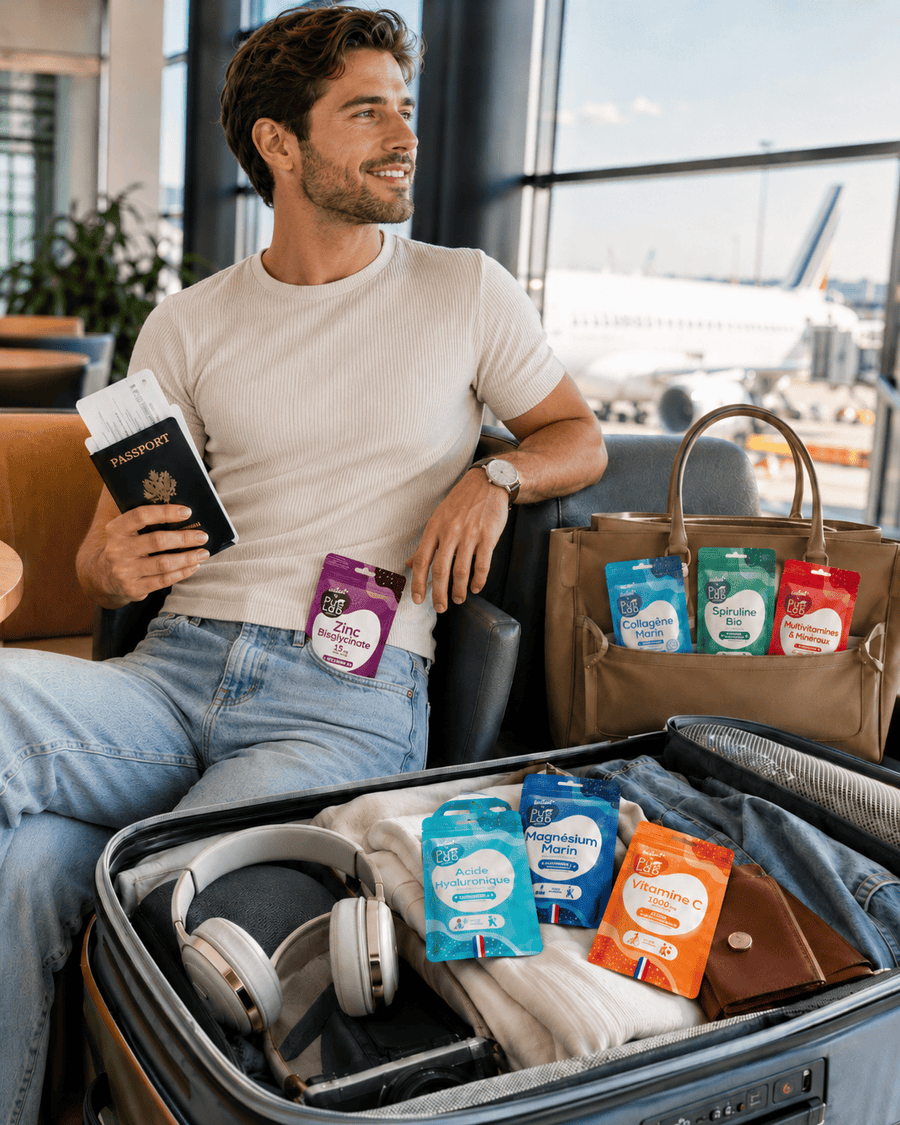
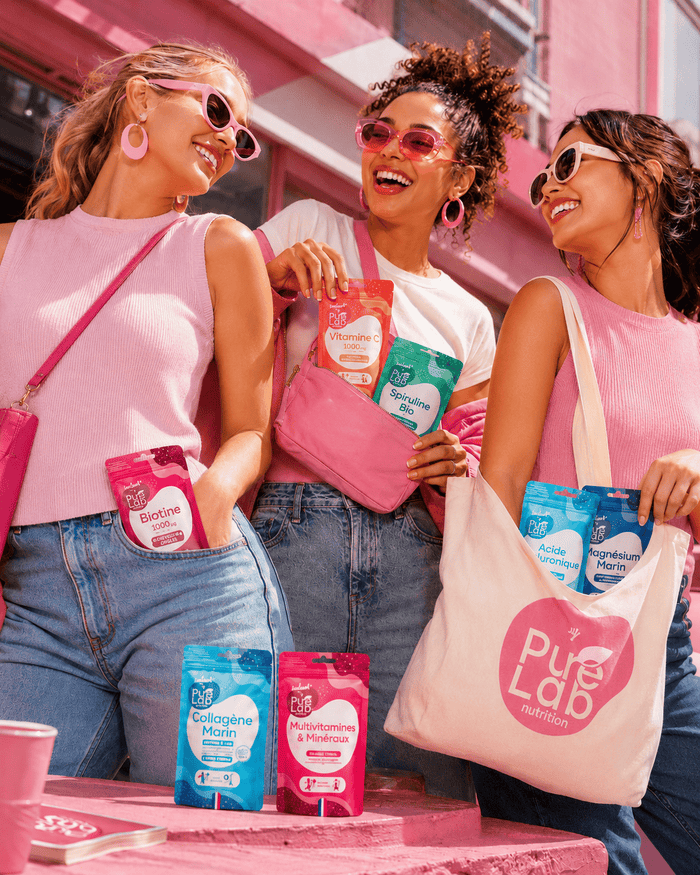
Our Instant+ supplements are designed for travel: a flat, flexible sachet that slips into a bag, a kit, or a jacket pocket. No pill organizer to fill, no bulky jars, and the label always stays with the product. Each formula maintains a precise composition: Instant+ Marine Collagen combines type I and III Naticol® collagen with vitamin C, Instant+ Vitamin B12 provides methylcobalamin in vegetable capsules for 30 days, and Instant+ Zinc combines zinc and vitamin B6. To discover the entire range, read The Instant+ range: your supplements in pocket format.
Frequently asked questions
❓ Can you bring supplements on a plane?
Capsules and tablets can generally be transported without difficulty. Keep them in their original packaging and check with your airline and destination country for long-distance travel.
❓ I forgot a dose during the trip, what should I do?
Simply resume the next day at the usual dose. Never double the dose.
❓ What about children traveling with us?
Do not give them your own supplements. For a child or adolescent, as with a pregnant woman or a person undergoing treatment, the DGCCRF recommends seeking the advice of a healthcare professional before any intake.
❓ Can you take several supplements at once?
Yes, provided you read each label: the same nutrient can be found in two products, and the DGCCRF advises caution in case of accumulation. To assess this, read Can you take several supplements at the same time?
❓ Should you stop your course during the holidays?
No, unless advised otherwise by a healthcare professional. It is actually a good time to keep a simple routine.
In summary
1️⃣ Consistency is the key, even while traveling
2️⃣ Adapt the kit to your destination and sync your intake with local time
3️⃣ Protect your supplements from heat and keep the label
4️⃣ The pocket format simplifies everything
Pure Lab Nutrition ... The art of nourishing your well-being.
Sources:
- Regulation (EU) No 432/2012 regarding authorized health claims. EUR-Lex
- DGCCRF. Labeling, presentation, and advertising of food supplements: the rules to know. economie.gouv.fr
- ANSES. Food supplements containing spirulina: the importance of choosing trustworthy supply channels. anses.fr


Restez informé 🌿
Recevez nos derniers articles et conseils santé directement dans votre boîte mail.