






















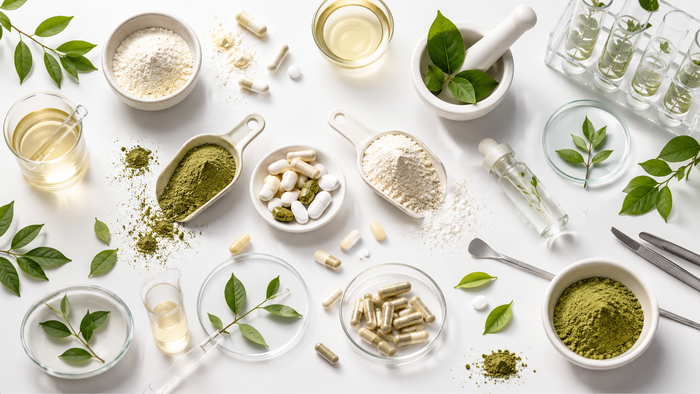




Natural appetite suppressants: how fiber and plants help with satiety
4:00 PM, stomach growling, and that pack of biscuits is calling your name… Cravings and snacking are often the first obstacles when you want to rebalance your diet. That’s where natural “appetite suppressants” come in.
At Pure Lab Nutrition, we want to explain how they really work. Spoiler: it all comes down to a simple ingredient, fiber, and how you use it. You will also find a typical day, common mistakes to avoid, and answers to frequently asked questions.
📑 Summary
- The gut-brain axis: why modern cravings are so persistent
- Hunger and satiety: how do they work?
- The role of fiber
- What the studies say
- How to use fiber-based appetite suppressants effectively
- An anti-cravings day
- Common mistakes
- Frequently Asked Questions
- In summary
The gut-brain axis: why modern cravings are so persistent
Satiety is not just a matter of volume in the stomach. It is a complex dialogue between the gut, hormones, and the brain, which our modern lifestyles deeply disrupt.
🍟 Ultra-processing neutralizes natural signals
Ultra-processed products are designed to be consumed quickly and in large quantities. Their soft texture reduces chewing time—yet chewing sends early satiety signals to the brain. Their low fiber content limits swelling in the stomach. Their high energy density means the satiety signal arrives after many calories have already been ingested. The result: appetite regulation mechanisms—in place for millennia—are bypassed.
😴 Sleep, stress, and cortisol amplify cravings
Insufficient sleep (less than 7 hours) increases ghrelin, the hunger hormone, and reduces leptin, the satiety hormone. Chronic stress raises cortisol, which stimulates appetite for high-calorie-density foods—the famous "comfort foods." These two disruptors reinforce each other and explain a large part of why afternoon or evening cravings are so common in the working population.
🔬 The gut microbiota also plays a role
Recent work shows that the gut microbiota influences the production of certain satiety hormones (such as GLP-1 and PYY) via the fermentation of fiber in the colon. An impoverished microbiota—due to a low-fiber diet, repeated antibiotics, or stress—produces fewer of these signals. Prebiotic fibers, by nourishing good bacteria, thus contribute to the restoration of more effective appetite regulation.
It is in this context that fiber-based appetite suppressants become relevant: not as a miracle solution, but as a rational tool to restore signals that the modern environment has learned to bypass.
Hunger and satiety: how do they work?
Hunger and satiety are regulated by a dialogue between the stomach, the gut, and the brain. As the stomach fills and food moves through the gut, nerve and hormonal signals tell the brain that it is time to stop eating.
The more volume a meal takes up and the more slowly it is digested, the longer the sensation of satiety lasts. This is precisely where fiber comes into play.
🍫 Hunger or just a craving to eat?
It is useful to distinguish between true hunger, which sets in gradually and is satisfied by any food, and the craving to eat, which is often sudden, focused on a specific food (sweet, salty), and triggered by fatigue, boredom, or stress. Fiber helps primarily with the former. For the latter, habits, sleep, and stress management are what make the difference.
The role of fiber
💧 Viscous fibers swell
Certain fibers, known as "viscous," absorb water and form a sort of gel in the stomach. They increase the volume of the stomach's contents and slow down digestion. The result: you feel full faster and for longer. These are found, for example, in oats (beta-glucans), fruit (pectins), or certain vegetable gums.
🌾 Insoluble fibers
Other fibers, found notably in cereal bran, are less viscous. They primarily contribute to healthy transit, with a more modest effect on appetite.
| Type of fiber | Where to find them | Main benefit |
|---|---|---|
| Viscous | Oats, barley, apples, citrus fruits, legumes, certain vegetable gums | Satiety, slower digestion |
| Less viscous / insoluble | Wheat bran, whole grains, vegetable skins | Transit |
| Prebiotic (fermentable) | Inulin (chicory, artichoke), FOS, fermented pectins | Microbiota, production of GLP-1 and PYY |
What the studies say
In 2011, a systematic review published in Obesity Reviews (Wanders et al.) analyzed randomized trials on fiber, appetite, energy intake, and weight:
- Viscous fibers (pectins, beta-glucans, guar gum, etc.) reduced appetite more often than less viscous fibers: in 59% of comparisons versus 14%
- Regarding short-term intake, the trend was the same: 69% versus 30%
- Regarding energy intake and weight, the observed effects remained relatively modest, with no clear relationship to dosage
- Not all fibers are equal: the effect depends on their structure and properties
What to remember: fiber is a real support for better managing hunger, but its effect on weight remains gradual. It is part of a comprehensive approach, not a miracle solution.
📜 And regarding regulations?
At the European level, glucomannan, a fiber derived from konjac, has an authorized claim: it contributes to weight loss in the context of a calorie-restricted diet, for a consumption of 3 g per day in three 1 g doses, with one to two glasses of water before meals. Here again, the message is clear: fiber accompanies an appropriate diet; it does not replace it.
How to use fiber-based appetite suppressants effectively
- Before meals: 15 to 30 minutes before, so the fiber has time to swell
- With a large glass of water: this is essential; fiber needs water to act and to avoid discomfort
- Drink enough throughout the day
- Start gradually if you usually eat little fiber, to accustom your gut
- Space out medications: fiber can slow their absorption; ask your pharmacist for advice
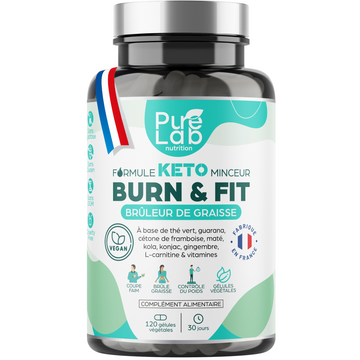
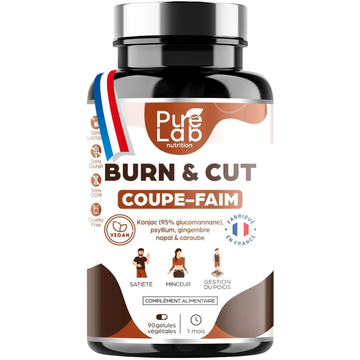
🌿 Our Burn & Cut
✅ Plant fibers and plant extracts to promote satiety
✅ 3 capsules 15 to 30 minutes before main meals, with a large glass of water
✅ One-month program, vegan formula
👉 Discover our Burn & Cut here.
Hesitating between this and our other formula? Read Burn & Fit or Burn & Cut: which one to choose?
An anti-cravings day
✅ Breakfast: oatmeal with a little plant-based milk or yogurt, a whole fruit instead of juice, possibly some nuts for healthy fats and longer satiety
✅ Appetite suppressant (if on a program): 3 capsules with a large glass of water, 20 minutes before lunch
✅ Lunch: raw vegetables as a starter (fiber first), a source of protein (legumes, fish, eggs), cooked vegetables, and a portion of whole grains
✅ Snack (if hungry): an apple and a few walnuts, or a plain yogurt—avoid industrial biscuits that immediately reignite sugar cravings
✅ Dinner: vegetable soup (volume + fiber), light protein, meal eaten seated and without screens to allow satiety signals to arrive before the end of the meal
A few principles complement this menu:
- Protein at every meal (eggs, legumes, fish, yogurt): these are the most satiating nutrients, with a higher thermic effect than carbohydrates or fats
- Eat slowly: put your fork down between each bite, chew more—satiety signals take 15 to 20 minutes to reach the brain
- Sleep well: lack of sleep often increases the urge to snack. Discover our 7 strategies for restful sleep
- Manage stress: a short walk or 5 minutes of deep breathing reduces cortisol more effectively than a sugary snack
Common mistakes
- Taking your fiber with only a sip of water: without enough water, they act less effectively and can be uncomfortable
- Switching suddenly to a very high-fiber diet: bloating is guaranteed; it's better to increase gradually
- Skipping meals while relying on an appetite suppressant: this is often an open invitation to evening cravings
- Replacing vegetables with a supplement: fiber-rich foods also provide vitamins and minerals
- Combining several weight-loss products: ANSES recommends not combining several supplements, nor combining them with medications without professional advice
- Neglecting sleep and stress: without addressing these two factors, fiber will struggle to counteract chronically high levels of ghrelin and cortisol
Frequently Asked Questions
❓ Does an appetite suppressant help you lose weight?
Not on its own. By helping you feel full, it can make it easier to stick to a balanced diet. But, as shown by the Wanders et al. review, the effects on weight remain modest and depend on all your habits.
❓ Can fiber cause bloating?
Yes, especially at the beginning or if you don't drink enough. Increase gradually and drink regularly. If discomfort persists, speak to your pharmacist.
❓ Who should not take appetite suppressants?
ANSES advises against supplements intended for muscle building or reducing body fat for children and adolescents, pregnant or breastfeeding women, and people with cardiovascular, renal, hepatic, or neuropsychiatric problems. If you are under treatment, always seek advice.
❓ Can you take a fiber-based appetite suppressant every day long-term?
Dietary fiber is a natural part of the daily diet and presents no long-term risk for the vast majority of adults, provided they drink enough water. Nevertheless, follow the duration of the program indicated on the packaging, and touch base with a healthcare professional if you are considering prolonged use or if you are on medication.
❓ Does the fiber in the supplement replace fiber from food?
No. A fiber-based supplement is a support tool, not a food substitute. Fiber-rich foods (vegetables, legumes, whole grains, fruits) also provide vitamins, minerals, antioxidants, and prebiotic molecules that the supplement alone cannot replicate. The goal is to optimize both in parallel.
In summary
1️⃣ Viscous fibers swell and prolong satiety by slowing digestion
2️⃣ Modern diets disrupt hunger signals: ultra-processing, insufficient sleep, chronic stress—fiber helps restore these signals
3️⃣ A real effect on appetite, more modest on weight—they are part of a global approach
4️⃣ Take before meals, with plenty of water
5️⃣ Protein, vegetables, sleep, and stress management complement and amplify the action of fiber
For an overview, also read Natural fat burners: what really works.
Pure Lab Nutrition ... The art of nourishing your well-being.
Sources:
- Wanders A.J., van den Borne J.J.G.C., de Graaf C. et al. (2011). Effects of dietary fibre on subjective appetite, energy intake and body weight: a systematic review of randomized controlled trials. Obesity Reviews, 12(9), 724-739. PubMed
- ANSES. Food supplements for developing muscle or reducing body fat. anses.fr
- Regulation (EU) No 432/2012 establishing a list of permitted health claims. EUR-Lex


Restez informé 🌿
Recevez nos derniers articles et conseils santé directement dans votre boîte mail.


