



















🧓💡 Creatine for the elderly: memory, heart, and neurodegenerative prevention
Do you think creatine is only for bodybuilders and athletes who want to build muscle? Think again. For years, this myth has overshadowed a major scientific fact: creatine is one of the most important nutrients for brain health, heart protection, and preventing cognitive aging.
At Pure Lab Nutrition , we want to clarify this situation. Creatine is not a miracle anabolic agent; it is a natural molecule that plays a fundamental role in your overall health, regardless of your age or fitness goals .
Discover why the elderly, students, professionals, and sedentary people should all consider creatine as a cornerstone of their long-term well-being.
📑 Summary
- Creatine is not an anabolic steroid: the real facts
- Cognitive health in seniors: Alzheimer's prevention
- Heart protection: the major oversight
- Improving daily functioning in older adults
- Recent scientific results and clinical trials
-
Pure Lab Nutrition Recommendation
✅ Creatine Is Not an Anabolic Agent: The Real Facts
The Great Misunderstanding
Important warning: Creatine is neither a performance-enhancing drug nor reserved for elite athletes . It is a substance that your body produces naturally, every day, without external intervention.
Your kidneys, liver, and pancreas together synthesize about 1 gram of creatine daily from three simple amino acids (arginine, glycine, and methionine). Supplementation simply adds what your body needs... nothing more, nothing revolutionary.
Why Does This Myth Persist?
Creatine has gained its "muscle-building" reputation because it's an excellent strength training supplement. But the fact that it benefits athletes doesn't mean it's dangerous for non-athletes.
It's like saying that B vitamins are only useful for marathon runners because they improve endurance. That's false. B vitamins help everyone.
The same applies to creatine.
🧠 Cognitive Health in Seniors: Alzheimer's Prevention
Pioneering Studies: Spectacular Results
A seminal study by Rai et al. (2005) in subjects aged 68-85 years showed that just 1 week of creatine supplementation (20g/day) produced significant improvements in:
✅ Long-term memory : marked improvement
✅ Spatial recall (front and rear) – +15 to 25%
✅ Random number generation – +12%
✅ Number recall – +18%
This is crucial: These benefits were observed in untrained , sedentary adults without associated exercise.
Understanding the Mechanism: Brain Energy
The brain consumes 20-25% of your total body energy , despite representing only 2% of your body weight. It is the most energy-intensive organ in the body.
Creatine plays a critical role: It transports energy (ATP) to where the brain needs it, particularly to critical areas such as the hippocampus (memory) and the prefrontal cortex (concentration, decision-making).
According to recent research, older people with high levels of brain creatine perform significantly better on cognitive tests , regardless of their chronological age.
Alzheimer's Prevention: Preliminary Data
KU Medical Center Pilot Study (2025)
The first-ever human study on creatine and Alzheimer's disease shows promising and surprising results:
1️⃣Population: 20 patients diagnosed with Alzheimer's (ages 60-90)
2️⃣Intervention: 20g/day of creatine monohydrate for 8 weeks
Results :
✅ 11% increase in cerebral creatine (measured by MRI)
✅ Significant improvement in working memory
✅ Improved executive function (ability to focus and ignore distractions)
✅ Improved oral reading recognition test
✅ Excellent tolerance – zero dropouts, 95% compliance
Verbatim quotes from Dr. Matthew Taylor (lead researcher): "There has been evidence in other populations that giving a higher dose of creatine changes brain creatine levels, but to see that it does change in Alzheimer's patients was really exciting. 11% is a significant increase."
Neuroprotective Mechanisms
Animal studies show that creatine protects neurons against:
🛡️ Beta-amyloid toxicity (the scourge of Alzheimer's)
🛡️ Oxidative stress and chronic inflammation
🛡️ Hypoxic damage (lack of oxygen)
🛡️ Apoptosis (programmed cell death)
In summary: Supplemental creatine allows the brain to better resist the degenerative attacks characteristic of Alzheimer's.
❤️ Heart Protection: The Major Forgotten One
Cardiac Function: An Unrecognized Role
The heart is also an extremely energy-intensive organ . Unlike the brain, it never "rests" – it pumps 24 hours a day, 365 days a year.
Creatine is essential for cardiac energy production . When cardiac creatine levels decline (which occurs with aging), the heart has to "work" harder to maintain the same performance.
Heart Failure Study (2025)
A recent clinical study of 43 patients with heart failure showed that creatine monohydrate significantly improves:
✅ Exercise capacity – increase in the 6-minute walk test of 48.69 meters (p=0.005)
✅ Reduced shortness of breath during exertion
✅ Stabilized heart rate – less cardiac stress during exercise
✅ Quality of life – significant improvement (p=0.03)
Important: The procedure was completely safe . There were no serious side effects. Kidney markers returned to normal after discontinuation.
Vascular Health in Seniors (2024)
A study on 12 sedentary elderly subjects (55-80 years old) demonstrated that 4 weeks of creatine:
📊 Improvement in arterial dilation (FMD: +4-5%)
📊 Improved microvascular function
📊 Reduction in blood glucose (-4 mg/dL on average)
📊 Reduction of triglycerides (a marker of cardiovascular risk)
A 1% reduction in FMD reduces the risk of cardiovascular disease by approximately 13%. Therefore, a 4-5% increase represents substantial protection against heart attacks and strokes .
🚶 Improving Daily Functions in Seniors
Muscular Strength and Mobility
Contrary to popular belief, creatine does not increase muscle mass without training . It simply improves:
✅ Muscle energy recovery capacity
✅ Maximum strength (particularly useful for getting out of a chair, climbing stairs)
✅ Resistance to fatigue during daily activities
✅ Fall prevention for seniors (improved balance and strength)
Data on the Elderly (2011)
According to a comprehensive review by Rawson & Venezia (2011) :
"In older adults, creatine supplementation (independent of training) increases body mass, improves resistance to fatigue, increases muscle strength, and improves performance in daily activities."
Concrete examples:
- Ability to get up from a chair without assistance
- Climbing the stairs without taking a breath
- Walk longer without excessive fatigue
- Improved stability and balance
📊 Recent Scientific Results and Clinical Trials
Meta-Analysis 2024: Global Cognition
A comprehensive systematic meta-analysis analyzing 16 randomized controlled trials (492 participants, ages 20.8-76.4 years) concludes:
✅ Memory : Significant improvement (p<0.05)
✅ Attention span : Significant improvement
✅ Processing speed : Significant improvement (p=0.04)
Certainty of the evidence: MODERATE for memory, LOW for other areas (requiring more research)
⚠️ No effect on: Overall function or executive function (in young/healthy adults)
Security Established
Over 1000 scientific publications spanning more than 30 years confirm that creatine is:
✅ Safe for children
✅ Safe for adults
✅ Safe for seniors
✅ Safe in the long term (up to 5 years of documented continuous use)
No adverse effects on the kidneys in healthy subjects – this myth has been definitively debunked.
🎯 Pure Lab Nutrition Recommendation
Who Should Take Creatine?
Honestly? Almost everyone would benefit from creatine:
📌 Seniors (65+) – Cognitive and cardiac protection
📌 People on a vegetarian/vegan diet – Insufficient food intake
📌 Students – Improving Cognitive Performance
📌 Demanding professionals – Improved focus and mental agility
📌 Cardiac patients – Improving quality of life
📌 Athletes – Synergistic with training
Optimized Dosage for Each Individual
For cognition and general health (non-athletes):
- Dosage: 3-5g daily for maintenance
- No charging phase required
- Visible results after 3-4 weeks
- Safe indefinitely
For Alzheimer's/severe cognition (preliminary data):
- Tested dose: 20g/day
- Minimum duration: 8 weeks
- Medical follow-up recommended
Our Pure Lab Nutrition Product
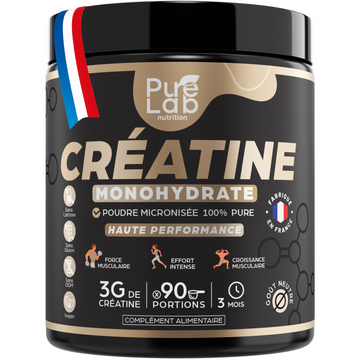
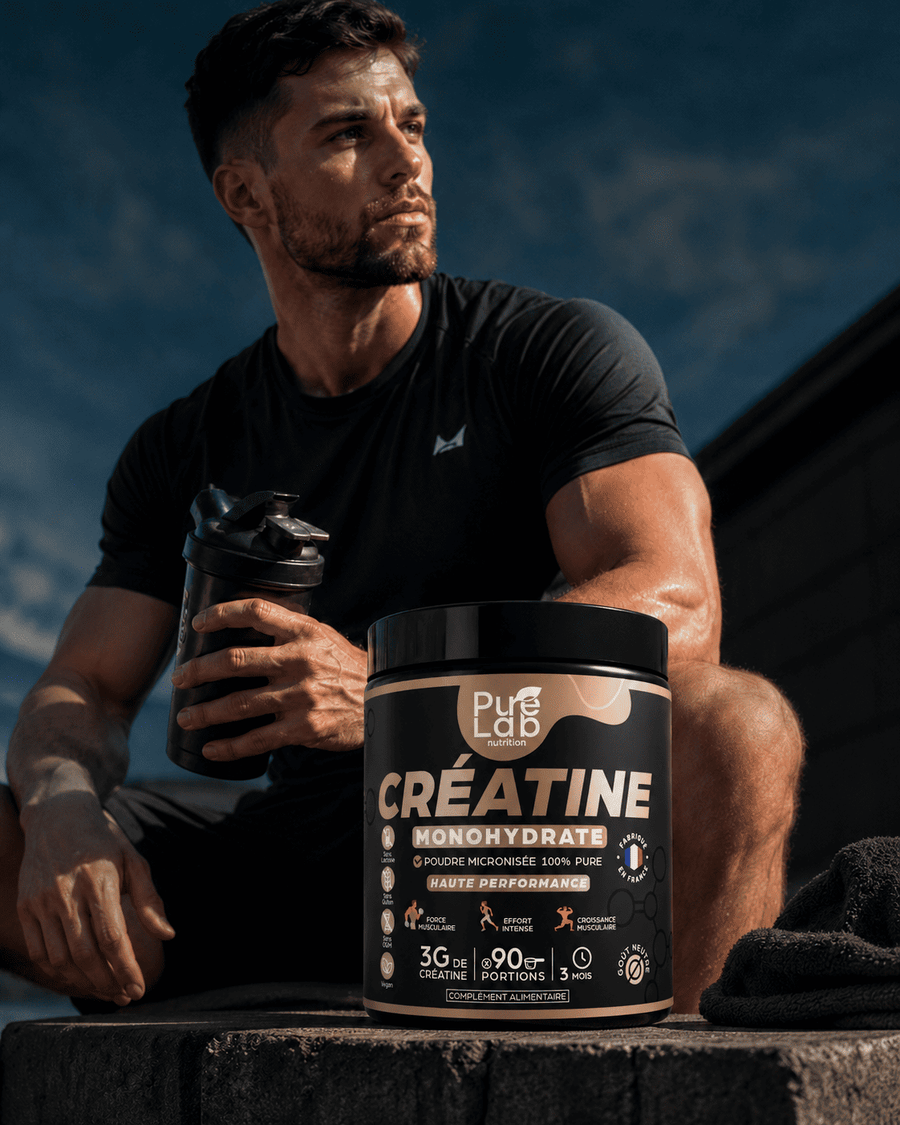
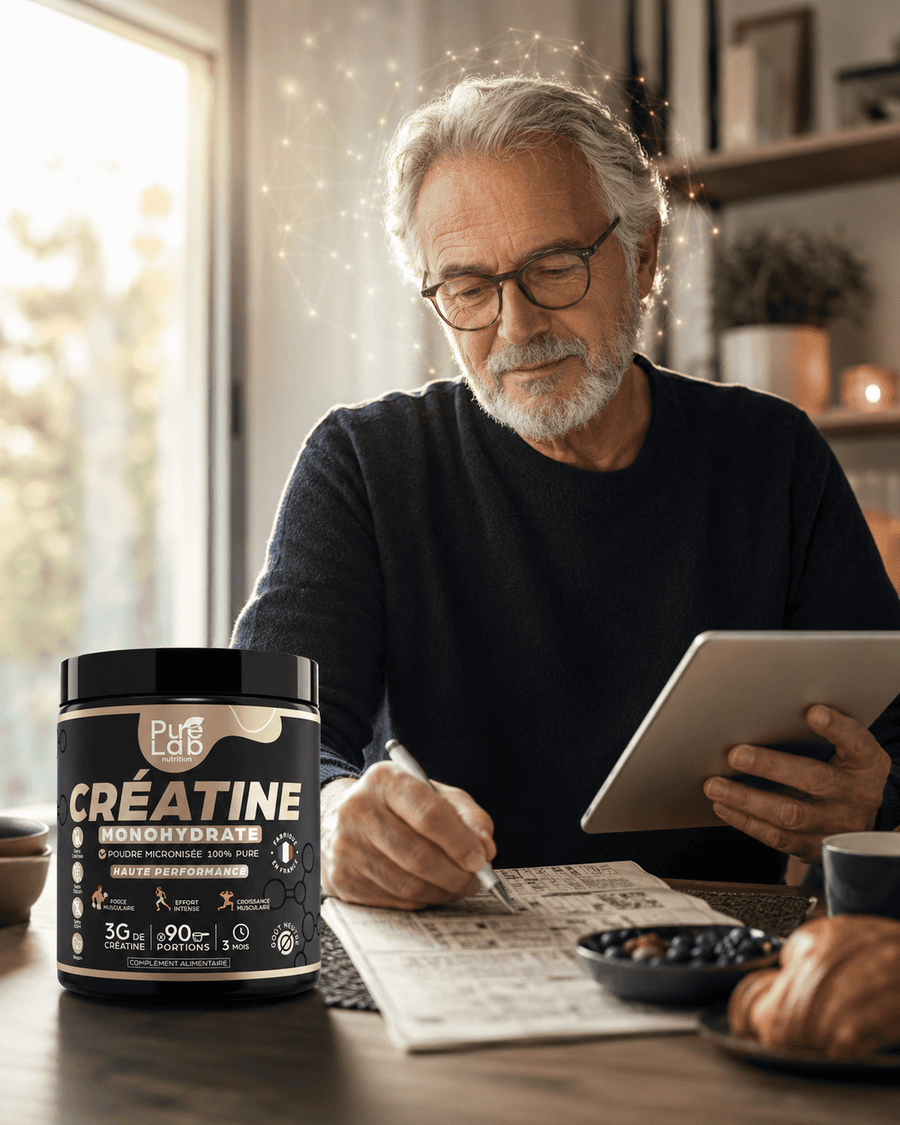
Premium Creatine Monohydrate – French Excellence 🇫🇷
✅ Purity ≥ 99.5% – Zero brain impurities
✅ Micronized – Perfect dissolution, optimal absorption
✅ Made in France – Full traceability from manufacturing and guaranteed safety
✅ Tested in an independent laboratory – Certified compliant with anti-doping standards
✅ No unnecessary additives and no contaminants like heavy metals or toxic byproducts – Pure creatine monohydrate, period.
👉 Discover our Pure Lab Nutrition Creatine Monohydrate HERE .
Simple Steps to Get Started
Days 1-28: 3g daily of creatine monohydrate (time flexible)
Hydration: 2L minimum of water per day
Patience: Wait 3-4 weeks for the first cognitive benefits.
Consistency: Take daily without interruption (unless medically contraindicated).
🎯 Conclusion: Creatine for All Ages
Creatine is not a supplement "for bodybuilders" – it is a fundamental nutrient for:
🧠 Brain protection and prevention of cognitive aging
❤️ Heart health and quality of life
💪 Mobility and daily independence among seniors
🔬 The scientific prevention of Alzheimer's
Whether you're 30 or 80, creatine monohydrate (simple, inexpensive, safe) offers multidimensional protection for your long-term health.
It's not a miracle. It's just basic biology, and it works.
Pure Lab Nutrition ... The art of nourishing your well-being.
📚 Sources
Rai, SN, Dilley, SR, Johnstone, JM, et al. (2005). Creatine supplementation and cognitive performance in elderly individuals. Neuropsychology, Development, and Cognition. Section B, Aging, Neuropsychology and Cognition , 14(5), 319-328.
Rawson, ES, & Venezia, AC (2011). Use of creatine in the elderly and evidence for effects on cognitive function in young and old. Amino Acids , 40(5), 1349-1362. doi:10.1007/s00726-011-0855-9
Smith, AN, Morris, JK, Carbuhn, AF, et al. (2025). Creatine monohydrate piloted in Alzheimer's: Feasibility, brain creatine, and cognition. Alzheimer's & Dementia: Translational Research & Clinical Interventions , 11(2). doi:10.1002/trc2.70101
Snow, WM, Cadonic, C., Cortes-Perez, C., et al. (2020). Sex-specific effects of chronic creatine supplementation on hippocampal-mediated spatial cognition in the 3xTg mouse model of Alzheimer's disease. Nutrients , 12(11), 3589. doi: 10.3390/nu12113589
Manrique-Hernández, EF, et al. (2025). Efficacy and safety of creatine supplementation in patients with heart failure and reduced ejection fraction: a pilot study. REC: CardioClinics , 60(2), 148-150.
Aron, A., Landrum, EJ, Schneider, AD, et al. (2024). Effects of acute creatine supplementation on cardiac and vascular responses in older men: a randomized controlled trial. Clinical Nutrition ESPEN , 63, 557-563. doi: 10.1016/j.clnesp.2024.07.008
Rawson, ES, & Venezia, AC (2011). Use of creatine in the elderly and evidence for effects on cognitive function in young and old. Amino Acids , 40(5), 1349-1362. Comprehensive review showing benefits on muscle strength, fatigue resistance, and daily living performance in elderly populations.
Prokopidis, K., Giannos, P., Triantafyllidis, KK, et al. (2024). The effects of creatine supplementation on cognitive function in adults: a systematic review and meta-analysis of randomized controlled trials. Frontiers in Nutrition , 11, 1424972. Analysis of 16 RCTs with 492 participants confirming significant improvements in memory and processing speed.
Avgerinos, KI, Spyrou, N., Bougioukas, KI, & Kapogiannis, D. (2018). Effects of creatine supplementation on cognitive function of healthy individuals: A systematic review of randomized controlled trials. Experimental Gerontology , 108, 166-173. doi: 10.1016/j.exger.2018.04.013
Kreider, RB, Kalman, DS, Antonio, J., et al. (2017). International Society of Sports Nutrition position stand: safety and efficacy of creatine supplementation in exercise, sport, and medicine. Journal of the International Society of Sports Nutrition , 14, 18. doi: 10.1186/s12970-017-0173-z


Restez informé 🌿
Recevez nos derniers articles et conseils santé directement dans votre boîte mail.


